Tweckling

Social media are triggering new forms of group behavior—for better or worse, and this past week's Web 2.0 Expo in Manhattan offered up a fresh example of the dark side. On Day Two of the conference, twittering audience members formed a digital swarm to heckle keynote speaker danah boyd while she was delivering her keynote. The Twitter pile-on was ironic: boyd was talking about how social media are having the effect of shortening audience attention spans and "motivating individuals to make their personal content more readily available."
While boyd spoke, a live, real-time Twitterstream was being projected on a large screen behind her back, pulling everything tagged #w2e. At first, the audience began sending tweets criticizing her delivery, and then they began ridiculing it. Boyd might have altered her presentation if she had seen what was happening behind her back, but she never got the chance. She was facing the audience and was only able to hear the audience laugh. [Read her response to it here.]
@billyger: danah boyd from microsoft is talking way too fast. It's hard to follow and I have no idea what she is talking about #w2e
@dandam: Danah Boyd loves coffee. #w2e
@andybudd: Wow, people are bleeding out of danah boyd's somewhat dry and academic lecture.
@dandam: Danah Boyd loves coffee. #w2e
@andybudd: Wow, people are bleeding out of danah boyd's somewhat dry and academic lecture.
And so on. It got worse. Since boyd's talk Nov. 17, there has been some hand-wringing in the blogosphere over whether to ban live Twitterstreams at conferences, or have organizers moderate the live Twitter streams for rude remarks. Maggie Fox, CEO of SocialMediaGroup.com, called the incident "an extremely uncomfortable experience" which "frankly ... pissed me off." Michelle Riggen-Ransom, a writer and cofounder of Batchblue Software, blogged that "this livestream Twitterbashing (tweckling?) seems a bit like the bully in my Spanish class who used to reflect a circle of sunlight glinting off his watch onto the teacher's bottom while she was writing on the chalkboard, just to make the class laugh." David Beaudouin, a communications strategist with DB+C, asked his blog readers: "Can civility and transparency co-exist within this social medium? Sure, there will always be trolls and flame wars, but behaving badly in public forums, as opposed to productive candor, simply lowers the collective level of useful discourse."
For their part, some of the people who participated in the Tweckling have since apologized to boyd, but their comments also provide insights into other ways social media are changing us. Web 2.0 conference-goer Daniel Damkoehler posted this on danah's Web site Saturday:
"...I was following along with what felt like a bit rushed, more scholarly-than-sales-oriented talk (unlike those that preceded you) until the person next to me gave me a nudge and pointed to the Twitter graffiti wall. I admit to laughing, quipping, and completely falling out of the flow of your presentation and I apologize for my lack of attention and decorum as well as my snarky comments. ...It seems that the more subtle the speaker's point, the more impatient and nasty the audience became. While it's easy enough to blame the new tech in the room for this shoddy behavior, I'm not sure we're seeing anything new here at all. It certainly didn't feel new to me from where I sat.
Consider the recent Town Hall meetings around health care—substantive discussions of important issues were subsumed in cat-calls and shouted rumors. That said, having participated in this bad behavior, I noticed something else about the way it felt to put something on that wall. The Twitterwall subverted Twitter's more symmetric conversation model of communication. Posting to the wall was like creating and sharing a public secret about the speaker (a little like political graffiti except it wasn't anonymous). The wall made a spectacle of the crowd's impatience and anxiety feeding on the speaker's inability to respond. That spectacle united us, not as a single group receiving challenging ideas from a thoughtful orator but as quite separate individuals struggling to listen, read, respond, and make sense of the event. We moved from Web conference to Twitter circus..."
Consider the recent Town Hall meetings around health care—substantive discussions of important issues were subsumed in cat-calls and shouted rumors. That said, having participated in this bad behavior, I noticed something else about the way it felt to put something on that wall. The Twitterwall subverted Twitter's more symmetric conversation model of communication. Posting to the wall was like creating and sharing a public secret about the speaker (a little like political graffiti except it wasn't anonymous). The wall made a spectacle of the crowd's impatience and anxiety feeding on the speaker's inability to respond. That spectacle united us, not as a single group receiving challenging ideas from a thoughtful orator but as quite separate individuals struggling to listen, read, respond, and make sense of the event. We moved from Web conference to Twitter circus..."
The boyd Tweckling is just the latest example of the phenomenon. At the Shorty Awards in February, a group of panelists sat on stage dumbfounded while the audience used a projection of the live Twitterstream to make fun of them behind their backs. More famously, former BusinessWeek columnist Sarah Lacy, during a 2008 SxSW interview of Facebook cofounder Mark Zuckerberg, got pummeled "when the back channel on Twitter caused the crowd to turn against Lacy and made for a fairly hostile Q&A," Riggen-Ransom recalls. A more recent example, she says, occurred earlier this month at a HighEdWeb Keynote speech in Milwaukee, "where even non-attendees jumped on the bandwagon (possible now with live-streaming.)" [To read Riggen-Ransom's full post, go here.]
Sure, speakers who read their speeches or who don't seem comfortable addressing a crowd have never been popular with audiences who have paid hefty registration fees just to hear them speak. People attend keynotes to be enlightened and entertained. But does the advent of Twitter—and the existence of a digital back-channel—make it socially permissible to virtually boo people off stage?
Like Riggen-Ransom, I'm all for the back-channel. But I'm also for civic spaces. Way back in the '90s, people used to laugh at Beavis&Butthead, the original back-channel snark-mongers—often to the point of losing interest in the videos they were skewering. To be sure, the audience is the stage in this new era of social media. As social media continue to redefine our notions of public spaces, public behavior—what's considered acceptable—is evolving. Transparency changes things, and not gently.
—By Marcia Stepanek
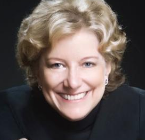
(Photo of danah boyd at Web 2.0 Expo New York courtesy of O'Reilly Media)
Labels: danah boyd, digital swarms, hecklers, live Twitter feed, maggie fox, marcia stepanek, michelle riggen-ransom, sarah lacy, social media, SxSW 2008, tweckling, Twitterstream, Web 2.0 Expo New York
posted by Marcia Stepanek at
3:35 PM
11 Comments