Saturday, October 22, 2011

Rethinking Africa


Erik Hersman -- a cofounder of Ushahidi; founder of the group blog, Afrigadget; the author of the blog, White African, and the founder of iHub, Nairobi's innovation hub -- offered this week's PopTech conferees contemplating the world's geopolitical power shifts a new definition of the term, white space. "In business, it is defined as a place where rules are vague, authority is fuzzy, budgets are nonexistent and strategy is unclear," said Hersman, who was raised by missionary parents in Africa and spent his childhood traveling between Sudan and Kenya. [Hersman still lives in Africa, with his wife and three children in Nairobi.] "...Business white space is the space between the organization chart, where the real innovation happens" -- and this space right now is Africa, he says.

Hersman told conferees that 313 million people are now moving into Africa's middle class ranks -- a figure that comprises 34 percent of the continent's population. Additionally, 98 percent of Internet subscriptions in Africa are for mobile service, and five of the world's Top 10-fastest growing economies are in Africa. "Ghana has beat Qatar for pole position," Hersman said. And mobile Web innovation is at a peak. He cited three recent Web startups as examples of what he called "reverse development" -- the creation of new tech ideas that Africa is exporting to the West rather than importing from it: Ushahidi, the crisis-mapping service; M-Pesa, the mobile, peer-to-peer money transfer service that has so far conducted more than $8 billion of transactions within Kenya, and MXit, a free instant-messaging application in South Africa that has become an alternative to Facebook in that country and has some 24 million users around the globe -- some 13 million in South Africa, alone. "The mobile revolution that you hear about in Africa? It's real," Hersman said.

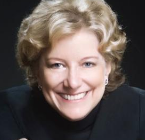
And Africa is also transforming itself culturally and spiritually, says Unity Dow (photo above). Young people are "beginning to question why they should mold themselves" into Western notions of what should be "normal" at home and abroad. Dow, a high court judge and human rights activist in Botswana, told conferees "there is a new generation that is not yoked to the past of colonialism" and it is "rethinking Africa. ...And they're asking, 'How can I move forward without having to be Western?'"

"...When people begin to have three meals a day and a warm bed at night, they begin to think," Dow said. "What is happening in Africa right now is that [young people] now have full bellies, cars to drive, and access to the Internet. They're beginning to look around and ask, 'What did we lose as a country in our attempt to be part of 'the Other'? What did we lose when it was un-Christian to be African and to dance the way we danced' and talk and wear our hair differently?"

Dow said this "new awakening" also is creating new diplomatic and economic friends for Africa -- chiefly China. "Africa has a right to extend its friendship across the world without people thinking it is being exploited," Dow said. Africans want to break the image of dependency on the West and rebalance its global relationships. "...When a Westerner sees a shoeless African, he thinks, 'How can I donate shoes?'" Dow said. "But when a Chinese sees a shoeless African, he thinks, 'How can I sell her cheaper shoes?'" China is catering to the continent's fast-growing middle class, she said, by offering inexpensive goods to Africa's new consumers. "It is more expensive to deal with Europe and America that it is to deal with China," she said. "...You can get a flight from Botswana to go to China, and when you land there, there will be a translator and a car waiting for you," Dow said, referring to buying trip services being offered by some Chinese companies seeking inroads into the Africa market. "For many Africans, this is their first trip outside of their country. ...You cannot afford these things in British pounds or dollars but you can if you go to China," she said.

"In the past," Dow said, "all of this would have been unimaginable. But in the last five years, we're seeing a reclaiming of what we lost when we tried to go global." The result? A new and different future for the continent. Said Dow: "The future of Africa is brown, the future of Africa is gendered, and the future of Africa is fair."

PopTech's conference, "The World Rebalancing," ended today.

-- Marcia Stepanek

[Photograph of Unity Dow by Kris Krug in Camden, Maine, at this week's PopTech conference]

Labels: , , , , , , , , , , , ,

Friday, June 4, 2010

The New Digital Divide


Call it the New Digital Divide. In the early days of the Web, social innovators predicted it would spawn a more open and democratic society. Today, though, that hope is being strongly challenged.

According to Eli Pariser, a cofounder and former Executive Director of MoveOn.org, data aggregators like Google have started using increasingly sophisticated filters to decide what information we consume online. Trouble is, these new levels of data-personalization, along with the growth of social networks that we use to self-aggregate, are threatening to hamper civic engagement. The filtering, Pariser told those attending this week's Personal Democracy Forum in Manhattan, is starting to keep us from being exposed to a surge of new information and ideas -- and chiefly, viewpoints that may differ from our own.

For example, Pariser says, Google now uses 57 different personalization filters to customize what we see on the Web, even if we aren't logged in. That makes it harder for us to see news and information that Google's algorithms suggest might bore us or upset us. And that's not all, says Pariser. Often, these "filter bubbles" keep information from us without our specific permission -- and worse, without our knowledge. [Google isn't the only culprit. Facebook also customizes content, using information on the links people click to tailor the news that appears in their personal feeds. Pariser, a progressive, says he has tried hard to add conservative friends to his own Facebook feed but their links and feeds keep getting blocked by Facebook's personalization algorithms.]

"What you see on your screen may be different from what the person sitting next to you sees during a similar Google search," Pariser told the gathering of more than 600 social change advocates, social entrepreneurs and open-government activists. "...We really need to get away from that silly idea that (computer) code doesn't care about anything."

Data-filtering isn't new, of course. But these new filter bubbles differ from what we've seen before, and in three key ways, Pariser says. First, the degree of personalization is higher. You're no longer simply being grouped with a bunch of people who read The Nation. Now you're alone in your bubble. Second, filter bubbles are invisible. You don't realize they exist; you can't see them. And third? You don't choose them. They choose you. "As the face of curation of what we see and consume online changes from a person to a machiine, we need to start questioning the values of these filtering devices and get the power back to make these decisions for ourselves," Pariser says. "The filter bubble may be good for consumers but it's bad for democracy."

Other assertions made by presenters:

* There is racial segregation on the Web, even in trending topics on Twitter. According to data visualization experts Fernanda Viegas and Martin Wattenberg, the thousands of hashtags being used to collate and segment different conversations by topic also may be keeping many people out of the short-messaging site's most popular and/or important conversations. Example: Two of the top-trending topics over the recent Memorial Day weekend -- #cookout and #oilspill -- were starkly segmented along racial lines. Viegas said the #cookout conversation was attended mostly by blacks and #oilspill, mostly by whites during the same period. "Hashtags are the bumper stickers of the 21st Century," said Wattenberg. Added Viegas: "On many topics, it's a heterogeneous crowd, but there's a whole other chunk of topics where race divides people. We need to be aware that even online, we can be immersing ourselves in conversations that are segregated in ways that might be worrisome."

* We are not using the social media tools we have to solve problems so much as we are using them to socialize with like-minded people about these problems. It's time to get more active offline, said Clay Johnson, the director of Sunlight Labs and cofounder of the online political strategy firm, Blue State Digital. Social entrepreneurs and activists need to focus less on using social media to build email lists and focus more on getting people active offline solving social problems, he said. He cited the online social network, Momsrising.org, as a good example of a social network that is highly civically engaged, using government data on health, education and economic trends to create a "Moms Score" to help catalyze offline protests and social change.

* We must work harder to break out of these self-imposed (or machine-imposed) comfort zones if we're to affect social change. "We are too focused on climbing the hierarchy ladder in our workplaces and social networks online, and not focused enough on dismantling these hierarchies, which is where the true power lies," said Deanna Zandt, a social media consultant and author of Share This! a new book about social networking. "We're living like fish right now," she said. "We don't know we're wet. We're taking our perception that the Net is a wonderful meritocracy but that's not true. We need to interrupt this pattern of thinking immediately." Zandt urged conferees to shatter their comfort zones to start making the Net a more hospitable place for civic engagement. "We have to work harder at civic engagement online," she said. Zandt, who is white, shared her own experience of finding herself in an unexpected discussion on Twitter about race in America after she spoke out against an action last summer by Philadelphia's Valley Club to ban black children from swimming in its pool. "This was completely outrageous, I got really angry about it and signed petitions and all of that, but what was more interesting was what happened in the days following that," Zandt said. "People started sharing on Twitter about the first time they'd been discriminated against as children and this blew me away. I wouldn't have found myself in a group of people of color, sharing stories about discrimination without Twitter" and without "stepping out."

* We must stop enabling the status quo. John Perry Barlow, the founder of the Electronic Frontier Foundation, a 20-year-old nonprofit digital rights advocacy group, told the gathering that he stands by his earlier statement, made many years ago, that "the Internet is the most powerful event since the capture of fire." Barlow said there is massive power in the hands of individuals, thanks to the Web, but this is power that destabilizes the status quo and can cut both ways, for better and worse. Most people still don't know how to use this Web power to organize and affect social change. But they are learning, he said. "We have to stop expecting the government to shower us with things it can no longer deliver," he said, "and start running this country and our institutions (including companies) the same way the Internet is run, from the edges."

* We must stop assuming that civic engagement will occur online on its own. James Fishkin, the director of the Center for Deliberative Democracy at Stanford University, said the best way to boost public deliberation online is to create it. Fishkin says that the current way we "self-select" our social networks online has led to only the most extreme views being heard by one group or another. He suggested a five-step "Deliberative Polling" methodology to start creating issues circles, which first gets all stakeholders together from all sides of an argument to agree to a set of detailed survey questions that will help frame a debate around issues where civic engagement is most needed. Second, select 500 people who represent specific groups across viewpoints to participate. Third, send them the survey. Fourth, assemble them in small groups and facilitate discussion and deliberation, either online or in person. Fifth and last, survey the participants again to see if their opinions have changed as a result of that engagement.

* The Net can be a force for civic engagement, especially in societies around the world where there has been none before. Ethan Zuckerman -- a social media expert, blogger, founder of Tripod.com, a Web hosting enterprise, and cofounder of Global Voices, an internationally crowdsourced news site -- said the Net "really changes things in the long-term by creating a new public space, one that in most closed societies around the world is not available any other way."

What do you think? Does the surge of online social networks and corporate use of Net filters to segment consumers of their products make it harder for people to engage with one another -- in or out of the workplace? Let us hear from you.


-- By Marcia Stepanek

[Photo-illustration: istock.com]

Labels: , , , , , , , ,

Thursday, March 11, 2010

Cause-washing: The New Black?


We've all heard about green-washing, what Urban Dictionary defines as "when companies pretend to be environmentally friendly -- when in fact they are not." Now there's a new term -- cause-washing -- that's being used with increasing frequency in the blogosphere to describe inauthentic marketing-for-good.

To talk about this and other new trends and challenges in the worlds of corporate responsibility and social enterprise, I sat down recently with the popular Harvard Business School marketing professor V. Kasturi Rangan, who moderated a panel in February on the subject at Harvard's Social Enterprise Conference 2010. Rangan says he worries a lot about how some causes may be considered a better "sell" than others. He also says he thinks it will soon become critical for companies involved in cause-branding to start proving social impact amid an increasingly cause-crowded marketplace -- but adds that few firms are, as yet, up to the challenge. Here's an edited transcript of our conversation:

What are the new cause-branding trends going forward?
I see pluses and minuses. Cause branding requires you to attach the cause to brand and then commercialize it; there are some causes that are more commercialize-able than others. That does not mean that those other causes are any less important. Some causes pull on your heartstrings. And sure, none of us want to see a hungry child; none of us wants to see children without access to education; we don't want to see children without access to health care. I mean, emotionally, we get pulled in. But there may be other things, for example -- drug addicts; for example, older adults who some in society might think are supposed to take care of themselves. Those kinds of causes may not be saleable, commercialize-able. So my worry is that if we cause-brand some causes and not others based on how sale-able they are to the general public, then we are letting private enterprise choose what is most important for society -- which may not exactly align with what the most important causes are. I really worry about that a lot. There needs to be some sort of clearing mechanism where not just the causes that are commercialize-able dominate all of the money from corporations. There must be some mechanism whereby some of the other causes also have a chance to get some corporate money to play up their causes.

On the plus side, we in America are a mature market. Most consumers in America pretty much know what kinds of products and services they can get and so it's very clear that a differentiation factor is what a company is doing for society. I believe a lot more products and brands will jump into cause-branding. When all is said and done, cause marketing is just a teeny fraction of philanthropy - about $15 billion or $20 billion, alone, versus all of philanthropy, which is about $350 billion. So we might see more corporate money coming into cause branding, and this is good. Once a corporation attaches itself to a cause, it tends to take it seriously, and public companies have oversight and so forth to help guide them in how well they execute. So it's good for the business. It's good for the social fabric.

And the downside? Is cause marketing a tougher sell?
Yes, if everybody claims that everybody is doing a great thing for such and such a cause, and then sooner or later, consumers will become skeptics. It's already starting to happen in some cases. I think the most authentic brands going forward will not only have to be transparent about how they are raising money and how they are spending it, they also now will have to show they are having a social impact. This is something that I do not think that most corporations are ready for. Corporations are willing to show financial impact. They are willing to show transparency. They are willing to show they're authentic about what they are thinking. But are they ready to show that yes, this is the cause that I care for, and look at the impact I've made in society? That, I don't think, the corporations are ready for. But it is something that corporations that really want to differentiate themselves are going to have to step up for. It's a new game for them that many haven't yet started to think about.

Why aren't most ready?
It's a cost item, and it's incredibly more difficult to achieve. Measuring social impact is different than measuring financial impact. (See "Does Corporate Philanthropy Sell?)

Can you cite a company that is?
Timberland, for one, is trying to measure the social impact of what it is trying to do. It's an early symbol of what is happening.

What are the stiffest challenges for cause-marketers?
The only way to succeed here is to support value. Newman's Own and others say that at best, consumers may pay a small premium for a cause-brand, but not a lot more. Cause brands now need to operate at a superb level of efficiency and effectiveness just to generate an extra surplus to support the cause and the movement. Cause brands have to be very lean, very hungry and really tough.

And secondly, of course, cause brands need to be authentic. That's always been the case and this is becoming ever more critical. When you lose trust on 'good' initiatives, your brand suffers irretrievably. A decade ago, maybe you could get by with a little sloppiness on the authenticity front but now - because there are so many companies claiming to be helping a cause - you have to run these cause branding campaigns as both a terrific business and you have to be authentic. There are so many watchdogs on the Web now that will call you out if you're not. With online social networks, successes and failures get amplified. Customers talk to other customers and stumbles can hurt badly. The Web is both a friend and a foe.

In that vein, what do you make of the new consumer activism online - chiefly social enterprises like Carrotmob, Quiet Riots and Good Guide that crowdsource consumer opinion? Are these new online networks friends or foes?
My quick takes on it? This is good for companies; they can get real-time consumer feedback. But companies and movements have to be careful. Ultimately, corporations and brands exist to show a return to shareholders. Some of these movements and the things they ask for may be perfect from the point of view of the small group of consumers that these movements represent. However, what these consumer groups are asking for might not form a valuable business proposition in terms of scale or in terms of sustaining the franchise because a company may not be able to make that kind of product or service available for, say, a mere 10,000 people in a northeast corner somewhere, or to a certain type of demographic. And that's where I think the problems might come, where it becomes like an activist movement, where the activists get up in arms over, say, what mothers really need but there's not a single firm able to take care of it.

If these new online consumer movements can be translated by companies into something viable business-wise, they will present an opportunity for businesses. As long as the consumer feedback is viewed constructively and firms are mindful of the fact that these are great opportunities for them to learn about digital markets and get a very quick sense of how [online complaint] builds up, maybe [online consumer groups] can help companies to decrease the cost of launching a product and taking it to market.

Otherwise, I'm afraid that these [consumer] movements could create more dissonance - cases where these online groups will not have impact and then start to feel used, thinking 'I gave all of these ideas to this company but look at what corporate American has done. It's not stepped up to the plate.' Businesses, beware.

-- By Marcia Stepanek

(Illustration by Matt Hertel for istock.com)

Labels: , , , , , , ,