Saturday, October 22, 2011

Rethinking Africa


Erik Hersman -- a cofounder of Ushahidi; founder of the group blog, Afrigadget; the author of the blog, White African, and the founder of iHub, Nairobi's innovation hub -- offered this week's PopTech conferees contemplating the world's geopolitical power shifts a new definition of the term, white space. "In business, it is defined as a place where rules are vague, authority is fuzzy, budgets are nonexistent and strategy is unclear," said Hersman, who was raised by missionary parents in Africa and spent his childhood traveling between Sudan and Kenya. [Hersman still lives in Africa, with his wife and three children in Nairobi.] "...Business white space is the space between the organization chart, where the real innovation happens" -- and this space right now is Africa, he says.

Hersman told conferees that 313 million people are now moving into Africa's middle class ranks -- a figure that comprises 34 percent of the continent's population. Additionally, 98 percent of Internet subscriptions in Africa are for mobile service, and five of the world's Top 10-fastest growing economies are in Africa. "Ghana has beat Qatar for pole position," Hersman said. And mobile Web innovation is at a peak. He cited three recent Web startups as examples of what he called "reverse development" -- the creation of new tech ideas that Africa is exporting to the West rather than importing from it: Ushahidi, the crisis-mapping service; M-Pesa, the mobile, peer-to-peer money transfer service that has so far conducted more than $8 billion of transactions within Kenya, and MXit, a free instant-messaging application in South Africa that has become an alternative to Facebook in that country and has some 24 million users around the globe -- some 13 million in South Africa, alone. "The mobile revolution that you hear about in Africa? It's real," Hersman said.

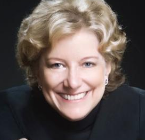
And Africa is also transforming itself culturally and spiritually, says Unity Dow (photo above). Young people are "beginning to question why they should mold themselves" into Western notions of what should be "normal" at home and abroad. Dow, a high court judge and human rights activist in Botswana, told conferees "there is a new generation that is not yoked to the past of colonialism" and it is "rethinking Africa. ...And they're asking, 'How can I move forward without having to be Western?'"

"...When people begin to have three meals a day and a warm bed at night, they begin to think," Dow said. "What is happening in Africa right now is that [young people] now have full bellies, cars to drive, and access to the Internet. They're beginning to look around and ask, 'What did we lose as a country in our attempt to be part of 'the Other'? What did we lose when it was un-Christian to be African and to dance the way we danced' and talk and wear our hair differently?"

Dow said this "new awakening" also is creating new diplomatic and economic friends for Africa -- chiefly China. "Africa has a right to extend its friendship across the world without people thinking it is being exploited," Dow said. Africans want to break the image of dependency on the West and rebalance its global relationships. "...When a Westerner sees a shoeless African, he thinks, 'How can I donate shoes?'" Dow said. "But when a Chinese sees a shoeless African, he thinks, 'How can I sell her cheaper shoes?'" China is catering to the continent's fast-growing middle class, she said, by offering inexpensive goods to Africa's new consumers. "It is more expensive to deal with Europe and America that it is to deal with China," she said. "...You can get a flight from Botswana to go to China, and when you land there, there will be a translator and a car waiting for you," Dow said, referring to buying trip services being offered by some Chinese companies seeking inroads into the Africa market. "For many Africans, this is their first trip outside of their country. ...You cannot afford these things in British pounds or dollars but you can if you go to China," she said.

"In the past," Dow said, "all of this would have been unimaginable. But in the last five years, we're seeing a reclaiming of what we lost when we tried to go global." The result? A new and different future for the continent. Said Dow: "The future of Africa is brown, the future of Africa is gendered, and the future of Africa is fair."

PopTech's conference, "The World Rebalancing," ended today.

-- Marcia Stepanek

[Photograph of Unity Dow by Kris Krug in Camden, Maine, at this week's PopTech conference]

Labels: , , , , , , , , , , , ,

Tuesday, September 22, 2009

Heat


Bill Clinton's fifth annual, star-studded thinkfest on philanthropy, technology, social issues and cause advocacy—the Clinton Global Initiative—kicked off today in Manhattan with a call for renewed urgency amid the global financial slowdown to create ever-more innovative, cross-sector solutions to climate change, poverty, and other global social ills. Clinton urged the record 1,200 attendees from the worlds of business, government, social advocacy, celebrity, and academia to forge more cost-effective and collaborative problem-solving initiatives, and to view emerging economies around the world as critical proving grounds for new ideas that can scale globally.

This is the fourth consecutive CGI I've attended; Bill Clinton, bowing to last year's collapse of the financial markets, has put special emphasis this year on society's overlooked populations—namely, the so-called "bottom billion"—and has scheduled panels to explore how business CEOs might do a better job working alongside social sector leaders to help local communities. To that end, ABC's Diane Sawyer will moderate a panel Wednesday that looks at how various countries treat women, followed by several sessions on human trafficking. Organizers also are promising some conversations about how the emerging mobile Internet—cellphones—can be a force for grassroots change, economic empowerment and collaboration from Kigali to Queens.

This year also will be different in another way: a record number of bloggers will be included in the press room, and there will be quite a few "citizen journalists" among the conferees; the ubiquitous Ashton Kutcher and Demi Moore, philanthrocapitalist Jaqueline Novogratz, actors Matt Damon and Ben Stiller, and philanthropist Steve Case (@SteveCase) are among those already tweeting their takes on the proceedings. CGI, meanwhile, is livestreaming much of the event, and is providing an easy interface for members of the public to ask questions of Clinton and other participants.

Watch this space for highlights from the week; much of the program will be unfolding during simultaneous break-out sessions and town hall-style seminars taking place on Wednesday and Thursday. Some of the sessions will be live-streamed over the Web. Cause Global will be tweeting from the floor and during some of the breakout sessions. You can follow our CGI tweets @CauseGlobal through mid-day Friday.

For the opening plenary, which includes President Obama's speech to conferees, click HERE. In that speech, Obama referenced the social advocacy work of his late mother, Stanley Ann Dunham Soetoro:

[My mother] was an anthropologist who dedicated her life to understanding and improving the lives of the rural poor, from Indonesia to Pakistan. Whether working with USAID or the Asian Development Bank, the Ford Foundation, Bank Rakyat in Jakarta or Women’s World Banking here in New York, she championed the cause of women’s welfare and helped pioneer the micro loans that have helped lift millions from poverty. My mother understood that whether you live in the foothills of Java or the skyscrapers of Manhattan, we all share common principles: justice and progress, tolerance and the dignity of all human beings. And we all share common aspirations, for ourselves and our children: to get an education, to work with dignity, and to live in peace and security.

(Photo: Mills/New York Times)

Labels: , , , , ,

Friday, July 17, 2009

Tweets + 12s = video twitter?


If tweets were short video clips instead of words, they'd probably be something out of 12seconds.tv —a Twitter-like video-messaging startup based in Santa Cruz, Calif., that's already starting to bend the rules of both social advocacy and marketing. Tweets are 140 characters long; a 12seconds.tv video lasts no more than 12 seconds—a kind of talking, moving, real-time snapshot that can capture anything from an opinion to a baby's first steps to a feeling or a news flash. “It’s a different way to engage with someone on the Web,” says cofounder Sol Lipman.

Unlike most of the fare on YouTube, 12seconds’ videos—known as "12s"—are uber-short and often emotionally evocative glimpses of “right-now” moments, more like a memorable photograph and a feeling than a story. [See the 12-second Me Plus Italy, above]. Also different about 12s, says Lipman, is that they're made mostly for consumption—for the people who would watch them. To be sure, video-messaging represents a new step in the evolution of social media that offers fresh opportunities for creative expression, event coverage, and persuasion.

Big advertisers and new-wave nonprofits are sitting up and taking notice, especially now that the new iPhone3GS is fueling a bump-up in 12seconds' traffic. A variety of advertising and marketing agencies have approached Lipman and his colleagues, looking to sign up 12seconds to co-create user-generated content for brands ranging from M&Ms to LG Electronics to Adidas.

Consider the startup’s recent “12omercials” [tweet-able commercials] for Adidas, called the 12th Man Campaign. The initiative asked 12seconds.tv members [known as 12ers] to create their own 12-second shorts to broadcast their enthusiasm for England’s Chelsea Football Club during the run-up to tomorrow’s friendly soccer match against the Seattle Sounders. Participating 12ers made videos in May and June to earn a 12th man spot on the Chelsea bench. Adidas has been running some of the better 12s on the JumboTron in Seattle’s Safeco Field. But only this clip won the contest, which ended last week. (Here’s another that made the finals.)

12seconds is trying the same formula to help boost the visibility of some nonprofits, including the Leukemia and Lymphoma Society, the Summer of Social Good, and Earth Hour. The Summer of Social Good campaign, for example—organized by Mashable—asked 12seconds to invite its community to film people (and themselves) saying what they would do or give up to benefit the good of society. Here’s one of the three, 12-second spots that won a free Kodak Zi6 pocket video camera for its producer. “I don’t think we’ve been able to raise tons of money directly for nonprofits yet,” says Lipman, “but I think 12seconds is a great tool for spreading the word, creating a video brand, and then giving people a bunch of great content to utilize.”

Lipman says about 60 percent of the videos appearing on 12seconds.tv are produced on Web cams, 30 percent on mobile phones, and about 10 percent in video uploads. But that’s soon to change: With the iPhone3GS, Lipman says there’s been a surge in the number of mobile spots across the site. "Mobile, in general, is just beginning to become this huge opportunity to bring us all closer together,” Lipman says.

What do you think?

—Marcia Stepanek

(Top video: Me Plus Italy, courtesy Italyworkshop on 12seconds.tv)
(NOTE: This post first appeared on PopTech.com and is being re-posted here with permission)

Labels: , , , , , , , , , , , , ,

Wednesday, June 3, 2009

Open Source Politics


Ever since Barack Obama’s strategic use of social media in the last election, people have begun to realize the Internet is reshaping politics—but it’s not just about bringing more young people out to the polls. A panel of thought leaders on social networking in the political world that I convened and moderated at the recent Milken Institute Global Conference 2009 in Los Angeles agreed that social media and the self-organized groups they are spawning have already begun to destabilize the political system, itself.

“Every medium has a signature and for television, it is image. For the Internet, it’s the ability to converse,” said Jason Calacanis, a Net entrepreneur and cofounder and CEO of Mahalo.com. “…Clearly, Obama is better suited for this medium; Democrats and more libertarian people are more suited for it, too. The Net represents a very bad trend for conservatives because they tend to have more extreme, intolerant, non-conversational positions on things. They tend not to do so well online because they can’t converse. The whole point of the Internet is to discuss it, fight it, to have a whole threaded message. The winners of elections now will be the ones able to keep the conversation going and to engage the largest number of people. You have this massive paradigm shift occurring right now, between people who can converse and those not willing to do so. It sort of transcends politics and gets into something even more Socratic in nature.”

Mindy Finn, whose Washington, D.C.-based political strategy firm, Engage, advises Republican candidates, says her firm won’t work with candidates who aren’t philosophically or naturally skewed toward online collaboration and the wisdom of the crowd. “There are certain candidates, frankly, who have come to us and we don’t tell them straight out why we are not going to work with them—but we won’t because we know they’re not going to be successful online,” she said. “They ask me, did we lose because of the Internet? I respond with a big fat no. People didn’t lose because of the Internet. They lost because they were seen as being out of touch…and not understanding the way that people are communicating now via the Internet and via mobile and in groups.”

But the GOP didn’t have a monopoly on social media illiteracy this past election. Andrew Rasiej, founder of the Personal Democracy Forum and PopTech Advisory board member, said Hillary Clinton stumbled with a video called Hillary and the Band, an unsuccessful response to the famous will.i.am video made by Obama’s supporters and this one, Dear Mr. President, made by the supporters of John McCain. “In the beginning of the Hillary video, there was this one throw-away line, a young man who says, ‘The blogs went crazy.’ No 25-year-old would ever say the blogs went crazy. Only a 55-year-old writing a script —writing what he or she thinks a 25-year-old would say—would write a line like that.” The result: the video became a “punching bag example” of inauthenticity and online illiteracy, “an effort by a political candidate to try to mold the message to an erroneous perception of what the audience is and how it communicates.” Added Scott Goodstein, a mobile Internet expert who worked on the Obama campaign’s new media team: “When Hillary’s campaign consultants said it looked like the Obama campaign resembled the face of Facebook, the thing they didn’t understand is that the fastest growing segment of Facebook right now is over-50 women. And the Barack Obama Facebook group has doubled since the campaign. People want information.”

But the social media lessons about blogs and mobile engagement that surfaced out of the past election, panelists agreed, will seem small compared to the changes that lie ahead. Far more significantly, panelists agreed, the Web is accelerating civic discourse to speeds that traditional politicians will find hard to match. The Web, they said, is already threatening to render some of the ways in which we currently govern obsolete.

Example: The citizen group called One Million Voices Against FARC, a Facebook group which organized a grassroots campaign in February 2008 to repudiate FARC guerrillas, empowering more than 12 million people to take to the streets in some 190 cities around the world. “We are living in a post-partisan era in which social media tools are allowing people to find the interests they care about the most,” Rasiej said. “People will be able to find each other faster than they will be led by political parties and political movements, and this has already begun to change the political dynamics of the entire planet. Applying technology to politics and expecting it to stay the same is like applying technology to the record industry and expecting it to stay the same. It doesn’t happen that way.

“…I predict that in 40 or 50 years, we won’t have Congress as we know it today,” Rasiej added, saying the ecosystem of how we identify people to lead us is changing dramatically. “Wikipedia is a great example of our new kinds of representatives, people who have built reputations because they know a great deal about one subject or another and have been identified by the crowd as knowing more than others about a subject. If you think about how our Constitution works and how our Congress works, it’s oriented around the fact that we elected these people because they are supposed to get into details and understand the issues that matter to us more than we do. But the reality is that they spend 95% of their time raising money just to keep themselves in office and actually don’t know more about the issues than we do. These new social media tools are going to create a new set of dynamics where we’re going to be able to identify the people who know the most about the issues that matter to us faster than our elections are going to be able to elect them.”

For more on politics and technology, check out the schedule for this year's Personal Democracy Forum, called We.gov, to be held June 29 and 30 in Manhattan.

—Marcia Stepanek

(This post first appeared on PopTech and is being reposted here with permission):

(Photomosaic image by tsevis via Flickr)

Labels: , , , , , , , , , ,

Friday, February 13, 2009

Smart Squares

David Merrill is an MIT graduate student who has created something called Siftables—cracker-sized "smart" squares equipped with wireless sensors that you can stack like blocks. Why bother? They do math. They play music. They interact. They also represent a breakthrough way to learn [and teach] and communicate complex ideas to children and adults. In addition, they create a new vehicle for all sorts of visual and mobile applications. Here's Merrill at TED2009 earlier this month:


When he's not working on Siftables, Merrill is exploring new ways to access digital information away from one's computer.

Labels: , , , , , ,

Tuesday, January 13, 2009

Future Imperfect


A new survey of Internet experts—the third in a series by the Pew Internet & American Life Project and Elon University—has triggered a lot of debate among social media thought leaders since it was released less than a month ago. Most of the 1,200 respondents surveyed for this latest report, called The Future of the Internet III, said they expect major advances in information technology by 2020, as voice recognition improves and as the mobile phone becomes a primary device for online access and social problem-solving. But many of these same thought leaders—from the scientists and engineers who created the first Internet architecture to social commentators and advocates, corporate technology leaders, government policy strategists, and tech experts in higher education—also disagree sharply over whether the Net will, in fact, build a better world.

To get a better sense of the fault lines, Cause Global Publisher Marcia Stepanek caught up last week with survey co-author and Pew project director Lee Rainie, who also co-wrote Up for Grabs: The Future of the Internet, based on much of the center's research. What follows is an edited transcript of that conversation:

Who and what inspired you to conduct these ongoing surveys about the Internet?
Back in the late 90s, I came across a wonderful piece of scholarship by a guy named Ithiel de Sola Pool, who wrote a book called Forecasting the Telephone. Fifty years after the telephone became mass-introduced into the culture, Pool and a team of students at MIT looked at the things that were predicted about what was going to happen when the phone became widely diffused, and then at what actually happened. We’re in a position to look at the dawn of a new technology, the Internet, and to measure its social impact in real-time, as it is evolving.

What are the big themes that emerge from your latest findings?
Technologists are now very convinced that the technology, itself, will continue to improve. It’s going to get faster, better, smaller, more convenient, and more plugged into people’s everyday lives in very powerful ways. At the same time, though, they are not at all convinced that human beings will improve along with the technology. Some people think an improved Internet will encourage better human behaviors, better social interactions, and better political discourse, but there are a lot of people who now are pushing back against that, saying that even if the technology gets better, people will use it in ways that will reinforce some of the worst tendencies of human beings: they will use these new tools to act tribally and in nasty ways towards each other. There are very ambivalent feelings about whether the species is going to progress when it uses these new tools.

Many of those same experts that you interviewed also predict that the transparency the Net creates won't necessarily yield more personal integrity, social tolerance, or forgiveness. Some 56% said the potential for bigotry, hate, and other forms of intolerance may expand.
What’s very clear in the minds of a lot of these respondents is that people are good and kind to the fellow members of their tribes—but they are not good and not kind to those people who are not in the charmed circle. Respondents were making the point in their answers that human tendencies are embedded in us; they’re not going to change. Technologies, they said, can facilitate some of the darkest sides of human nature, whether it is about hate, harm and fraud, people exploiting each other, or simply just not paying a lot of attention to people who aren’t like them. In bygone days, of course, people who were not like me were people who were not of my race, or weren’t of my physical community or didn’t share my language. Now, though, the possible number of tribes to which one can belong extends well beyond classic demographics. What these experts worry about is that when we break ourselves into niches that are formed around our specific, varied interests, we have less time for other people, and less chance of discovering experiences but more opportunities for our views to be reinforced and affirmed, even if they may not be right.

Another survey finding—but one on which most respondents agreed—is that mobile devices will be the primary way people will connect to the Internet by 2020.
Wireless connectivity—mobility—is going to be much more important in the future to our online experiences than it currently is and the environment itself will become networked as objects become networked. We will be operating in a very different kind of information sphere than the one in which we now live and work. Certainly, the introduction of the iPhone and all the other companion phones now on the market have given people a taste of what the future might look like already. Bandwidth will improve, our capacity to boost stuff through the electromagnetic spectrum will get better and better. The devices that we carry around now which we now call cell phones are going to be cell phones and computers and life managers in ways that we don’t quite yet employ them—and that in less-developed parts of the world, mobile phones will offer most people a much less expensive, more efficient way to connect to the Internet. People won’t have to buy laptops or desktop computers in order to have access to all the other people and all the information that people who now have a computer now have access to. So the hope is that the rise of mobility will help a whole new cohort of people to have access to the things that people in the developed world have had for 10-15 years.

There’s been a lot of talk – particularly in the wake of Barack Obama’s effective use of social networking—that one's social capital will continue to become more critical to one's success in society and could one day become even more influential than wealth.
The experts are very interested in the subject of social capital and in the survey, they broke off into several strains on how the concept may evolve. Some experts absolutely think that the capacity of the Net to bring new people and experiences into our lives means that the volume of social capital is going to grow. There are others–guys like Barry Wellman, a sociologist at University of Toronto—who says the idea of social capital is sort of transformed by the Internet. It’s not necessarily taking place in traditional, tight-knit groups like the family or the neighborhood or even the workplace, he says. Rather, it’s more of a networked phenomenon. People can segment their lives based on their interests. I might, therefore, have one group of buddies online who share my passion for my favorite baseball team, and I might have another set of buddies online who share my passion for the dog that I own and another set of buddies who can help me with financial information, especially in hard economic times. So we’re acting like networkers now. [Wellman and I are writing a book that says just that.] Another group of respondents thinks people aren’t necessarily building extra social capital online and certainly are not reaching out to others who are not like them. In fact, many think that online, people will ever more tightly close into smaller information worlds, where the only people and information they will encounter will perfectly match up with what these people already think and believe.

And transparency will become even more uncomfortable for some?
There’s a very strong feeling of concern that this new world we’re entering is not necessarily going to be one in which people are going to have better experiences. One of the big dimensions of that dark side is that, of course, as we expose ourselves to more—and as more is known about us in this new online environment—traditional notions of reputation, power, and privacy are going to change; a lot of experts think we are not yet socially equipped to deal with that. We haven’t figured out the new norms and the new etiquette and the rules of the road for how to behave responsibly in a world where anybody who wants can ask you to be their friend and follow your profile and your comings and goings in ways they couldn’t before, when they didn’t have physical access to you. The experts we surveyed are very anxious about the ways that governments and big corporations may be able to exploit the new vulnerabilities that may be part of this new world.

(Illustration by frenta - Fotolia.com)

Labels: , , , , , , , ,

Thursday, December 4, 2008

Causefest 2


Inspired by a sharp rise in the number of Facebook-organized political protests and mass demonstrations this year in cities around the world, dozens of youth activists from the U.S. and abroad met today at Columbia University for Day 2 of the Alliance of Youth Movements Summit—a first-time gathering hosted by Howcast, Facebook, MTV, the U.S. Department of State, YouTube, Google, and Access 360 Media.

Selected panel discussions—featuring many of the young people who organized these various mass-scale marches and civic actions in recent months—are being streamed live here. "We noticed a rise of movements all using social networking to fight extremism, so we thought now would be the perfect time to aid and help build momentum for those using online platforms to catalyze social change," said Summit co-organizer Jason Liebman, the CEO and cofounder of Howcast. "All of these groups arose independent of each other. It was time to come together."

Organizers also are using the two-day event to form a new nonprofit to unite global activists and to create a field manual that can be distributed to others about how best to affect Web-driven social change. Updated drafts of the manual can be viewed here.

Among conference highlights so far:

* Oscar Morales, a young engineer and founder of One Million Voices Against FARC, a Facebook group, discussed his use of Facebook to organize what many have described as the largest demonstration in Colombia's history. Morales told conferees his success has proven that social networking can be used to organize citizen campaigns against oppressive forces all over the world. The February 4 protest used word-of-mouth campaigns over Facebook to repudiate FARC guerrillas and turned out more than 1 million people on the streets of Colombia—as well as smaller groups in some 200 other cities across the world, from Berlin to Barcelona, London, Madrid, Toronto, Dubai, Miami, New York, and others. "The Feb. 4 protest was a big slap in the face to FARC, who saw that its ideals were no longer supported by the people, and many members of FARC then started abandoning the group," Morales said. "...Digital platforms are a means to social liberties...We proved that the digitally connected few can connect the masses."

* Juan David Lacouture, the founder of No Mas Chavez, a Venezuelan group that originated on Facebook to oppose Venezuelan President Hugo Chavez’s policies, said his movement "couldn't have started anywhere but on the Internet." The group, which has some 80,000 members on Facebook, staged a mass protest on April 11 that mobilized some 2,000 people to visit Venezuelan embassies in 25 cities around the world to call for an end to terrorism and corruption in that country. The protest also brought thousands of Venezuelans into the streets to call for change. “Facebook lets us stay in contact with friends, relatives, colleagues, and people from our past," Lacouture told conferees, "and it also helps us to express ourselves and carry our messages to thousands and thousands of people.” When asked if extreme left-wing or right-wing groups should have the same access to Facebook to organize, Lacouture said: “I don’t believe anything should be banned online. If an idea is not strong enough and you expose it for what it is, then the idea can be its own biggest enemy. Oppression is sustained by those who would keep bad ideas in the dark.”

* Gemma Olway and Sharon Singh, both 26, organized The People's March Against Knife Crime in London on September 20, which drew 6,000 to a protest rally and gained the attention of British Prime Minister Gordon Brown, other politicians, and the media. The group, formed in July, started as a Facebook group. “We noticed a lot of anti-knife groups already on Facebook but we wanted to unite them to say that enough is enough,” Singh told a Summit panel.

* Elias Kuri, a cofounder of Iluminemos Mexico, organized an anti-violence march on August 30 that was joined by 2 million people in 88 cities across Mexico and in six other countries. Kuri said he organized the march at a time when many Mexicans were horrified by what was then the recent kidnapping and murder of 14-year-old Fernando Martí, the son of a businessman. “Does a march work to make change?” Kuri asked his fellow panelists. “We think yes because when people are angry they want to do something...The important thing was that we didn’t use traditional media to protest. We used the Internet, Facebook, emails, and people just went to the march. The authorities were sure we were going to fail. They didn’t believe the Internet could have so much power.”

* Dustin Moskovitz, cofounder of Facebook, said the 40-and-older crowd is the fastest-growing demographic using the social networking site, a plus for the spread of social activism in the United States and abroad. "We started four years ago as a youth social network and now we are fighting that stigma," Moskovitz told conferees. "In other countries where Facebook is being used, the average age is 45 or 50 years. Our fastest-growing [age] demographics in the United States are 40-plus and we expect that to continue." Moskovitz acknowledged that Facebook groups are still "somewhat limited" in their ability to communicate to very large audiences but said the company is working to expand that capability. He also said Facebook is working hard to discourage al Qaeda and other terrorist groups from using social networks to advance their ideologies. "We work with law enforcement in many countries and we are going to fight people who try to repress free speech all over the world," Moskovitz said. "We already work to expel anyone using Facebook for hate and violence. You can't organize an al Qaeda group on Facebook and expect us to keep it up for very long." Moskovitz did acknowledge, however, that there is a "fine line between harassment and free speech" and told conferees the company is planning to hire more people to help it handle site monitoring.

* James K. Glassman, Undersecretary of State for Public Diplomacy and Public Affairs in the Bush Administration, commended Summit organizers for trying to create what he called "a giant global conversation about how individuals can oppose violence and extremism and stand up for universal values of tolerance, freedom, justice, and social change." He said U.S. government officials have arrived at the notion that the Net is "the locus of civic society" and that governments which don't use the Net to support pro-democracy movements at home and abroad face a greater risk of being ignored by the people they are trying to govern. "What we face today, these threats to liberty and security, cannot be overcome by governments, alone," Glassman said. "Only popular opposition can turn the tide. The forces of oppression and terror have little support but they do intimidate and frighten people into inaction. The Internet is a tool that will help people to overcome." Responding to a question, Glassman said he is confident that the incoming Obama administration will continue the State Department's policies of "Web 2.0 diplomacy." Said Glassman: "I would expect the new administration to take this new approach and expand it, and if they do expand it, I hope they also will provide the resources to do so."

In addition to Howcast videos posted on this site yesterday, see two more, below, released to conferees today—How to Smart Mob and How to Be an Effective Dissident. Watch this space for conference updates.


(Illustration, top, by Miroslaw Pieprzyk for istock.com)

Labels: , , , , , ,

Wednesday, December 3, 2008

Causefest

Tomorrow and Friday, an Alliance of Youth Movements Summit convenes at Columbia University Law School to launch a new global youth network to help train people around the world to use social media—from cell phones to digital video to Twitter and other tools—to fight violence and oppression. The Summit was inspired by the recent successes of One Million Voices Against FARC—a Facebook group that used social networking and mobile technologies to organize 12 million people in 190 cities around the world to protest the FARC extremist group in Colombia.

The Alliance of Youth Movements—being organized by Howcast, Facebook, MTV, the U.S. Department of State, YouTube, Google, and Access 360 Media—is crafting a field manual on how to affect social change using the Internet. The first draft can be viewed here.

The alliance also is forming an online "hub" that will include links to community organizing information, a forum for sharing experiences, and instructional videos for creating citizen action groups around the world. The Summit brings together leaders of 17 organizations from 15 countries, including Save Darfur Coalition, One Million Voices Against FARC, Genocide Intervention Network, and Invisible Children. Panels will include talks entitled How to Use New Mobile Technologies and How to Preserve Group Safety and Security.

Cause Global
will be covering parts of the conference; check this space for updates.

Here are two of the videos being collected by the Alliance as resources for helping cause-wired activists, first posted on Howcast within the last 48 hours:


(Illustration by istock.com)

Labels: , , , , , , , ,

Thursday, November 27, 2008

Readings


Some holiday reading on social media and giving worth noting:

* Ethan Zuckerman, founder of Global Voices Online, writing about the use of social media in closed societies. Check it out here.

* Mario Morino's personal essay on the shifting landscape of need and giving in these uncertain economic times.

* Suzanne Seggerman's piece on video games-for-change and Barack Obama.

* Patty Stonesifer kicks off a new weekly advice column for Slate.com, called My Goodness, on "how to make the world a better place." Stonesifer, the former CEO of the Bill & Melinda Gates Foundation, will be co-writing it with her daughter, Sandy, a project manager for a national study of the consequences of unintended pregnancy based in San Francisco. Read the introductory column here.

* Tom Watson's terrific new book, CauseWired, chiefly Chapter 7, on the rise of "flash causes." Watson has been a consultant with Changing Our World, Inc., and is a co-founder (with colleague Susan Carey Dempsey) of a new media consultancy called CauseWired Communications. Watson writes of flash causes:

"New groups organizing online are eschewing traditional labels and structures, creating themselves for short-lived but powerful campaigns, and then morphing into other types of causes and campaigns...These flash causes have changed the definition of charity and volunteerism, and they are an important microtrend."

(Illustration by Bodhi Hill for istock.com)

Labels: , , , , , , , , ,

Monday, November 3, 2008

Vote Watch

Social media as tools for election-monitoring are being put to their first U.S. presidential election test. Vote Report (which I wrote about here two weeks ago, when it launched) is a nationwide project that is asking anyone with a cellphone, personal digital assistant, iPhone, or computer and a Twitter account to immediately share any first-hand knowledge of voting irregularities via instant-messaging. You, too, can participate. For more information, check out project partner National Public Radio's recent podcast about the initiative here. (Also worth checking out is Twitter's general election 2008 page, the fast-running Twitter stream of commentary by voters heading into the final hours of this historic election cycle. Much of the chatter this morning alludes to voting delays and massive turnout that could slow final tallies.)

YouTube, meanwhile, has been working with PBS to organize its Video the Vote project, a national project that asks voters to shoot short videos with their cellphones or digital video cameras to document any examples of vote suppression or other problems—and then post them to the site. "This is a way to spotlight voter experience...and get people to show and share experiences where there have been exceedingly long lines, voter intimidation, or broken machines," says Steve Grove, head of news and politics for YouTube. "We want people to use YouTube to get those messages out to the world." Want to participate? Click here for a blip.tv video about how.

Other non-partisan election-monitoring and voter-information sites worth checking out include:

* iDashboards: a running string of results from the election that allows you to roll your mouse over states to see up-to-the-hour voting results so far.
* Social Median: a news aggregator with an election page that includes blogs and Twitter posts, along with an array of videos that can be filtered easily
* Topix election site: a national, digital debate by topic.
* FiveThirtyEight.com: a site that shows up-to-the-minute projections of who's winning, for political junkies who want to track the last-minute whims of the undecideds, all the way up to the concession speeches.
* TechPresident.com: a daily digest of Web content that tracks the election.

And here's one of my favorites, Shifting the Debate, which measures the movement of ideas through social networks, chiefly tracking which YouTube videos bloggers are linking to on both sides of the political spectrum. It is creating an ongoing portrait of video political commentary, with the site's Video Barometer displaying who's watching which videos, and which are most popular at any given time. Fascinating.

Go ahead, share your favorite electon sites and give us a head's up about your favorite election videos. And don't forget to vote.

(Illustration, Angry Elephant, by Diane Labombarbe for istock.com)

Labels: , , , , , , , , , , ,

Wednesday, May 14, 2008

Empty-handed


Despite rising casualties from the May 3 typhoon in Myanmar (Burma), global relief officials are continuing to fight hard to get desperately needed plane-loads of donated water, packaged foods, blankets, plastic sheets, and medicine off the country's air strips and into the hands of victims.

Yet most aid, nearly two weeks after the storm, is still not reaching the needy.

Michael Kiernan, a spokesman for Westport, Conn.-based international aid group, Save the Children, tells Cause Global that Myanmar's ruling junta is blocking distribution—stealing, diverting, or warehousing for its own use the lion's share of supplies being flown in by donors worldwide. (The United Nations said today the World Food Programme is getting in only about 20 percent of the food needed due to the bottlenecks.) Further, the junta is barring all foreigners, including credentialed diplomats and journalists, from entering the country, and aid workers are being prohibited from accompanying any donated aid, tracking its distribution, or following up on its delivery.

Thanks to the use of social media—from Twitter to mobile video—detailed accounts of what's happening inside Myanmar (and what's not) are leaking out to the West. For an up-to-date account of the political challenges that international aid workers are facing in their push to help typhoon victims in Myanmar, see this May 14 YouTube/Al Jazeera interview with Tom Costello, CEO of World Vision, a Christian global relief nonprofit, on the ground in Yangon (Rangoon).


For some background on Myanmar's repressive military regime, see this Washington Post story, which lends some context to the aid blockade.

Should donors keep sending aid to Myanmar if there is no clear assurance that it will reach the needy? And would such aid be adequate, even if it did arrive and get distributed? (After the 2004 tsunami in Asia, for example, 4,000 tons of free drugs flooded into the Indonesian coastal town of Banda Aceh but 60% of them were irrelevant or unneeded and 25% had expired on arrival or shortly thereafter, according to Pharmacists Without Borders, a global nonprofit.)

World Vision's Costello insists it's important to keep raising money, sending basic food and supplies, and working to get around the bottlenecks—given the evidence of escalating need in the region detailed in Web reports. Ned Olney, who is overseeing Save the Children's response in Asia from his office in Washington, D.C., says the nonprofit's 35 sub-offices in Myanmar and 500 full-time staff already on the ground there "are helping us get some supplies through when other groups are finding it impossible." (The U.S. Office of Foreign Disaster Assistance has consigned Save the Children to distribute three planeloads of supplies; the U.K. has asked it to help distribute two such additional planeloads.) "It's not that nobody has access, because we do," Olney says. "But there's no question that it's been difficult and it's still a very delicate situation."

Moreover, Olney, Costello, and others agree that a more coordinated approach by aid groups worldwide is needed now and in the future to resolve common disaster relief challenges, chiefly those posed by distribution snafus including geopolitical conflicts. The New York-based Committee Encouraging Corporate Philanthropy (CECP) is discussing the creation of a global "SWAT team" of corporate aid networks to help donor groups avoid the all-too-frequent disconnect between need, distribution, and resources at home and abroad in the wake of natural disasters.

"Business groups should develop rapid deployment logistics teams and they should be formal and should be housed somewhere," says Alan G. Hassenfeld, Chairman of Hasbro Inc. and a founding member of the CECP. "And they should be made up of people who are able to interconnect on a global basis. We live in a world where there is going to be another disaster somewhere soon, ongoing, so let's mobilize now."

Can it work? Expect to hear more about the notion in social entrepreneur think-fests later this summer and fall.

What do you think?

(Photo of Myanmar children by Getty Images)

Labels: , , , , , , , , ,

Saturday, April 19, 2008

Smart Mobs


In his 2003 book, Smart Mobs, futurist Howard Rheingold predicted the next social revolution would be triggered by the ubiquity of mobile phones. Their ability to send text messages, photographs, videos, and other instant data directly to a computer, he predicted, would give people a powerful new way to organize themselves on the fly, battle social ills as they are happening and ultimately transform cultures and reshape communities—for better or worse.

Rheingold's glimpse of the future is now—and is being promoted by a rising new crop of mobile activists like Katrin Verclas, cofounder and editor of MobileActive.org, a months-old Web site and community of about 8,000 people and NGOs from around the world. Verclas will be hosting a conference in Tokyo this fall to further promote the use of the technology and to "connect people and mobilize them for change," she says. Verclas estimates that about 80% of the world has cellphone coverage, and more than half of the global population has a cellphone—or has access to one. "We're at a critical time," she told me, " and 2009 will be the tipping point."

One recent example of where so-called smart mobs have already made a difference involves the National Democratic Institute, the U.S.-based nonprofit that promotes democracy abroad and sends volunteers to monitor polling places for corruption in potentially problematic democratic elections. A vote in Sierra Leone last August almost collapsed amid rumors of violence (also spread through text messages)—but order was quickly restored when some 500 NDI observers at the various polling places sent text messages to the central system saying that the rumors were false.

Cellphone activism is just getting started. Corruption will become even harder to hide as mobile phones improve their capacity as cameras able to capture police brutality, government corruption, or corporate crime as it occurs. The recent crackdown by Myanmar's junta on its Buddhist monks may not have been covered as widely had it not been for phone-toting witnesses who sent photos and videos of the uprising past censors to global broadcast networks and news outlets. "Mobile phones can get around the censorship controls that governments have been able to put on the Internet so far," Verclas says.

But the mobile-action movement is not only about playing the game of "gotcha." According to a recent story in The Economist magazine, shoppers in South Africa can now text-message the name of a fish to a service called FishMS and get an instant recommendation to "tuck in" or "think twice" about eating it, based on information telling how the fish was caught and whether the species is endangered. Similarly, the magazine reported, Londoners can now text a service called AirTEXT to get real-time data on air quality and alerts when pollution is spiking.

But will this increasingly cause-wired mainstream always work the upside? At a recent conference I attended at Oxford University, I asked Verclas about the odds that not-so-smart (or not-so-benevolent) mobs with cellphones could form surveillance squads or commit random snooping.

"Sure it could happen," she acknowledged. "But I figure it's an arms race. Better to have a wired version of a neighborhood watch out there to combat those who want to steal the civil liberties and freedoms and privacy of others. Mobile phones are empowering. With mobile phones, you have the choice to fight back."

What do you think?

Labels: , , , , , ,