Wednesday, September 25, 2013

#CGI2013: Brokering for Good


Once again this year, Bill Clinton is hosting his annual power-philanthropy conference in New York. His annual Clinton Global Initiative this week marks its ninth year of channeling mega-wealth to social innovation projects around the world. Cool, exclusive, wonky and celebrity-studded, this year's gathering, like others, is also ferreting out new strains of global injustice and dousing them with nonpartisan outpourings of media, money, PowerPoints, and hard work from truly committed people on the ground.

But it is Bill Clinton’s social capital – his remarkable, ongoing ability to forge unlikely alliances among corporate executives, NGO leaders, celebrities, and government officials -- that distinguishes CGI as a game-changer in its own right. "The world's problems are so big, philanthropy cannot do it alone," Clinton said again this year in opening remarks. "We need everyone at the table." Indeed, CGI has done much over the past decade to help erode some of the traditional cultural barriers to business collaboration within the American philanthropy establishment, and has helped to focus it more acutely on social impact. Before CGI, there were no other high-profile, independent forums devoted to channeling philanthropic resources into specific, cross-sector giving projects tied to measurable results. Today? According to the Clinton Foundation's website, CGI members have so far made more than 2,300 philanthropic commitments which have improved the lives of over 400 million people in more than 180 countries. When fully funded and implemented, Clinton says, these commitments will be valued at more than $73.1 billion. 

To be sure, not all of the projects spawned at CGI have succeeded; not everyone gets invited back. [CGI rules require philanthropic commitments that can prove impact from one year to the next.] "Solutions are only effective if they are implemented," Clinton told Time this week. And not everyone thinks CGI is inclusive enough, saying it's still mostly centered around the 1% and not the 99% who are innovating the Internet and digital social networks to create mass philanthropy models capable of channeling more funds directly (and more quickly) to those in need.

Still, more than 1,000 large companies, celebrities, governments and big NGOs are represented here, roaming the halls and small ballrooms of the Midtown Sheraton with an enthusiasm for proving the nonprofit/for-profit collaboration model can work to more efficiently and quickly get money to those in need. During opening day talks, Bono talked about how, when he took his fight against AIDS in Africa to American and European consumers with his One (RED) campaign, he was able to raise $200 million for the cause, while Sheryl Sandberg of Facebook touted the recent launch of Internet.org, a Facebook-led initiative to bring connectivity to billions of women in poverty living without it.

["U.S. lawmakers would tell us we're not feeling the (AIDs) issue at home," Bono told CGI attendees, sharing that his Global Fund to fight AIDS was flagging until he harnessed it to consumer market forces. "So we went straight to the people, to the shopping malls and Gap stores, and through the marketplace, RED started to turn up the heat on the issue. The marketplace is where the real money lies. Do you want a blue iPod or a red one? Kids started choosing red because they knew that purchase would count."]

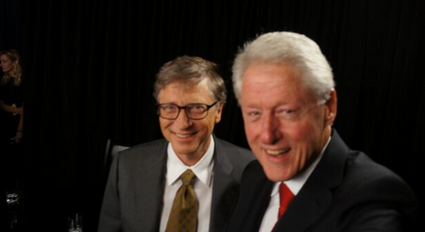
Philanthropist Bill Gates, meanwhile, named again by Forbes last week as the wealthiest man in America, urged the nonprofit community to work even harder at nonprofit/for-profit collaboration. "It's interesting that nonprofits think the for-profit guys are evil," Gates told attendees. "That attitude has blocked cooperation in the global food and drug-health sectors" and it's slowing aid to the world's hungry and dying. On the other hand, Gates said, philanthropy has a unique role in the social good sector because it is more easily able to fund the smaller, risker projects, the kind "nobody else wants to touch," Gates said.  "You don't want (as a philanthropist) to go into an area that is already well-covered." 

Cause Global has attended seven out of the nine CGI meetings in New York. This year, attendees have started to refer to themselves as being in "the social commons." As the designer, Eileen Fisher, told Cause Global today: "These are exciting times for philanthropy because the tent is expanding, big-time, and now, it seems, everyone can play." 

Among other first-day highlights:

     *Bono did a good impression of Bill Clinton, to help fill time for the former President when he ducked back stage to get his glasses prior to starting a morning panel. The video of Bono’s impression got more than 6,000 hits by day's end.  Clinton, returning to the stage with his notes, quipped that “it must be real easy to make fun of me; anybody can make fun of me.”

*    Sheryl Sandberg joined the International Monetary Fund’s Christine Lagarde and 24-year-old Khalida Brohi, founder of Sughar Women Program in Pakistan, to talk about the need to do more to empower the world’s women in poverty. “We’re going to invest in women and recognize that women need to lead,” Sandberg said of Facebook, her employer. Brohi, whose organization aims to mobilize a million women in the next 10 years, shared a phrase her father would tell her to encourage her to translate her tears into action. “Don’t cry, strategize,” Brohi said. Sandberg, meanwhile, gave a nod to Hillary Clinton, saying few have done as much for women’s empowerment as she has, stressing the double standard women face around the world with a quick poll of how many female leaders in the audience have been called “bossy.” “We teach ourselves from very young age that men should lead and women shouldn’t,” Sandberg said. “When this changes, we will have a society more productive, more peaceful and families will be happier.” Lagarde encouraged women to get into politics, citing countries like Rwanda, with a Parliament composed of two-thirds women. “In every crisis you see women rising,” Lagarde said. “When it’s messy you get the women in but when the mess is sorted, you need to keep the women in.”

*    Mo Ibrahim, the Sudanese-British mobile communications billionaire and founder of the Mo Ibrahim Foundation, blasted the West for neglecting investment in Africa, chiding Google for investing only relatively small sums and criticizing U.S.-based Internet giants for being “totally absent” from the push to provide broadband data access to some 3 billion in Africa who still don’t have it. He also rebuked stereotypes about Africa on corruption, saying that “for every corrupt leader, there are 50 corrupt business people, half of them sitting here.”  

*    Barack Obama joined Bill Clinton on stage to promote Obamacare as part of the Administration's two-week blitz to build public support for the new health insurance law. The GOP Congress is waging an effort to defund the law ahead of October 1, when new health-care exchanges will begin to enroll people for health insurance coverage that will take effect in January. “Let's face it," Obama quipped, "It's been a little political, this Obama-care thing." But Clinton was far more pointed. “What you’ve had is an unprecedented effort that you’ve seen ramp up over the last month or so in which those who have opposed the idea of universal health care in the first place have fought this thing tooth and nail through Congress and through the courts and so forth," he said. "They’re trying to scare and discourage people from getting a good deal.” Obama said those who need health insurance should tune out the naysayers. “Make your own decision about whether it’s good for you,” Obama said. “What we are confident about is that when people look and see they can get high quality, affordable health care for less than their cell phone bill, they’re going to sign up.”

*    Cherie Blair, the wife of former British Prime Minister Tony Blair and founder of the Cherie Blair Foundation of Women, conferees worked on ways to get more smartphones into people’s hands to create new opportunities for women. “Without access to mobile, so many poor have been cut out of the global economy,” Blair said. According to statistics, she said, countries that boost mobile phone access by 10 percent experience a 1.2 percent economic bump. But even the $20 needed to buy a phone is too much for the billions earning less than $2 a day, Blair said, and for women living in extreme poverty, there are often cultural barriers, too. Women in Africa and the Middle East are 23 percent less likely than men to have mobile access, she said. All told, Blair said, some 300 million women across the world could have access to mobile phones but don’t, due to cost, cultural attitudes that give men first preferences, fear of technology and environmental limitations such as a lack of electricity. Literacy creates another barrier, Blair said. 

CGI runs through Thursday. Watch this space for further highlights.

-- Marcia Stepanek

[Photography: courtesy CGI; Bill Gates and Bill Clinton, top; Bill Clinton on the CGI stage with Barack Obama, middle, and Sheryl Sandberg of Facebook, bottom]

Labels: , , , , , , , , , ,

Tuesday, June 1, 2010

Conferences for Good


Here's a quick-and-dirty list of some of the top social innovation conferences and conversations taking place this summer through December 2010.

This list is long but not complete; please share any important events that we may have overlooked.

An updated list of events will be issued in August.

Cause Marketing Forum - June 2 and 3 in Chicago

Global Youth Rework the World Summit - June 2-5 in Leksand, Sweden

Personal Democracy Forum - June 3 and 4 in NYC

Journalism That Matters - June 3-6 in Detroit

TEDxRotterdam - June 4 in Rotterdam

Fast Company's Most Creative People in Business - June 6 in NYC

Conference on Innovation Journalism - June 7-1 Palo Alto, CA

Rewire London - June 8 in London

Mashable Media Summit - June 8 in NYC

The 4th Annual Climate Change Summit 2010 - June 8 and 9 in London

Women Deliver Global Conference - June 7-9 in Washington, DC

New Media Consortium - June 9-12 in Anaheim, CA

ReadWriteWeb's Real-Time Web Summit - June 11 in NYC

Mobile Tech for Social Entrepreneurs - June 12 in London

Scaling Social Impact Conference - June 17 and 18 in NYC

Allied Media Conference - June 18-20 in Detroit

TEDxTasmania - June 18 in Launceston, Tasmania

TEDxStockholm - June 19 in Stockholm

TEDxPerth - June 21 in Perth

NetSquared Camp Portland - June 25 in Portland, Oregon

NCTech4Good Conference - June 25 in Chapel Hill, NC

Nonprofit 2.0 Unconference - June 25 in Washington, DC

TEDxMadrid - June 26 in Madrid, Spain

iSociety International Conference - June 28-30 in London

National Conference on Volunteering and Service - June 28-30 in NYC

Cloud Computing and Enterprise 2.0 World Forum - June 29-July 1 in London

Aspen Ideas Festival - July 5-11 in Aspen, CO

International Development Design Summit - July 7 in Fort Collins, CO

TEDxAbuja - July 10 in Abuja, Nigeria

TEDGlobal "And Now the Good News" Conference- July 12-16 in Oxford, UK

Cosi10: Alternative Currencies in Social Entrepreneurship - July 16-18 in Brussels

Cosi10: Change Your City Denver - July 16-18 in Denver

Cosi10: Social Innovation Online - July 16-18 in Shanghai

Netroots Nation - July 22-25 in Las Vegas

TEDxBoston - July 29 in Boston

TEDxBoulder - August 7 in Boulder

Big South Social Media Summit - August 13 in Nashville, TN

Second Life Community Convention - August 13-15 in Boston

Craigslist Foundation Boot Camp - August 14 in Berkeley, CA

Cosi10: Strategies to Foster Innovation - August 20-22 in Chicago

Cosi10: Social Enterprise in the Developing World - August 20-22 in Delhi, India

Philanthropy Australia Conference 2010 - August 31-September 1 in Melbourne

Gov2.0 Summit - September 7 and 8 in Washington, DC

CSR Asia Summit - September 14 and 15 in Hong Kong

Clinton Global Initiative - September 21-24 in NYC

CUSP Conference - September 22 and 23 in Chicago

Paris 2.0 - September 22-25 in Paris

Web of Change Conference - September 22-26 in Hollyhock, Cortes Island, British Columbia

TEDxAuckland - September 26 in Auckland, NZ

Mobile Giving Conference - September 27 and 28 in Malibu, Los Angeles

The IdeaFestival - September 29-October 2 in Louisville, KY

GoingGreen West - September in Sausalito, CA

Open Video Conference - October 1 and 2 in NYC

Social Capital Markets Conference - October 4-6 in San Francisco

BlogWorld Expo - October 14-16 in Las Vegas

Opportunity Collaboration CSR Conference - October 15-20 in Ixtapa, Mexico

Bioneers - October 15-18 in San Rafael, CA

The Feast Conference 2010 - October 15 in NYC

Blackbaud's 2010 Confeence for Nonprofits - October 20-22 in Washington, DC

Independent Sector's 2010 National Conference - October 20-22 in Atlanta

PopTech - October 20-23 in Camden, ME

Social Ventures 2010 Conference - October 21-23 in Long Beach, CA

TEDMED 2010 - October 26-29 in San Diego

Justmeans Social Media, Technology and Change Conference - November 1 in NYC

TEDxHonolulu Shift Conference - November 4 in Honolulu

Web 2.0 Summit - November 15-17 in San Francisco

European Venture Philanthropy Association - November 16 and 17 in Luxembourg

TEDxYouth Conference - November 20 worldwide

GlobalGreen Awards - November 25 in London

Medicine 2.0 - November 29 and 30 in Maastricht, The Netherlands

Conference on Philanthropy and Leadership - December 3 in Boston


We'll be updating this list again in the fall. Please share any conferences we've missed.

-- Compiled by Marcia Stepanek

(Illustration: istock.com)
(This post first appeared in Justmeans.com and appears here with permission.)

Labels: , , , , , , , , , ,

Monday, August 31, 2009

Global Swarming


In his 2003 book, Smart Mobs, futurist Howard Rheingold predicted the next social revolution would be triggered by the ubiquity of mobile phones and computers. Their ability to send and share text messages, photographs, videos, and other instant data directly, he predicted, would give people a powerful new way to organize themselves on the fly, battle social ills as they are happening and ultimately transform cultures and communities—for better or worse.

We're not there yet, but we're getting much closer. Social media, still in its infancy, is evolving—from social networking to mobilization. The rise of self-organized groups into cause-focused swarms is just beginning to chip away at the economic and political order of things. The first stirrings of this became evident last summer, during the Obama campaign; this week's mega-conference in San Francisco, SoCap09, convenes 800-plus social entrepreneurs bent on using social media to invent a new economy—one focused more directly on global problem-solving. "Americans are hungry to engage," says Jonathan Greenblatt, a SoCap presenter and president of All for Good, an open source platform that exists to press more people into service, and brands are only too happy to oblige.

The biggest driver of this shift toward mobilization, though, is not commerce—nor altruism. Historians and futurists suggest it's more about our increasing discomfort with the mass proximity we may now feel to communities and classes of people that previously lived outside our direct spheres of experience or influence. Thanks to social media, says Greenblatt, the old buffer zones of neglect or disengagement are shrinking—fast. "We have never been nor felt so adjacent to others," he told a group of online activists Friday at Mashable's Summer of Social Good conference in Manhattan. With mass globalization, we can see the same brands being advertised in central Dubai as in Manhattan; our closest neighbors are more likely now to be found online, everything can be googled, and we have never been so mobile. "There is more computing power in our Blackberries than there was in the control room in Houston that put a man on the moon," Greenblatt says.

All of this, of course, presents both opportunity and burden. "In a networked world where everyone is adjacent and everything can be known, we are seeing increasing evidence of the inequities around us," Greenblatt says. "When you are actually adjacent to these people—the have-nots (and when the have-nots know what we have)—it puts a burden on the 'haves' [in society]."

Indeed, says Greenblatt and others, we are compelled to invent new alternatives. "Twestival? What was that but a self-organized swarm?" Scott Henderson of Media Sauce told attendees at Mashable's event. "It's just the beginning." [Mark Pesce (see Collision Course) predicts a dangerous time ahead, with new, Web-strong "adhocracies" eroding—like sand against rock—our traditional systems and institutions.]

For SoCap's part, many attendees heading for San Francisco this week believe there is, already, a new "economy of integrity" in the making—fueled by social media. "It's like shoots growing out of the ground," Greenblatt says. "It's giving us different answers than the ones we've heard before to the questions we are facing" as a society. Think Zipcar, he says—the Netflix for cars. Or Living Homes, a Los Angeles-based construction business that is building homes that generate more power than they consume. Or Tom's Shoes, which will donate a pair of shoes to someone in need for every pair purchased. Or Revolution Foods, which is offering healthier meals to kids around the nation as an alternative to junk food in public schools. "This new economy of integrity is animated by these ethical brands driving values and creating values, and social media will allow this economy of integrity to take off," Greenblatt says. Social media, he says, will both "cohere this moment of opportunity and catalyze it...We have opportunities before us that were never before possible."

"Social media is not just about reading a story online and deciding whether to reddit or propeller it or digg it. This is noise. Noise. For me, social media is Wikipedia, with 10 million members all across the planet with a mission to be the repository of human knowledge, accessible to every person alive. It's Twitter and what happened in Iran. Did Twitter change the course of that election? Maybe not. But far more significantly, it changed forever how Iranians think of themselves. Twitter didn't change the outcome now... But it will."

For more on SoCap, check out this interview with Kevin Jones, a co-founder of the conference, which runs September 1-3. To follow it on Twitter, the hashtag is #SOCAP09.

—By Marcia Stepanek


(Illustration, Net Working, by Miroslaw Pieprzyk for istock.com)

Labels: , , , , , , , , , , , , ,

Tuesday, August 4, 2009

For Mom

Tuesday, January 13, 2009

Future Imperfect


A new survey of Internet experts—the third in a series by the Pew Internet & American Life Project and Elon University—has triggered a lot of debate among social media thought leaders since it was released less than a month ago. Most of the 1,200 respondents surveyed for this latest report, called The Future of the Internet III, said they expect major advances in information technology by 2020, as voice recognition improves and as the mobile phone becomes a primary device for online access and social problem-solving. But many of these same thought leaders—from the scientists and engineers who created the first Internet architecture to social commentators and advocates, corporate technology leaders, government policy strategists, and tech experts in higher education—also disagree sharply over whether the Net will, in fact, build a better world.

To get a better sense of the fault lines, Cause Global Publisher Marcia Stepanek caught up last week with survey co-author and Pew project director Lee Rainie, who also co-wrote Up for Grabs: The Future of the Internet, based on much of the center's research. What follows is an edited transcript of that conversation:

Who and what inspired you to conduct these ongoing surveys about the Internet?
Back in the late 90s, I came across a wonderful piece of scholarship by a guy named Ithiel de Sola Pool, who wrote a book called Forecasting the Telephone. Fifty years after the telephone became mass-introduced into the culture, Pool and a team of students at MIT looked at the things that were predicted about what was going to happen when the phone became widely diffused, and then at what actually happened. We’re in a position to look at the dawn of a new technology, the Internet, and to measure its social impact in real-time, as it is evolving.

What are the big themes that emerge from your latest findings?
Technologists are now very convinced that the technology, itself, will continue to improve. It’s going to get faster, better, smaller, more convenient, and more plugged into people’s everyday lives in very powerful ways. At the same time, though, they are not at all convinced that human beings will improve along with the technology. Some people think an improved Internet will encourage better human behaviors, better social interactions, and better political discourse, but there are a lot of people who now are pushing back against that, saying that even if the technology gets better, people will use it in ways that will reinforce some of the worst tendencies of human beings: they will use these new tools to act tribally and in nasty ways towards each other. There are very ambivalent feelings about whether the species is going to progress when it uses these new tools.

Many of those same experts that you interviewed also predict that the transparency the Net creates won't necessarily yield more personal integrity, social tolerance, or forgiveness. Some 56% said the potential for bigotry, hate, and other forms of intolerance may expand.
What’s very clear in the minds of a lot of these respondents is that people are good and kind to the fellow members of their tribes—but they are not good and not kind to those people who are not in the charmed circle. Respondents were making the point in their answers that human tendencies are embedded in us; they’re not going to change. Technologies, they said, can facilitate some of the darkest sides of human nature, whether it is about hate, harm and fraud, people exploiting each other, or simply just not paying a lot of attention to people who aren’t like them. In bygone days, of course, people who were not like me were people who were not of my race, or weren’t of my physical community or didn’t share my language. Now, though, the possible number of tribes to which one can belong extends well beyond classic demographics. What these experts worry about is that when we break ourselves into niches that are formed around our specific, varied interests, we have less time for other people, and less chance of discovering experiences but more opportunities for our views to be reinforced and affirmed, even if they may not be right.

Another survey finding—but one on which most respondents agreed—is that mobile devices will be the primary way people will connect to the Internet by 2020.
Wireless connectivity—mobility—is going to be much more important in the future to our online experiences than it currently is and the environment itself will become networked as objects become networked. We will be operating in a very different kind of information sphere than the one in which we now live and work. Certainly, the introduction of the iPhone and all the other companion phones now on the market have given people a taste of what the future might look like already. Bandwidth will improve, our capacity to boost stuff through the electromagnetic spectrum will get better and better. The devices that we carry around now which we now call cell phones are going to be cell phones and computers and life managers in ways that we don’t quite yet employ them—and that in less-developed parts of the world, mobile phones will offer most people a much less expensive, more efficient way to connect to the Internet. People won’t have to buy laptops or desktop computers in order to have access to all the other people and all the information that people who now have a computer now have access to. So the hope is that the rise of mobility will help a whole new cohort of people to have access to the things that people in the developed world have had for 10-15 years.

There’s been a lot of talk – particularly in the wake of Barack Obama’s effective use of social networking—that one's social capital will continue to become more critical to one's success in society and could one day become even more influential than wealth.
The experts are very interested in the subject of social capital and in the survey, they broke off into several strains on how the concept may evolve. Some experts absolutely think that the capacity of the Net to bring new people and experiences into our lives means that the volume of social capital is going to grow. There are others–guys like Barry Wellman, a sociologist at University of Toronto—who says the idea of social capital is sort of transformed by the Internet. It’s not necessarily taking place in traditional, tight-knit groups like the family or the neighborhood or even the workplace, he says. Rather, it’s more of a networked phenomenon. People can segment their lives based on their interests. I might, therefore, have one group of buddies online who share my passion for my favorite baseball team, and I might have another set of buddies online who share my passion for the dog that I own and another set of buddies who can help me with financial information, especially in hard economic times. So we’re acting like networkers now. [Wellman and I are writing a book that says just that.] Another group of respondents thinks people aren’t necessarily building extra social capital online and certainly are not reaching out to others who are not like them. In fact, many think that online, people will ever more tightly close into smaller information worlds, where the only people and information they will encounter will perfectly match up with what these people already think and believe.

And transparency will become even more uncomfortable for some?
There’s a very strong feeling of concern that this new world we’re entering is not necessarily going to be one in which people are going to have better experiences. One of the big dimensions of that dark side is that, of course, as we expose ourselves to more—and as more is known about us in this new online environment—traditional notions of reputation, power, and privacy are going to change; a lot of experts think we are not yet socially equipped to deal with that. We haven’t figured out the new norms and the new etiquette and the rules of the road for how to behave responsibly in a world where anybody who wants can ask you to be their friend and follow your profile and your comings and goings in ways they couldn’t before, when they didn’t have physical access to you. The experts we surveyed are very anxious about the ways that governments and big corporations may be able to exploit the new vulnerabilities that may be part of this new world.

(Illustration by frenta - Fotolia.com)

Labels: , , , , , , , ,

Monday, January 5, 2009

The Year Ahead


We know we're a bit late making our predictions for 2009; more than ever, it seems, people are divided over how they think social media will be used differently this year to make change in the world. We at Cause Global know it's going to be a tough year for many social advocacy groups; we're hopeful that widespread cost-cutting will help clarify what works [and what doesn't]. At the very least, results will be more critical than ever. Impact will be measured more harshly (no more anecdotes allowed) and low-cost social media will be used more widely by businesses and nonprofits, alike, to find new levels of support.

Here's some of what we forecast:

* Managing transparency will get harder. As more cash-strapped nonprofits and social change organizations use social media—successfully—to drum up new supporters and re-engage existing ones, they'll find themselves facing larger workloads amid growing demands by new members for more individualized attention and more frequent interaction. Look for new "donor relationship management" strategies and software—along with an array of new job titles [donor relationship manager, anyone?] all aimed at better handling the roars of the crowd.

* Smaller will mean better. Many more social networks will start closing their doors to the general public, opting instead to become smaller, invitation-only groups based on members' influence and thought leadership—what Chris Brogan of New Marketing Labs calls a trend towards "velvet ropes." Look for leaner and meaner social action networks—action-oriented, semi-gated communities organized around specific projects. Members will, increasingly, be recruited based on the skill-sets the group needs to become more effective. Think grassroots re-organization, online, of what had been brick-and-mortar—sans the top-down, hierarchical org charts of older groups that tended to hinder teamwork, rapid response, and innovation.

* De-friending will become de rigueur. The social graph—not just who you know but who you're connected to based on your interests, location, your favorite causes, your profession, and so on—will shrink. Look for people to start dropping out of online social networks or becoming more selective about who they invite into their own. Increasingly, it's not how many people you can recruit to the cause. Now it's more about who can be effective that matters. Social capital—one's individual networking clout or a group's cache among thought leaders and coolhunters—will become as (or even more) important as fundraising savvy when it comes to effective social problem-solving. In the early days of e-commerce, companies began using the power of the Web to learn which customers cost them the most, then "fired" the most expensive. As social networks continue to reshape the philanthropy space, also look for more cause groups to start proactively shedding supporters who no longer participate with their dollars, time, or connections—or who fail to get results or become too demanding online. We also predict a surge in online services aimed at helping groups and individuals update, downsize, and more effectively manage their "friends" lists.

*Flash causes will proliferate. The convergence of mobile and social media will play an increasingly important role in social problem-solving, making it possible, instantly, (read cheaply) to organize, raise money, or gather attention online. Look for more on-the-fly, online "swarms" to be organized at home and abroad this year to express rapid dissent or support, or drum up volunteer aid to individuals or organizations in a heartbeat—depending on what's happening now.

* Twitter will emerge as a top new tool for social change—that is, of course, if it can tackle a series of security issues that hit the free social messaging service again today. [For more about today's Twitter hackers, see this post on the PC World blog.] HubSpot's recent State of the Twittersphere Report estimates that there are some 5 million people in the Twitter community, and that it is growing by some 10,000 new accounts per day. Key to more growth will be the types of conversations the community will have; we believe more of the tweet-stream will become cause-focused as Twitter integrates a search function—and as mobile, cause-action groups wrack up more successes using Twitter as a "citizen watch" or group-protection device in dangerous geographical and political areas. [Check out HarassMap, which enables women in the Dar El Salaam neighborhood of Cairo to anonymously report incidences of sexual harassment as soon as they happen, using a simple text message from their mobile phones. Look for Twitterized versions in China, Japan, and the United States in 2009.] Twitter also will help more groups pass or tank controversial legislation, educate citizens on the fly against public health dangers, and raise fast cash for the needy. [For more on this, check out EpicChange.org's recent Tweetsgiving campaign, which raised $10,000 in 48 hours to build a classroom in Tanzania.] We also see Twitter becoming an even more popular tool for citizen-whistleblowers and journalists of all stripes.

* More companies will get social. The sputtering economy will push more companies and business interests bent on social purpose into the social media space. Blogger Ann Handley says "dwindling budgets (will) suddenly make low-cost social media look like the pretty girl at the ball." We also predict more CEOs will attempt to harness the social Web to promote themselves and their company's brand values online—as well as push for increasingly sophisticated communications strategies to keep some things out of the digital fishbowl, but successful implementation of either will be spotty.

*Impact-measurement will go micro. Cause-wired activists will devise new ways to micro-measure donor impact to keep supporters feeling more continuously engaged, online and off. A new survey from the Pew Internet & American Life project shows people expect the level of online engagement they experienced with President-elect Obama during the campaign to continue; since the election, social media experts agree that cause-wired donors and supporters of all social initiatives need now to be continuously reassured by the organizations and people they patronize that they are making a difference. While it's somewhat easier to measure progress in a political campaign by a candidate's standing in the polls or how many primaries he or she has won, it's harder to measure donor impact on, say, the alleviation of poverty. Look for major new ways by those in hard-hit social sectors to measure small [or minor] progress. We also predict an increase in the use of rapid-response teams by social action organizations expanding their activities online. Watch for nonprofit fundraising executives to start de-emphasizing traditional solicitation strategies in favor of impact measurement marketing and community organizing.

*Video games will find broader acceptance as social problem-solving tools. The serious games movement will make major strides this year using game technology to raise awareness of social problems, from the Israeli-Palestinian conflict, poverty, global warming, and the genocide in Darfur. Still skeptical? Know that Food Force, a game that teaches children about hunger, has been downloaded more than 4 million times; Darfur is Dying has been played by some 3 million people and has generated what GamesforChange founder Suzanne Seggerman says are 50,000 real-world actions [including letters to members of Congress]; Ayiti: The Cost of Life, a game about poverty in Haiti created with inner-city youth in New York, is being played by more than 2 million young people around the world. Look for newer games and wider use of them in the classroom and by more causes to reach new supporters, at home and abroad.

And that's just for starters. For JD Lasica's annual list of the coming year's top social media events, click HERE. And elsewhere on the Web, here's one of our favorite musings about the year ahead, from Sean Stannard-Stockton. His recent New Year's Resolution post on his terrific blog, Tactical Philanthropy, urges those in the philanthropy field using social media this year to "make better mistakes tomorrow." Stannard-Stockton writes:

"The field of philanthropy is a bit like an uncharted wilderness...As a field, we still have an aversion to admitting that philanthropy ever fails at anything. But as everyone knows, admitting a problem is the first step to fixing it...Rather than resolve that next year we will do more, do better, do faster, let us humbly resolve that in 2009 we will make better mistakes than we did in 2008, mistakes that are a result of daring, well-informed risks—mistakes that demonstrate our willingness to embrace the unknown and try things that other people tell us can't be done. Let's make mistakes that we can be proud of..."

What are some of your predictions for the year ahead? Go ahead, tell us what we missed.

(Illustration by Miroslaw Pieprzyk for istock.com)

Labels: , , , , , , , , , , , ,

Wednesday, November 5, 2008

The Secret Sauce

(PHOTO: Gray's Papaya hot dog stand, 72nd & Broadway, Manhattan, 11-5-08)

Both Barack Obama and John McCain used the Internet to reach voters this election but Obama mastered the medium early "and exploited it to the hilt," says Andrew Rasiej, founder of Personal Democracy Forum and co-founder of techPresident.com. There's no question: Election 2008 will go down in the books as the first nationwide political contest for social capital.

In an interview today with Cause Global, Rasiej credits Team Obama's "culture of belief in the Internet" for building a movement for change among ordinary citizens energized via social media into a community of engaged, viral marketers for Obama's campaign. The Web strategy, says Rasiej, was critical in helping the Illinois senator win the White House.

(Indeed, an analysis of the vote today by the Pew Research Center for the People & the Press says that without a doubt, "the overwhelming backing of younger voters was a critical factor in Obama's victory." Obama drew two-thirds—or 66%—of the vote among those younger than age 30, Pew reports. In addition, Trendrr, an online statistics mashup tool, shows Obama had a clear lead in using social media to connect to his audience, as well as an overall lead in winning the attention of the blogosphere as a whole. On social networks, Trendrr says, Obama held a big lead over McCain, with 844,927 MySpace friends compared with McCain's 219,404. Between November 3 and 4 (election day) alone, Obama gained more than 10,000 new friends, while McCain only gained about 964. On Twitter, says ReadWriteWeb, Obama gained 2,865 new followers between November 3 and 4, for a total of 118,107, while John McCain's Twitter account only had 4,942 followers in total.)

Team Obama also saw an opportunity in exploiting the flagging credibility of mainstream media—again chiefly among younger voters. "[Obama's team] leap-frogged the mainstream media by producing content that they knew would get distributed for them [via social media] once it was uploaded," techPresident's Rasiej said. Especially in the final days before November 4, Obama's campaign sent daily emails and text-messages directly to supporters, urging them to vote with friends, participate in phone drives, and volunteer at campaign events—even offering up a contest in which last-minute donors could be selected to attend Obama's election-night party in Chicago. Says Rasiej:


Going forward, social capital will become increasingly more valuable than fund-raising dollars...The political power of the future will be a question of how robust and engaged a political entity's [social] network will be"—not just how much money a candidate has in the bank or how many friends he/she has in Congress.

A key lesson for cause activists everywhere from the election? Two quick reactions surface among nonprofit leaders this week. The first—be consistent with your message and broadcast it widely and continuously through the use of social media. Second? Create a movement around your cause, not just awareness for it. "Social media build powerful movements—but only when the cause is powerful and moving," says Melissa Berman, President and CEO of Rockefeller Philanthropy Advisors. "Even the most powerful social media can't build a movement if people aren't poised to sign on. What's remarkable about social media is how quickly they can forge the links that create a movement—when the message is right."

Adds Rasiej: "What we really saw here [with Obama's Internet strategy] is the reaction of a new network publicsphere—or, you could argue, a whole new political media ecology, a generational shift that's empowering an entirely new human experience of participatory, civic engagement. It's taking our former notion of civic engagement and redefining it as something that should be continuously very relevant to people's lives."

For more on the lessons for nonprofits in Election 2008, check out Tom Watson's post today at onPhilanthropy.com, where he is a consultant and writer. Watson is also the author of the forthcoming CauseWired, a book about the use of social media in advocacy.

Writes Watson: "While there is a temptation among those who track causes and online fundraising to separate political organizing from philanthropy, I think that's a mistake - it's wishing for a division that the audience simply won't tolerate going forward. It's like hoping that a print classified operation will continue to grow during the age of Craigslist. Young people don't separate their causes into neat little boxes labeled politics and charity. They simply respond to what moves them, what their friends recommend, what they believe might change the world.

"...It's no accident that my nonprofit clients are asking about websites like Barack Obama's. The [old] order is rapidly fading."

(Photo by Marcia Stepanek)

Labels: , , , , , , , , , ,