Wednesday, September 25, 2013

#CGI2013: Brokering for Good


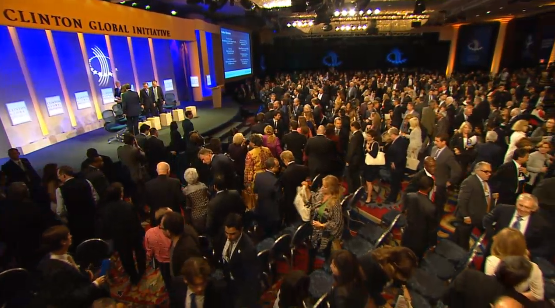
Once again this year, Bill Clinton is hosting his annual power-philanthropy conference in New York. His annual Clinton Global Initiative this week marks its ninth year of channeling mega-wealth to social innovation projects around the world. Cool, exclusive, wonky and celebrity-studded, this year's gathering, like others, is also ferreting out new strains of global injustice and dousing them with nonpartisan outpourings of media, money, PowerPoints, and hard work from truly committed people on the ground.

But it is Bill Clinton’s social capital – his remarkable, ongoing ability to forge unlikely alliances among corporate executives, NGO leaders, celebrities, and government officials -- that distinguishes CGI as a game-changer in its own right. "The world's problems are so big, philanthropy cannot do it alone," Clinton said again this year in opening remarks. "We need everyone at the table." Indeed, CGI has done much over the past decade to help erode some of the traditional cultural barriers to business collaboration within the American philanthropy establishment, and has helped to focus it more acutely on social impact. Before CGI, there were no other high-profile, independent forums devoted to channeling philanthropic resources into specific, cross-sector giving projects tied to measurable results. Today? According to the Clinton Foundation's website, CGI members have so far made more than 2,300 philanthropic commitments which have improved the lives of over 400 million people in more than 180 countries. When fully funded and implemented, Clinton says, these commitments will be valued at more than $73.1 billion. 

To be sure, not all of the projects spawned at CGI have succeeded; not everyone gets invited back. [CGI rules require philanthropic commitments that can prove impact from one year to the next.] "Solutions are only effective if they are implemented," Clinton told Time this week. And not everyone thinks CGI is inclusive enough, saying it's still mostly centered around the 1% and not the 99% who are innovating the Internet and digital social networks to create mass philanthropy models capable of channeling more funds directly (and more quickly) to those in need.

Still, more than 1,000 large companies, celebrities, governments and big NGOs are represented here, roaming the halls and small ballrooms of the Midtown Sheraton with an enthusiasm for proving the nonprofit/for-profit collaboration model can work to more efficiently and quickly get money to those in need. During opening day talks, Bono talked about how, when he took his fight against AIDS in Africa to American and European consumers with his One (RED) campaign, he was able to raise $200 million for the cause, while Sheryl Sandberg of Facebook touted the recent launch of Internet.org, a Facebook-led initiative to bring connectivity to billions of women in poverty living without it.

["U.S. lawmakers would tell us we're not feeling the (AIDs) issue at home," Bono told CGI attendees, sharing that his Global Fund to fight AIDS was flagging until he harnessed it to consumer market forces. "So we went straight to the people, to the shopping malls and Gap stores, and through the marketplace, RED started to turn up the heat on the issue. The marketplace is where the real money lies. Do you want a blue iPod or a red one? Kids started choosing red because they knew that purchase would count."]

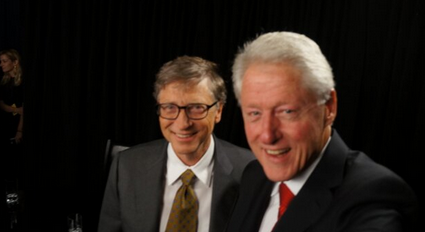
Philanthropist Bill Gates, meanwhile, named again by Forbes last week as the wealthiest man in America, urged the nonprofit community to work even harder at nonprofit/for-profit collaboration. "It's interesting that nonprofits think the for-profit guys are evil," Gates told attendees. "That attitude has blocked cooperation in the global food and drug-health sectors" and it's slowing aid to the world's hungry and dying. On the other hand, Gates said, philanthropy has a unique role in the social good sector because it is more easily able to fund the smaller, risker projects, the kind "nobody else wants to touch," Gates said.  "You don't want (as a philanthropist) to go into an area that is already well-covered." 

Cause Global has attended seven out of the nine CGI meetings in New York. This year, attendees have started to refer to themselves as being in "the social commons." As the designer, Eileen Fisher, told Cause Global today: "These are exciting times for philanthropy because the tent is expanding, big-time, and now, it seems, everyone can play." 

Among other first-day highlights:

     *Bono did a good impression of Bill Clinton, to help fill time for the former President when he ducked back stage to get his glasses prior to starting a morning panel. The video of Bono’s impression got more than 6,000 hits by day's end.  Clinton, returning to the stage with his notes, quipped that “it must be real easy to make fun of me; anybody can make fun of me.”

   Sheryl Sandberg joined the International Monetary Fund’s Christine Lagarde and 24-year-old Khalida Brohi, founder of Sughar Women Program in Pakistan, to talk about the need to do more to empower the world’s women in poverty. “We’re going to invest in women and recognize that women need to lead,” Sandberg said of Facebook, her employer. Brohi, whose organization aims to mobilize a million women in the next 10 years, shared a phrase her father would tell her to encourage her to translate her tears into action. “Don’t cry, strategize,” Brohi said. Sandberg, meanwhile, gave a nod to Hillary Clinton, saying few have done as much for women’s empowerment as she has, stressing the double standard women face around the world with a quick poll of how many female leaders in the audience have been called “bossy.” “We teach ourselves from very young age that men should lead and women shouldn’t,” Sandberg said. “When this changes, we will have a society more productive, more peaceful and families will be happier.” Lagarde encouraged women to get into politics, citing countries like Rwanda, with a Parliament composed of two-thirds women. “In every crisis you see women rising,” Lagarde said. “When it’s messy you get the women in but when the mess is sorted, you need to keep the women in.”

   Mo Ibrahim, the Sudanese-British mobile communications billionaire and founder of the Mo Ibrahim Foundation, blasted the West for neglecting investment in Africa, chiding Google for investing only relatively small sums and criticizing U.S.-based Internet giants for being “totally absent” from the push to provide broadband data access to some 3 billion in Africa who still don’t have it. He also rebuked stereotypes about Africa on corruption, saying that “for every corrupt leader, there are 50 corrupt business people, half of them sitting here.”  

*    Barack Obama joined Bill Clinton on stage to promote Obamacare as part of the Administration's two-week blitz to build public support for the new health insurance law. The GOP Congress is waging an effort to defund the law ahead of October 1, when new health-care exchanges will begin to enroll people for health insurance coverage that will take effect in January. “Let's face it," Obama quipped, "It's been a little political, this Obama-care thing." But Clinton was far more pointed. “What you’ve had is an unprecedented effort that you’ve seen ramp up over the last month or so in which those who have opposed the idea of universal health care in the first place have fought this thing tooth and nail through Congress and through the courts and so forth," he said. "They’re trying to scare and discourage people from getting a good deal.” Obama said those who need health insurance should tune out the naysayers. “Make your own decision about whether it’s good for you,” Obama said. “What we are confident about is that when people look and see they can get high quality, affordable health care for less than their cell phone bill, they’re going to sign up.”

   Cherie Blair, the wife of former British Prime Minister Tony Blair and founder of the Cherie Blair Foundation of Women, conferees worked on ways to get more smartphones into people’s hands to create new opportunities for women. “Without access to mobile, so many poor have been cut out of the global economy,” Blair said. According to statistics, she said, countries that boost mobile phone access by 10 percent experience a 1.2 percent economic bump. But even the $20 needed to buy a phone is too much for the billions earning less than $2 a day, Blair said, and for women living in extreme poverty, there are often cultural barriers, too. Women in Africa and the Middle East are 23 percent less likely than men to have mobile access, she said. All told, Blair said, some 300 million women across the world could have access to mobile phones but don’t, due to cost, cultural attitudes that give men first preferences, fear of technology and environmental limitations such as a lack of electricity. Literacy creates another barrier, Blair said. 

CGI runs through Thursday. Watch this space for further highlights.

-- Marcia Stepanek

[Photography: courtesy CGI; Bill Gates and Bill Clinton, top; Bill Clinton on the CGI stage with Barack Obama, middle, and Sheryl Sandberg of Facebook, bottom]

Labels: , , , , , , , , , ,

Monday, September 24, 2012

Heat


Bill Clinton's eighth annual, star-studded thinkfest on philanthropy, technology, social enterprise and cause advocacy — the Clinton Global Initiative 2012 — kicked off Sunday in Manhattan with a call to delegates to step up their impact on a global scale, to "design your actions in advance to make it more likely they will succeed."

In opening remarks decidedly less optimistic than in previous years, Clinton signaled impatience. "I want to say my standard broken record," he told attendeees, "that cooperation works better than conflict. I say that not for the purpose of avoiding disagreement—there will be a lot of those here—but the point is to act." [At one point during an opening panel with U.N. Secretary-General Ban Ki-moon, Queen Rania of Jordan and World Bank President Jim Yong Kim, Clinton challenged Wal-Mart President and CEO Michael Duke to open a store in Libya and create jobs in some of the world's crisis hotspots. Duke responded that his company already operates in "high-risk areas" but not yet in Tripoli, the Libyan capital.]

"How come we can never seem to take solutions to problems to scale?" Clinton asked delegates and panelists, alike, alluding to the theme of this year's conference, Design for Impact. Since the first CGI conference in 2005, delegates have pledged millions to create new projects to ease hunger, stem environmental damage, and lift thousands of people out of poverty. But Clinton urged delegates to now act more collaboratively, and quickly, to translate what works in their individual projects into larger, cross-border deployments. "There are all of these places, all over the world, and they're all so different. How can we take what we know to work, and scale it quicker?" Clinton asked. "...How can countries come together amid all these cuts in foreign assistance? How can we plan and execute our way out of the current economic crisis (globally) without backsliding on all of these humanitarian goals?"

"If we do not deeply understand the communities we are trying to serve, we cannot design causes for impact." -- IDEA CEO Tim Brown

This is the fifth consecutive CGI that Cause Global has attended; the crowd at the New York Sheraton Hotel in the heart of midtown Manhattan is, once again, a testament to Clinton's continuing clout on the world stage, with appearances scheduled for Tuesday by both Governor Mitt Romney and President Barack Obama, the new leaders of Egypt and Libya (attending amid the opening of this year's United Nations' General Assembly across town], and a blue-chip roster of bold-faced names from the worlds of media, business, policy think tanks and entertainment, including wellbeing guru Deepak Chopra, Actors Michael Douglas, Forrest Whitaker and Geena Davis, Newsweek/Daily Beast Editor-in-Chief Tina Brown, fashion designer Donna Karan, Council on Foreign Relations Co-chair and former Clinton Treasury Secretary Robert Rubin, Barbra Streisand, Loew's Hotels CEO Jonathan Tisch, and philanthropist Eli Broad.

Much of the program will be unfolding during simultaneous break-out sessions and delegate design-for-impact workshops taking place on Monday and Tuesday. Some of the sessions will be livestreamed over the Web. Cause Global will be tweeting from the floor and during some of the breakout sessions. You can follow our CGI tweets @CauseGlobal throughout.

[The 2012 Social Good Summit, a separate conference occuring simultaneously across town, also is exploring impact, but mostly through the use of social media for cross-community action. Cause Global also is covering that conference, sponsored by the United Nations Foundation, Mashable, the 92Y, Ericcson and the Gates Foundation. Watch this space for separate posts.]

To view Sunday's opening plenary session of CGI, a conversation between Bill Clinton and global heads of state, click HERE. In that conversation, United Nations Secretary General Ban Ki-moon , alluding indirectly to the civil war in Syria, issued a "call for alarm" by world leaders and, alluding indirectly to Syria's civil war, urged more collaborative political leadership across the world. His remarks are excerpted, below:

"I'm going to sound the alarm to all leaders for more leadership. We are living in an era of insecurity, injustice, inequality, and intolerance. I want to emphasize that political leadership is needed. This is a collective responsibility of all of our leaders at this time in our history.  I was just in Srebrenica, a place that may be the most difficult place to visit for any Secretary General of the United Nations. It was most humbling, sad, and troubling to realize the international community failed to protect the lives of many in the civilian popultion. We could have done that. We could have done it if there was a very clear, strong political will. More than 8,000 boys and men were murdered in just three days (in July 1995). Why and for what? In Rwanda, hundreds of thousands were killed in the span of a year. Why? Because we lacked the political will to protect the civilian population. We must respect human dignity ... and we have to set this world right, put this world on the right track for humanity. That is what the UN will continue to try to do but we need all of you to get engaged, as we can't do it alone." 

Among other first-day highlights:

* World Bank President Jim Yong Kim acknowledged that multilateral institutions, including his own, "are not very good nor effective at capturing knowledge of what works and spreading it to others."  Within the multilateral system, he said, "there are so many good examples of what works, yet we don't capture them, codify them, or duplicate them." He also said that global institutions have been "very bad at pulling fragile states out of instability. We do know that one way to do that is to create jobs. What do we know about creating jobs in fragile environments? Well, the folks in Mozambique and Rwanda have done pretty well at it. What are the lessons? The World Bank is filled with master practioners but we haven't been systematic about capturing that knowledge and spreading it effectively." He said his precedessor, James Wolfensohn, often talked about transforming the World Bank into a 'knowledge bank.' "But what does that mean?" Kim asked. "Does it mean that we send everyone our studies and our reports? Instead, we need to turn the World Bank into a solutions bank, and develop a science of delivery and execution around social goals. Solutions in one place may not work in another, but if you have a commitment to continously learn from what people are doing, there is a possibility we can contribute to stability everywhere."

* IDEO CEO Tim Brown spoke with Fast Company editor Linda Tischler, telling her that global changemakers need to learn about local culture and local markets before they can be effective scaling their designs for change, whether for new products or new social problem-solving. "If we do not deeply understand the communities we are trying to serve, we cannot design causes for impact," he said. "You need to be on the ground and to understand the local cultures. You have to be able to connect to the people for whom your designs are meant to serve."

* During a private dinner panel hosted by 10,000 Women, the Goldman Sachs-backed women's empowerment initiative, Liberian business owner Kabeh Sumbo told invitees that "if you train one woman like the 10,000 Women trained me, you train a nation." The panel, moderated by Newsweek and The Daily Beast Editor-in-Chief Tina Brown, was joined by Liberian President Ellen Johnson Sirleaf, U.S. Ambassador-at-Large Melanne Verveer, Nobel Peace Prize winner Leymah Gbowee and New York Times columnist Nicholas Kristof. Kristof said there is mounting evidence that small businesses run by women can dramatically influence local communities and "lift nations" over time. But Sirleaf acknowledged that not every woman who wants to start a company will be a success. "Kabeh is an exception," Sirleaf acknowledged. Her administration has given Sumbo 100 acres of farmland to help her grow her palm-oil business, which Sumbo began with one container of olive oil and a microfinance loan. Sirleaf told Sumbo Sunday night, "Kabeh, your 100 acres of land awaits you. I have chosen to put it in my own county so I will be able to monitor you first-hand."

The conference continues through Tuesday. Secretary of State Hillary Clinton is to address CGI Monday morning.

Watch this space for continuing highlights.

-- Marcia Stepanek

[Photographs courtesy CGI and CauseGlobal staff]


Labels: , , , , , , , ,

Wednesday, September 22, 2010

Girl Talk


At this year's Clinton Global Initiative, there is a big emphasis on creating new cross-sector initiatives to help empower women and girls around the world. Social innovators attending the conference generally credit Hillary Clinton for getting this issue on the agenda. But make no mistake. Bill Clinton wanted it there, too -- and took a few minutes Tuesday to justify the choice to global CGI delegates. Here's a transcript of Clinton's remarks, issued at the end of a panel talk on Tuesday. [The speech still has many delegates buzzing.]

"A widespread belief exists in many cultures that women are property. (Consider) the rise of sexual violence (against women) in the camps in Haiti. I know many people don't think that violence is much higher than it was on the streets of Port au Prince before the earthquake. But is a lot of this (violence occurring) just because of physical weakness or is there a widespread belief deep down inside in many cultures that men should have more significance in society than women? We haven't talked about that (yet at CGI). We always talk about fixes and policies, and I like that (as we) can't plumb the depths of the human psyche here. But it's worth your thinking about it. Why, in 2010, do we even have to have these sessions (at CGI) on women and girls? Why? I'll never forget when Hillary and I were in Africa one time and Hillary dragged me into this beautiful hotel to meet with these women who had come in from the country to talk about female genital mutilation and the small, hearty cadre of men who were there to support them. These guys were really at risk of being ridiculed back home for standing up for what today seems like the most normal thing in the world.

I'm just saying all of this because I think there is something that we all can do about (women's empowerment) and I think we forget this at our peril. There is still a whole set of complicated assumptions that rifle throughout the world. We have the
Crown Prince here from Bahrain and one of the best things he's done to help women and girls is not directly related to women and girls. He established a commission to make economic policy for his country that was half-government, half private sector, where women were fully represented. He didn't have to say anything about women and girls. People saw the picture. (applause)

There are still a lot of places in this world where women are part-human and part-property and where men define their meaning in life partly by their intrinsic merit and partly by their ability, no matter what else is going on in their lives, to control somebody else. And I think all of us can speak about that and challenge (other) people to think about what is truly going on in their minds and hearts to make this (something that is) still a problem in the world, and which requires us to come here (to CGI) and have a separate section (of discussion) about it."

(Photo: Xhosa family at home in Mthatha, South Africa by Shaun Lombard for istock.com)

Labels: , ,

Tuesday, September 21, 2010

Heat


This week, for the sixth year in a row, the Sheraton hotel in midtown Manhattan has been transformed into schmooze central for more than 1,300 heads of state, 600 business leaders, and 500 NGO leaders from 90 countries on six continents. The invitation-only crowd is attending Bill Clinton's annual three-day Clinton Global Initiative to pledge their time, money and vast social networks to commit global problem-solving. But this year, the mood of the delegates is far less competitive: there are far fewer vanity causes, far fewer self-congratulatory press conferences; less pitching of the resident press for an easy story.

Sure, there are the usual numbers of Hollywood celebrities and big-name philanthropists air-kissing each other near the elevators. [Demi Moore and Ashton Kutcher are here and so is Jim Carrey.] But it's almost as if everyone got a memo asking them to keep the big vision talk to a minimum, skip the grandstanding, and collaborate with each other to bridge the gap between all the talk about change and real impact. [The irony isn't lost on those who recall Clinton's famous political mantra -- "it's the economy, stupid" -- from his days in the White House. For Clinton, it is still all about the economy, stupid. Invest in the cause of women and girls? Sure -- because it's a cost-effective way to create jobs and fight poverty.]

To be sure, CGI in its sixth year is no longer a former President's bid to stay relevant. It has grown into a potent new force in today's Web-driven world of collaborative advocacy -- aggregating the leaders of many traditional charities and governments and philanthropies to up the ante on social change; to do together what each institution can no longer do so well on its own. "The world is so interdependent that the struggle of the 21 century will be a complicated, ongoing blizzard of conflicts between the positive and negative forces of interdependency," Clinton told conferees in opening remarks. "The limits to what the private sector can produce and what government can provide are everywhere so evident, that all of us are going to need to do much more to fill the gaps. We must all start to figure out how to do everything [including philanthropy] less expensively and better."

It's a tall order. But attendees are required to pledge money and create specific projects that will result in measured improvements for those in need. Delegates who fail to make progress on their projects from one year to the next are not invited back. "I hope when we come out of this meeting later this week," Clinton told delegates, "that every one of you will have a clearer idea about how you can best use your resources in this climate to promote more economic growth in all the countries represented here." Translated? Only results matter here.

Among highlights so far:

* A sequel to the award-winning, 2008 cause video, The Girl Effect, had its world premiere on CGI's main stage. Called The Girl Effect: The Clock is Ticking, the animated video focuses on the impact of intervention in the life of a girl at age 12. The original video -- which won awards for impact -- makes the point that improving the lives of women and girls can boost the quality of life on the planet. To view the just-released sequel, click here.

* A panel moderated by The Daily Beast Founder Tina Brown shared highly descriptive reports from the Congo and flood-ravaged Pakistan of new threats to the public safety of women and girls that panelists said is impeding economic progress and recovery in those regions. ActressAshley Judd, on the board of Population Services International, said that in the Congo, there is virtually no family planning, with some 9 million unintended pregnancies per year. A large majority of those pregnancies, Judd said, are the result of gang rapes by armed militia amid civil strife in the region. Richard Holbrooke, special representative for Afghanistan and Pakistan in the Obama Administration, said that "if you want to fix the problem of women in these areas you have to address the men." Failure to do so, he said, "is the single biggest failure of all of our programs. If you don't sit down with the men and hammer them, you are not going to get anywhere." Brown added the following comment:
"It's very easy to look around and to start to kid ourselves that there's some kind of great tipping point going on about a global focus on the affairs of women. Yes, thanks to CGI, there is an increased global focus and an intensity building. But we are so far from where we need to be and what we need to be doing. More women were killed in the last century just for being women than all the men killed in the wars of the 20th century. At this moment, a woman is being raped fetching water, a girl is being forced into prostitution, a husband is beating his wife, a girl is being denied an education, and I won't even go into the honor killings and the medieval horror show that is raging (in the Middle East) and is still going on."

* Richard Holbrooke, the special representative for Pakistan in the Obama Administration, said the recent flooding in that country now covers an area the size of Italy and has put a "staggering issue into our hands as humanitarians." As the water starts to recede and flows out to the Indian Ocean, Holbrooke told an afternoon panel, "families will start to race back to their homes, except that there are no homes left, schools have been washed away, roads are gone, every bridge is out and $1 billion in aid has already been spent. So what's going to happen is that kids are going to start drinking stagnant water, they will get dysentery, and cholera will spread and everything we in this room are trying to do for women and girls is going to face an explosion of new problems. Our first issue now in Pakistan is humanitarian. Women and children have to go home, (away from the camps, which are dangerous). We've got to focus first on rescue, recovery and preventing the spread of disease."

* Google Chairman and CEO Eric Schmidt, when asked by Bill Clinton what "the tech revolution can do for poor people," said the distribution and widespread use of mobile phones can "make the world one." Schmidt added, as follows:
"If I were to have to build a country or help one that is recovering from a war, I'd start with empowering citizens with (mobile) devices. They can be sourced globally, and all you have to do is put up towers and make them work. Once you do, suddenly, every one has access to the world's information and you can begin to have small business and start to participate in global conversations. Further, where people once were being fed the wrong information by local charlatans, they can now get another viewpoint. Over and over again this development of mobile devices is the single most important thing the tech sector has done because it allows the world to be one. This is technology that everyone will have and that everyone can access."

* Bill Clinton said his conference is partly focused on women because they're not considered equal to men in many parts of the world. Clinton then gave a small, impromptu speech to conferees on the plight of women and girls, as follows:
"...A widespread belief exists in many cultures that women are property. (Consider) the rise of sexual violence (against women) in the camps in Haiti. I know many people don't think (that violence) is much higher than it was on the streets of Port au Prince before the earthquake. But is a lot of this (violence occuring) just because of physical weakness or is there a widespread belief deep down inside in many cultures that men should have more significance in society than women? We haven't talked about that. We always talk about fixes and policies, and I like that (as we) can't plumb the depths of the human psyche here. But it's worth your thinking about it.
Why, in 2010, do we even have to have these sessions (at CGI) on women and girls? Why? I'll never forget when Hillary and I were in Africa one time and Hillary dragged me into this beautiful hotel to meet with these women who had come in from the country to talk about female genital mutilation (with) the small, hearty cadre of men who were there to support them. (I remember thinking how) these guys were really at risk of being ridiculed back home for standing up for what today seems like the most normal thing in the world.
I'm just saying all of this because I think there is something that we all can do about (women's empowerment) and I think we forget this at our peril. There is still a whole set of complicated assumptions that rifle throughout the world. We have the crown prince here from Bahrain and one of the best things he's done to help women and girls is not directly related to women and girls. He established a commission to make economic policy for his country that was half government, half private sector, where women were fully represented. He didn't have to say anything about women and girls. People saw the picture. (applause)
...There are still a lot of places in this world where women are part human and part property and where men define their meaning in life partly by their intrinsic merit and partly by their ability, no matter what else is going on in their lives, to control somebody else. And I think all of us can speak about that and challenge people to think about what is truly going on in their minds and hearts to make this (something that is) still a problem in the world -- and that requires us to come here and have a separate section (of discussion) on it. (applause)"

* Richard Branson, the billionaire founder of the Virgin Group, announced a new philanthropic venture, Enterprise Zimbabwe, to connect philanthropists and commercial investors with "safe" business and social development opportunities in the African nation. Zimbabwe has struggled to attract foreign aid and investment because of President Robert Mugabe's policies, and talks to improve Zimbabwe's ties with the European Union have stalled over slow political reforms in Harare. "Zimbabwe is a magnificent country that has had a really rough few years," Branson told a breakout session on investment at the conference. He urged his fellow philanthropists to "get off the sidelines and invest" in Zimbabwe, because "either the world can continue to wait and see and not invest in it, or the world can help Prime Minister Morgan Tsvangirai and the coalition government get Zimbabwe back on its feet." Branson added: "Zimbabwe, of all the African countries, has got the best chance of getting back ... it just needs a bit of help being kick-started." The idea behind Enterprise Zimbabwe, Branson says, is to create "a sort of safe haven for people to invest through." Enterprise Zimbabwe is a project of Branson's Virgin Unite, the philanthropy arm of his Virgin business empire; Humanity United (run by Pam Omidyar, wife of eBay founder Pierre Omidyar), and The Nduna Foundation.

* Secretary of State Hillary Clinton announced a new public-private partnership led by the United Nations Foundation to provide women around the world with clean, efficient and affordable stoves. "People have cooked over open fires and dirty stoves for all of human history but the simple fact is, they are slowly killing millions of people and polluting the environment," Clinton said, announcing the Global Alliance for Clean Cookstoves. About half the world's population relies on indoor fires and inefficient cookstoves to prepare daily meals, she said, and it causes health problems, as well as forces many women to walk for hours to find cooking fuel -- time that could be spent on education or self-employment. "The food they cook is different on every continent, but the air they breathe is shockingly similar: a toxic mix of chemicals released by burning wood or other solid fuel that can reach 200 times the amount that our EPA considers safe for breathing," Clinton added. "The World Health Organization considers smoke from dirty stoves to be one of the five most serious health risks in poor, developing countries. Nearly 2 million people die from its effects each year, more than twice the number from malaria." The goal of the Alliance is for 100 million homes to adopt clean and efficient stoves and fuels by 2020. The group will work in cooperation with other leading non-profits, foundations, academic institutions and corporate leaders and governments to spur production, distribution and use of clean cookstoves in the developing world.

CGI continues through Friday with further sessions on social enteprise and social investment. Watch this space for updates.

--Marcia Stepanek

(Photo, above, by M&H Sheppard for istock.com)

Labels: , , , , , , , ,

Sunday, May 16, 2010

Summit Series 2010


This year's four-day Summit Series conference -- 24-year-old social entrepreneur Elliott Bisnow's invitation-only, GenY-focused, $3,500-per-head networking event for under-40 social entrepreneurs that ends today in Washington -- has once again lived up to its hype as one of social enterprise's newest gatherings-to-watch.

The New York Times described the first two national Summit Series events, in 2008 and 2009, as "MTV meets Davos" -- and this year's mostly Millennial gathering stayed true to form, with tracks on innovation, business, altruism, personal growth, arts and revelry (no kidding). Many of the estimated 650 CEOs, authors and start-up founders in attendance, some clad in T-shirts and Vans, used MingleSticks along with serial-texting and power-pitch networking to keep pace with who was who among them.

One attendee, consultant Pat Kane, the author of The Play Ethic, blogged that his "average Summit Series day this year has been something like a 360-degree civilizational radar search to find almost every possible opportunity for American enterprise ..." On Friday, he said, "I was faced with three possible morning sessions: one called Memoirs of a Boy Soldier, where the extraordinary Ishmael Beah was telling his inspirational story to a packed house of developmentally-oriented social entrepreneurs; another session was featuring two ex-NASA guys promoting commercial space travel, and a third session right next door, called The Greenest Economy, was all about new business models for cannabis production."

But not all sessions offered new take-aways, as speakers from Bill Clinton to Russell Simmons to tattoo artist Scott Campbell weighed in on topics ranging from rapid technological change to the stubborn challenges facing Haiti, the urgent need to invigorate the business world with innovation and the importance of keeping fit, mentally and physically, through it all. ["I don't like to hang out with old people if I can help it," Simmons told an opening-day panel, "and certainly none my age. Old people (expletive) things up." As if to underscore the point, authors Keith Ferrazzi (Never Eat Alone) and Tim Ferriss (The 4-Hour Work Week) -- along with MindValley CEO Mike Reining -- recommended that attendees work hard "to keep yourselves blissful" because, said Ferrazzi, "happiness breeds productivity." [These messages weren't lost on the over-achieving crowd: conferee @luxlotus tweeted Saturday that "every #simmitseries person I meet seemingly has eight nonprofit projects, a VC firm & plays in a band."]

Unique about this #socent gathering (other than its profound shortage of mingling elders) was the urgency with which both speakers and attendees discussed the accelerating pace of Web-fueled social change and the unprecedented levels of cross-sector collaboration needed to harness it for good. Numerous attendees agreed, too, that exclusive, face-to-face meet-ups of top, NextGen executives are sorely needed, especially since most work in post-industrial work spaces that are more commonly centralized via Skype connections than common floor space.

Among program highlights:

* Former President Bill Clinton said the definition of citizenship is being altered dramatically "by the level of interdependence that we have" -- like it or not. Our growing, Web-driven adjacency with people from different nations, demographic groups, religions and value systems carries both promise and unprecedented challenge, he said. "The mission of humanity and the mission of America in the 21st century is to build up the positive and reduce the negative forces of our interdependence," Clinton added. Government cannot do it alone; record budget deficits have left many agencies and states too weak to adequately help the under-served, and philanthropy isn't enough, either. "In the best of all worlds," he told conferees, "you will have a continuous interface with what is done by the government, the private sector and the NGOs. We will always need citizen action and that is where social entrepreneurs can really take hold."

Clinton also said that communitarian values "are more important today than ever before, yet very much in debate" in recent months due to prolonged economic woes and ideological and political bickering -- what Clinton called "the psychic landscape of many people" who would stifle social innovation and collaboration. Clinton urged his listeners not to get discouraged. "Those of us with more yesterdays than tomorrows ought to be spending our time trying to figure out how to make more opportunities available to you to create the future," he said. Meanwhile, he concluded, "keep working with NGOs, keep aiming for social good (and keep working to make sure that) government gets into the tomorrow business." [An iPhone video of his speech, shot by Kane, can be watched here.]

* Kiva cofounder Jessica Jackley, a founder of the crowd-funding start-up ProFounder, won the Summit Series' pitch competition and the $50,000 prize that went with it. She and her new venture were chosen by the audience, not by voting but by a smartphone-powered "Live Market Venture Competition" game in which attendees traded shares of competing companies' stock on a mock social enterprise market. ProFounder is a site that helps new businesses crowd-source funding from among its social networks and communities of supporters, engaging them as micro-investors who share both risk and profits.

* Cameron Sinclair, founder of the nonprofit Architecture for Humanity, likened sustainability to survival and urged all NGOs to share their failures and successes so that the sector can collaborate and do far better to help those in need. His push for what he called "open-source best practices" is especially critical in global hot spots like Haiti and Nashville, he said, where "chaos" has replaced common sense and coordination. "The status-quo of cross-sector crisis management is not acceptable," he said.

* Craig Newmark (craigslist) spoke about how the Internet can facilitate representative democracy; social media, he said, will determine the outcome of November's mid-term elections. Newmark later said that lately, Facebook "may be stumbling a bit" around privacy issues but urged participants not to delete their accounts but to "work with them" at Facebook to "get the privacy thing right."

* Inventor Ray Kurzweil -- the man that Bill Gates considers the world's most brilliant and accurate futurist -- warned that the exponential evolution of technology is about to fundamentally change the human experience in irretrievable ways. "In the future, technological change will be so rapid and its impact so profound, that ever aspect of human life will be irreversibly transformed, so that there will be no distinction between machines and humans," he said in a dinner gathering. By 2050, he said, "we will be a hybrid of biological and non-biological intelligence. Technological change feeds on itself and gets faster and faster, and in 40 years, the pace of change will be so quick that you won't be able to follow it unless you merge with the technology that humans have created to keep up."

Kurzweil's message for social entrepreneurs? Businesses that aren't solidly organized as collaborative structures, highly networked across sectors and guided by leaders who understand the critical need for group-sourced innovation, won't survive. [For more on Kurzweil and his singularity theory, see this trailer of the upcoming film, Transcendent Man, shown at the conference.]

Were you at the Summit Series? If so, please share what we missed.

-- Marcia Stepanek

[This post first appeared on justmeans.com and is reposted here with permission.]

(iPhone Photo, above, by Cause Global)

Labels: , , , , , , , , , ,

Friday, September 25, 2009

Heat4


[Picture+1.png]

Not surprisingly, perhaps, this year's Clinton Global Initiative—held this past week amid the worst economic climate for philanthropy in decades—was not so much about big check-writing. It was more about seeing how well the large sums already fueling dozens of new projects are getting spent, and whether social-change advocates are creating, as Ashoka's Bill Drayton put it, "the revolutions we've been looking for." [Case in point: Brad Pitt's Making it Right Foundation, catalyzed at a CGI two years ago, played into this new sensibility, offering attendees a progress report that featured New Orleans' 9th Ward resident Dierdra Taylor—not Pitt—as its star. "You should see my dual-flush commode," the 43-year-old hospice worker gushed about the house that MIR built to replace the one she'd lost.]

Another difference? In past years, CGI showcased individual millionaires and billionaires, the Richard Bransons of the world, who would, in turn, use the CGI press room [with Bill Clinton in tow] to announce the big checks they'd just written to their favorite charities.

Not so this year. Despite a humorous turn by actor Ben Stiller as MC for CGI's Global Citizen Awards Thursday night, the CGI that ended Friday was decidedly low-wattage, if not at times somber. Even Ricky Martin, Nation blogger Ari Melber wrote, "did not sing, and did not dance, or flash his trademark grin" when he got up to talk briefly about the need to help children escape human trafficking. Even the attending CEOs, many from Wall Street, appeared to be more reserved. ["First #cgi09 that I've attended where corporate titans seemed (almost!) chastened on stage—perhaps even listening a bit," blogger Tom Watson tweeted from the press room.] Indeed, it was as if everyone had gotten the same memo about how, in this post-boom world, reinvention and collaboration would be the only sure ways to save their own organizations—if not philanthropy, itself—never mind the planet. [Said GE's CEO Jeff Immelt during a Thursday panel on public investment, underscoring this New World theme: "I just don't think we're going to wake up in a luxury world anymore, folks—not even in the U.S."]

To be sure, all the talk last year about the merits of single-donor, schmooze-heavy, write-a-check-on-the-spot philanthropy seemed hopelessly passe here this week, if not on life support—about as scarce in this crowd as Republicans and unescorted press. [Attendance this year topped 1,200 global heads of state, CEOs, celebrities, intellectuals and policymakers from 64 countries, a record.] "We don't have economies of scale in philanthropy around the world, and we need it," JPMorgan Chase CEO Jamie Dimon told a Friday panel on financing. Agreed Judith Rodin, the CEO of Rockefeller Foundation, who spoke earlier in the week: "The philanthropy field hasn't been organized in a way that has made it easy for funders to find the right social investments."

But it was Bill Clinton who summed it up the best, parroting the campaign slogan that helped to put him into the White House more than a decade ago. "It still is, 'It's the economy, stupid,'" he said in an interview, "but it's now much more about the platform we create across sectors to make the economy work for change and humanity. The CGI model is five years old now, and it's evolving. I don't want to make any grandiose claims, but it seems to be working. We learn from each other. We need to leverage capital from across sectors and have a shared mechanism to achieve common goals—and some kind of accountability mechanism built in from one year to the next to make sure it keeps working. Philanthropy can't do that and it can't do it alone." Amen.

Among highlights from CGI's closing sessions:

* This year's participants made 284 commitments to change-making projects, with an estimated total value of more than $8 billion, about as much as the sums pledged last year.

* A panel moderated by Nicholas Kristof of The New York Times, a co-author with his wife of the just-released Half the Sky: Turning Oppression into Opportunity for Women Worldwide, gave a shout-out to Carlson, a travel company whose founder and chairman, Marilyn Carlson Nelson, is the only travel executive so far to sign the EPCAT Code of Conduct . The code pledges the company to avoid doing business with suppliers or related companies known to be enabling the trafficking of children. [Click here to see a video of that panel, "Building Human Capital."] One of the best soundbites of the day came from Queen Rania of Jordan, who told Kristof:

"We now have 75 million children not in school in the developing world, and this carries a price tag we cannot afford. It would cost $11 billion a year to get all children from developing countries into primary school. That's the amount of money that Americans spend on their pets every three months, it's what the war in Iraq costs in one month and what Europeans spend on ice cream in one year."

Dow Chemical CEO Andrew Liveris, meanwhile, urged conferees to start considering corporate partnerships as a way to crack down on illiteracy worldwide:

"There's absolutely a business case for improving education for children in the developing world. For example, if we can supply water through a combination of microfinance, philanthropy, and corporate partnerships and provide clean water to a village, then the children in that village now have time to be educated versus carrying water from rivers. Those kids now have a chance to be healthy and go to school. It's a business imperative. I think corporations in the modern world are at a tectonic shift in human history. It is time to spend time on the 3 billion to 4 billion people in the world who are impoverished and encourage them to be consumers in the modern world, and to do that, we as businesses have to be participants in the bottom of the pyramid."

* Kailash Satyarthi, chairperson of the Global March Against Child Labor, told conferees attending a special panel on human trafficking that he was beaten and that two of his colleagues were shot to death in recent raids staged by his group to rescue children from garment supply factories in Nepal and Bangladesh. His remarks were followed by testimony from a woman who, along with her two children, was kidnapped and held for four years of forced labor. Louis CdeBaca, President Obama's chief diplomat to combat human trafficking, estimated that between 12 million and 27 million people are enslaved around the world and that some 90 percent of countries don't investigate trafficking. Many governments, he said, simply "look the other way." A fellow panelist, actress Julia Ormond—whose nonprofit, ASSET, was forged at CGI last year to pressure garment company supply chains to stop using children—called forced labor "one of the scourges of the century...I don't want to wear any piece of clothing that some kid had to die for." Later, Clinton gave activist Ruchira Gupta a Global Citizen Award. She had spent 18 months observing Bombay brothels to make her Emmy-winning 1997 documentary, Selling of Innocents before founding Apne Aap, an organization that combats sex trafficking with education and preventive programs in India.

* A session on social investment finance, moderated by CNBC Anchor Maria Bartiromo, explored the state of the global economy and what financial services firms can do to help lift the world's poor. "I think the finance industry is going through a very rapid rethink on sustainability," said JPMorgan Chase CEO Jamie Dimon. "Particularly now, in the aftermath of the financial crisis, people are thinking about the social purpose of banking." But Dimon acknowledged some hesitation, saying: "We don't have economies of scale in philanthropy around the world and we need it. Maybe NGOs should get together and think best practices" to attract more and larger investments. But Fazle Abed, founder and chairman of BRAC, urged Dimon and fellow panelist Peter Sands, the CEO of Standard Chartered, to do more. "We have not been ambitious enough to get people out of poverty fast enough," Abed said. "We're all thinking about small projects covering 30,000 to 40,000 people. We need larger programs. We need to scale up our efforts" and do more lending to small and midsized enterprises. Currently, said Abed, "there's a missing middle."

* CNN Founder Ted Turner, education and arts philanthropist Eli Broad, and Bob Wright, the former CEO of NBC all talked about their philanthropy work and how it differs from their former lives in the executive suite. Running a foundation, Broad said, means "you have to be nicer, more consensus-oriented, and you have to suffer more fools." Wright, founder and chairman of Autism Speaks, quipped that the "pay is a lot less" and it's harder to raise money in tough times. Only the outspoken Turner dodged the question entirely. "In 10 years, I've never had an argument with the United Nations," he said, referring to his current work as chief of the United Nations Foundation. "I wish I could say the same about my ex-wives."

* Secretary of State Hillary Clinton delivered a closing speech outlining her initiative to promote food security around the world. "Since 2007, there have been riots over food in over 60 countries," she said. "...Instability rises as food becomes more scarce...The global food supply must increase by 50% in the next 20 years to meet demand...What affects some of us now could affect all of us tomorrow." A video, narrated by actor Matt Damon, explains Clinton's new program. Click here to see the video of the closing plenary session on Friday, which includes Secretary Clinton's speech (which starts at 13 minutes into the session).

* Brad Pitt [Make It Right Foundation] gave CGI attendees an update on his efforts to build new homes for the former residents of New Orleans' Katrina-ravaged lower 9th Ward. So far, Pitt said, the average electricity bill for one of the energy-efficient MIR homes is $35 a month—about one-fourth of what residents had been paying previously. The cost of building the homes also is dropping, Pitt said. By the time the project's 150 homes are completed some time next year, he said, the cost will be comparable to standard buildings. What's key, says Pitt, is that the 9th Ward project is becoming a template for what's possible all over the country. Said Pitt:

"We demanded that these new homes be aesthetically appealing, storm resilient, affordable and ecologically sound...and I don't think I have to tell you that these four things are not compatible in today's construction space. But we've stuck to it. We found inefficiency and archaic practices in this industry that had not been questioned before we came along. Our work here not only reinvents what is possible, we're just scratching the surface on what can be done for people in need everywhere."

But the best part? Ninth Ward resident and MIR homeowner Dierdra Taylor, a CGI panelist with Pitt Thursday, said: "People are starting to return to the neighborhood now. Community is coming back." For more on MIR's work, see this video interview by The Economist with Tom Darden, MIR's executive director and its first volunteer:


—By Marcia Stepanek

(Photo, top, of bus passengers in Bagan, Myanmar by Dejan Suc for istock.com)

Labels: , , , , , , , , , , , ,

Wednesday, September 24, 2008

Heat Wave


Bill Clinton's fourth annual, star-studded thinkfest on philanthropy, technology, and cause advocacy—the Clinton Global Initiative—kicked off today in Manhattan with a bang of urgency. It's the third CGI I've attended; this year's conference is rife with references to global climate change, the U.S. financial meltdown, and the need for the next president, whoever he will be, to restore some of America's standing in the world.

Here are some highlights from today's sessions:

*Bono blasted the failure of the developing world to make progress meeting United Nations Millennium Goals. He also blasted the Wall Street bail-out, saying: "It's extraordinary to me that you can find $700 billion to save Wall Street and the entire G-8 can't find $25 billion to save the 25,000 children who die from preventable diseases and hunger." Bono, flanked on an opening session stage by Al Gore, Lance Armstrong, Bill Clinton, Queen Rania of Jordan, and Liberia President Ellen Johnson-Sirleaf, said: "Bankruptcy is bad enough but this is moral bankruptcy." The lead singer for U-2 and cofounder of Product (RED) also said the next U.S. president should lead a global effort to tackle climate change, poverty, and other global social ills. This, he said, would "help America to re-describe itself to the rest of the world."

*Al Gore urged young people to engage in "civil disobedience" to stop the creation of new coal-burning power plants. The Nobel Peace Prize winner and environmental crusader said that since last year's Clinton summit, "the world has lost ground to the climate crisis. This is a rout. We are losing badly." Gore called on young people to step up and take action. "If you're a young person looking at what is being done right now, and not done, I believe we have reached the stage where it is time for civil disobedience to prevent the construction of new coal plants that do not have carbon capture and sequestration." Gore said there are about 28 coal plants under construction in the United States, with another 20 projects near the start of construction. Gore also called on people to stop "buying the lie, the notion" that burning coal is still an acceptable energy alternative. "There is no such thing as clean coal," he said. "Clean coal is like healthy cigarettes. It doesn't exist."

*Bill Gates, in an on-stage, one-on-one with Bill Clinton, said that amid the financial crisis and economic slowdown, "we have to show [the wealthy] that [philanthropy] is fun, that it has impact, that there are great success stories." When asked what advice he'd give to wealthy philanthropists now taking a beating on the value of their investments, Gates said: "I think there a lot of rich people. The percentage [of their wealth] that is being given to these great causes and inequity relative to that wealth is very small, and so a fairly modest increase in the amount [of giving] going [to philanthropy] can certainly offset the gyrations in terms of stock market valuation."

Click here for the video of the "two Bills" conversing at CGI.

*Bill Clinton told a small group of bloggers that he thinks there is, at least, "a 50 percent chance" that people will give more to those in need during the evolving U.S. financial crisis. He said the meltdown "will make the work of putting philanthropists and organizations together more significant over the next couple of years."

*Former U.S. Treasury Secretary Robert Rubin, a panelist on an anti-poverty panel, called the current U.S. financial crisis "a really extraordinary situation—by far the most extraordinary situation the capital markets have faced since the 1930s." Rubin, currently the director and chairman of the executive committee of Citigroup, said the first priority for the country is to "deal with the crisis of confidence that we're facing." He recommended quick passage of "some version" of the bailout plan now before Congress, saying that "there are no guarantees in life, but what is being proposed could help significantly, and if it's not passed, then it will exacerbate" the crisis.

*Former President George Bush (41st) made a surprise appearance to talk about the need for Americans to join him and Clinton to raise money for families displaced by natural disasters in the American South. "People are without homes and without jobs as a result of forces beyond their control," Bush said. "Just as we Americans gave to the victims of the tsunami four eyars ago, we must give to those in the Gulf suffering from sudden displacement."

The conference continues through Friday.

(Photo of Bono and Al Gore courtesy Jason DeCrow)

Labels: , , , , , , , , , , , ,