Wednesday, September 25, 2013

#CGI2013: Brokering for Good
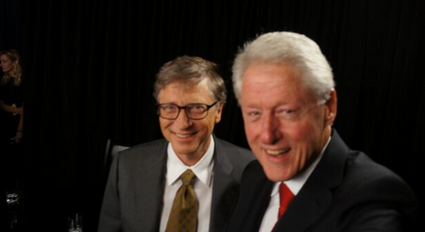


Once again this year, Bill Clinton is hosting his annual power-philanthropy conference in New York. His annual Clinton Global Initiative this week marks its ninth year of channeling mega-wealth to social innovation projects around the world. Cool, exclusive, wonky and celebrity-studded, this year's gathering, like others, is also ferreting out new strains of global injustice and dousing them with nonpartisan outpourings of media, money, PowerPoints, and hard work from truly committed people on the ground.

But it is Bill Clinton’s social capital – his remarkable, ongoing ability to forge unlikely alliances among corporate executives, NGO leaders, celebrities, and government officials -- that distinguishes CGI as a game-changer in its own right. "The world's problems are so big, philanthropy cannot do it alone," Clinton said again this year in opening remarks. "We need everyone at the table." Indeed, CGI has done much over the past decade to help erode some of the traditional cultural barriers to business collaboration within the American philanthropy establishment, and has helped to focus it more acutely on social impact. Before CGI, there were no other high-profile, independent forums devoted to channeling philanthropic resources into specific, cross-sector giving projects tied to measurable results. Today? According to the Clinton Foundation's website, CGI members have so far made more than 2,300 philanthropic commitments which have improved the lives of over 400 million people in more than 180 countries. When fully funded and implemented, Clinton says, these commitments will be valued at more than $73.1 billion. 

To be sure, not all of the projects spawned at CGI have succeeded; not everyone gets invited back. [CGI rules require philanthropic commitments that can prove impact from one year to the next.] "Solutions are only effective if they are implemented," Clinton told Time this week. And not everyone thinks CGI is inclusive enough, saying it's still mostly centered around the 1% and not the 99% who are innovating the Internet and digital social networks to create mass philanthropy models capable of channeling more funds directly (and more quickly) to those in need.

Still, more than 1,000 large companies, celebrities, governments and big NGOs are represented here, roaming the halls and small ballrooms of the Midtown Sheraton with an enthusiasm for proving the nonprofit/for-profit collaboration model can work to more efficiently and quickly get money to those in need. During opening day talks, Bono talked about how, when he took his fight against AIDS in Africa to American and European consumers with his One (RED) campaign, he was able to raise $200 million for the cause, while Sheryl Sandberg of Facebook touted the recent launch of Internet.org, a Facebook-led initiative to bring connectivity to billions of women in poverty living without it.

["U.S. lawmakers would tell us we're not feeling the (AIDs) issue at home," Bono told CGI attendees, sharing that his Global Fund to fight AIDS was flagging until he harnessed it to consumer market forces. "So we went straight to the people, to the shopping malls and Gap stores, and through the marketplace, RED started to turn up the heat on the issue. The marketplace is where the real money lies. Do you want a blue iPod or a red one? Kids started choosing red because they knew that purchase would count."]

Philanthropist Bill Gates, meanwhile, named again by Forbes last week as the wealthiest man in America, urged the nonprofit community to work even harder at nonprofit/for-profit collaboration. "It's interesting that nonprofits think the for-profit guys are evil," Gates told attendees. "That attitude has blocked cooperation in the global food and drug-health sectors" and it's slowing aid to the world's hungry and dying. On the other hand, Gates said, philanthropy has a unique role in the social good sector because it is more easily able to fund the smaller, risker projects, the kind "nobody else wants to touch," Gates said.  "You don't want (as a philanthropist) to go into an area that is already well-covered." 

Cause Global has attended seven out of the nine CGI meetings in New York. This year, attendees have started to refer to themselves as being in "the social commons." As the designer, Eileen Fisher, told Cause Global today: "These are exciting times for philanthropy because the tent is expanding, big-time, and now, it seems, everyone can play." 

Among other first-day highlights:

     *Bono did a good impression of Bill Clinton, to help fill time for the former President when he ducked back stage to get his glasses prior to starting a morning panel. The video of Bono’s impression got more than 6,000 hits by day's end.  Clinton, returning to the stage with his notes, quipped that “it must be real easy to make fun of me; anybody can make fun of me.”

*    Sheryl Sandberg joined the International Monetary Fund’s Christine Lagarde and 24-year-old Khalida Brohi, founder of Sughar Women Program in Pakistan, to talk about the need to do more to empower the world’s women in poverty. “We’re going to invest in women and recognize that women need to lead,” Sandberg said of Facebook, her employer. Brohi, whose organization aims to mobilize a million women in the next 10 years, shared a phrase her father would tell her to encourage her to translate her tears into action. “Don’t cry, strategize,” Brohi said. Sandberg, meanwhile, gave a nod to Hillary Clinton, saying few have done as much for women’s empowerment as she has, stressing the double standard women face around the world with a quick poll of how many female leaders in the audience have been called “bossy.” “We teach ourselves from very young age that men should lead and women shouldn’t,” Sandberg said. “When this changes, we will have a society more productive, more peaceful and families will be happier.” Lagarde encouraged women to get into politics, citing countries like Rwanda, with a Parliament composed of two-thirds women. “In every crisis you see women rising,” Lagarde said. “When it’s messy you get the women in but when the mess is sorted, you need to keep the women in.”

*    Mo Ibrahim, the Sudanese-British mobile communications billionaire and founder of the Mo Ibrahim Foundation, blasted the West for neglecting investment in Africa, chiding Google for investing only relatively small sums and criticizing U.S.-based Internet giants for being “totally absent” from the push to provide broadband data access to some 3 billion in Africa who still don’t have it. He also rebuked stereotypes about Africa on corruption, saying that “for every corrupt leader, there are 50 corrupt business people, half of them sitting here.”  

*    Barack Obama joined Bill Clinton on stage to promote Obamacare as part of the Administration's two-week blitz to build public support for the new health insurance law. The GOP Congress is waging an effort to defund the law ahead of October 1, when new health-care exchanges will begin to enroll people for health insurance coverage that will take effect in January. “Let's face it," Obama quipped, "It's been a little political, this Obama-care thing." But Clinton was far more pointed. “What you’ve had is an unprecedented effort that you’ve seen ramp up over the last month or so in which those who have opposed the idea of universal health care in the first place have fought this thing tooth and nail through Congress and through the courts and so forth," he said. "They’re trying to scare and discourage people from getting a good deal.” Obama said those who need health insurance should tune out the naysayers. “Make your own decision about whether it’s good for you,” Obama said. “What we are confident about is that when people look and see they can get high quality, affordable health care for less than their cell phone bill, they’re going to sign up.”

*    Cherie Blair, the wife of former British Prime Minister Tony Blair and founder of the Cherie Blair Foundation of Women, conferees worked on ways to get more smartphones into people’s hands to create new opportunities for women. “Without access to mobile, so many poor have been cut out of the global economy,” Blair said. According to statistics, she said, countries that boost mobile phone access by 10 percent experience a 1.2 percent economic bump. But even the $20 needed to buy a phone is too much for the billions earning less than $2 a day, Blair said, and for women living in extreme poverty, there are often cultural barriers, too. Women in Africa and the Middle East are 23 percent less likely than men to have mobile access, she said. All told, Blair said, some 300 million women across the world could have access to mobile phones but don’t, due to cost, cultural attitudes that give men first preferences, fear of technology and environmental limitations such as a lack of electricity. Literacy creates another barrier, Blair said. 

CGI runs through Thursday. Watch this space for further highlights.

-- Marcia Stepanek

[Photography: courtesy CGI; Bill Gates and Bill Clinton, top; Bill Clinton on the CGI stage with Barack Obama, middle, and Sheryl Sandberg of Facebook, bottom]

Labels: , , , , , , , , , ,

Saturday, October 22, 2011

The Impact Economy


New White House Social Innovation Director Jonathan Greenblatt told people attending this year's annual PopTech conference in Maine today that the White House is preparing for the rise of an "impact economy" - a new approach to social problem-solving that involves impact investing and new hybrids of business and philanthropy to scale good.

Greenblatt, a co-founder of Ethos Water and former CEO of GOOD who began his new job last month, said his office is "looking to create a new infrastructure inside government" to support social innovation "that can involve technology but also seeks new thinking that will identify, then fund, solutions that are already working." Greenblatt said this effort "isn't angel capital for the social space. That is what philanthropy does. We are looking for solutions that already work, and to fund them commensurate to their impact."

Since its founding two years ago, Greenblatt said, the Office of Social Innovation and Civic Participation has expanded the Americorps program and is using competitions and prizes to help identify new, entrepreneurial solutions to social problems. It also has created the $200 million Social Innovation Fund to scale what works through dozens of community organizations already on the ground. Earlier this year, the Office also added a line item to the President's budget to create Social Impact Bonds, a new way to pay for public services. [The plan would use private, profit-motivated investment money to fund public services up front. The government would only pay if the services deliver as promised, and only out of government cost-savings. The idea: to avoid the waste of tax dollars on failed programs.]

But more is needed amid great challenges, Greenblatt said. "We remain in a very difficult set of economic and social circumstances, with a housing problem that has bedeviled the experts" and a national unemployment rate of 9.1 percent that gets worse in communities of color. "We also have companies that often don't abide by the letter or the spirit of the law" and "a political system where some of the actors remain committed not necessarily to governance, but to opposition in a way that I just don't think is constructive." The result, he said, is that the nonprofit sector is now often taking "the brunt of the blow." At a time when government has less resources, he said, more is being asked of nonprofit organizations. "We need them to deliver more in a moment when they actually have less," Greenblatt said.

A new and expanded definition of the social sector will help, he said. The nonprofit sector, he said, "isn't just a collection of soup kitchens" but a sector that "helps to cohere the whole population" with over $300 billion in aggregate wages. It represents 5 percent of the country's GDP and 11 percent of its work force. "Nonprofits are like small businesses," he added, with nearly all of them operating on budgets of $1 million or less. But there is something "even more profound afoot," Greenblatt added. "Business can be a force for change, too." When we look at businesses that have an explicit social dimension to their mission, he added, "the opportunity for the social sector is even larger. It is even more important," Greenblatt said. New start-up social enterprises, coupled with many large-scale corporations that are helping to create new models of shared value, working to service shareholders "but also thinking intelligently and in integrated ways about supporting their stakeholders" also are important players in the social sector. "Ensuring the health and vitality of the entire sector is critical," Greenblatt added, "and essential to our national health."

Greenblatt said the White House is preparing for two trends in social innovation -- first, the advent of an impact economy, which refers to changes in today's business community such as the emergence of impact-investing. "These are conventional capitalists who are identifying opportunities to invest in the social sector, to drive economic return and social good," Greenblatt said. He said the Monitor Institute has described this as a category that could be worth more than $100 billion by the end of the decade.

Second, Greenblatt said, he and the White House are also very focused on the idea of a civic engagement continuum. "The idea that you need to don a red jacket to serve seems important but we think there's a bigger opportunity at hand that is enabled by technology," Greenblatt said. He cited citizen advocacy efforts like Data Without Borders and Code for America as being important initiatives that "marry technology talent to need." And he cited Meetup and the crowdfunding platform, Kickstarter, as being "extraordinary" new ways ordinary people are convening to work for social change. "This is not 800 million people on Facebook who may or may never connect," Greenblatt said. "We at the White House are eager to help these phenomenon grow because we believe they represent the gears of a healthy society -- the foundation of a social sector that is vibrant."

Greenblatt concluded his remarks to the PopTech crowd by asking conferees for their help to "bring more financial capital into the field to scale the social sector" and to "boost the number of human capitalists" working in it. Said Greenblatt: "This work matters now more than ever."

-- Marcia Stepanek

[Photo of Jonathan Greenblatt addressing 2011 PopTech conference by Kris Krug for PopTech]

Labels: , , , , , , , , ,

Saturday, July 24, 2010

Making Waves


As the "do-good" conference season sputters and slows in the mid-summer heat, here are eight new social media tips and takeaways from the recent National Conference on Volunteering and Service in New York:

* Message shorter. There is one big "missing" in the use of social media, says Twitter co-founder and Chairman Jack Dorsey. Too many groups get their messaging wrong, he says. "You're more successful if you focus on simplifying your message," he told NCVS conferees. "Make sure the message is in as few words as possible."

*
Get analytical. Many nonprofits, social enterprises and social service
organizations don't have a good sense of analytics, Twitter's Dorsey adds. "Ask yourself: Where are we today? Where do we mark today and where do we plan to go? If you don't know where you're coming from or going to, it's hard to figure out if anything is actually moving or not inside your organization. On the outside, your members and supporters want status updates. They want to know -- before they throw money over the wall -- that you're making progress. It's very, very important to constantly show a sense of momentum and a sense of movement. It can be as simple as updating people in a simple message."

*
Compete harder. Sure, collaboration is all the buzz and today's holy grail. But Joe Rospars, a founder of Blue State Digital and on the social media team that put President Obama in the White House, says that for him, two questions come into play for organizations having trouble mobilizing people -- especially "during these in-between times between crises and big moments." His advice? Make sure you're adequately communicating "not only the reasons people should be involved in your cause -- but also why people should choose your organization over another fighting for the same cause." Rospars says most groups get the first part right but miss the second.

*
Work harder. Your supporters want to help but they don't want to phone it in -- nor want you to do that, either. "Oftentimes, signing a petition isn't enough to ask," says Rospars. For some people, it's too insignificant. People know when their time is being wasted, Rospars says -- "when things are being phoned in by the staff who aren't thinking about things very deeply." Rospars says if you lose your enthusiasm, so will the people you're trying to engage. "Even on the worst, most busy days, it pays to remember that your responsibility is to the people out there who only have an hour to give," Rospars adds. "Don't waste their time. Make it worthwhile. People will know the difference if you're passionate and urgent and authentic about engaging them."

*
Get clear on ROI. "The term, ROI, is widely misused," says social media marketing strategist Paul Gillen. "It's a financial metric. It's not a number of followers, or number of page views, or number of unique visitors. Those things are results, not returns. A return is a financial metric." But don't despair. According to Gillen, anything that can be expressed as a result can be expressed as a financial metric. Next time you're asked what the value is of raising your organization's visibility, do a standard marketing study called a "lift study," Gillen says. "If you have historical data that says that the last time your organization's visibility increased by 5 percentage points, the amount of giving increased 20 percentage points, then that is an ROI," Gillen says. "You can say that if this social media campaign to boost visibility succeeds in raising your visibility by 5 percentage points as determined by a lift study, then you can expect X amount of return for each speaking engagement. It's all in the math."

*
Measure the dollar value of your donors. To see how much money a member or a donor is worth over the course of their lifetimes, says Gillen, take the total value of giving to your organization in a year and divide it by the total number of members/donors during that same time period. "If you can draw X number of new members as a result of a social media campaign, you can say that the campaign will yield a specific lifetime value," Gillen says. "When you start to think in those terms, ROI becomes much easier to forecast."

*
Measure the dollar value of your followers. Look at the total number of visits to your Web site per tweet stream over a given period, then look at the percentage of those visitors that converted into donors and the value of their donations over any given amount of time. Says Gillen: "Move all of that back up the spreadsheet and see that the value of a follower is, let's say, 2.5 cents. It's a matter of mapping the numbers that you use to see the impact they have on your bottom line."

*
Push or pull leaders into the pool. Don't keep social media in a corner. Make it everybody's business, starting at the top. According to Twitter's Dorsey, organizational leaders need to be participating in social media use every day, to make it a part of the culture. "Your leader will make mistakes and will learn from them but what's most significant is that he or she is sharing the learning curve and the lessons throughout the organization," Dorsey says. "Assigning someone else to look at social media can only go so far; it won't speak to the spirit of what your organization is trying to bring to the world." Dorsey also said that leaders must be willing to try new things themselves, both in their personal lives and in their organizational leadership. "It's an attitude and a willingness to jump in that makes all the difference," says Dorsey. "A leader's passion is clear and contagious. Don't shut out the leader or underestimate his or her power, both outside and inside the organization."

Got any tips to add? Let us hear from you.

-- Marcia Stepanek


(Illustration: fotolia.com)

Labels: , , , , , , , ,

Monday, June 7, 2010

Women Deliver

Watch this week's Women Deliver conference livestreamed from Washington, D.C. Featured speakers include Melinda Gates, United Nations Secretary-General Ban ki-moon and Ngozi Okonjo-Iweala, managing director of the World Bank. The global conference runs through Wednesday in Washington, D.C.:


Watch live streaming video from womendeliver at livestream.com

Labels: , , , , ,

Tuesday, June 1, 2010

Conferences for Good


Here's a quick-and-dirty list of some of the top social innovation conferences and conversations taking place this summer through December 2010.

This list is long but not complete; please share any important events that we may have overlooked.

An updated list of events will be issued in August.

Cause Marketing Forum - June 2 and 3 in Chicago

Global Youth Rework the World Summit - June 2-5 in Leksand, Sweden

Personal Democracy Forum - June 3 and 4 in NYC

Journalism That Matters - June 3-6 in Detroit

TEDxRotterdam - June 4 in Rotterdam

Fast Company's Most Creative People in Business - June 6 in NYC

Conference on Innovation Journalism - June 7-1 Palo Alto, CA

Rewire London - June 8 in London

Mashable Media Summit - June 8 in NYC

The 4th Annual Climate Change Summit 2010 - June 8 and 9 in London

Women Deliver Global Conference - June 7-9 in Washington, DC

New Media Consortium - June 9-12 in Anaheim, CA

ReadWriteWeb's Real-Time Web Summit - June 11 in NYC

Mobile Tech for Social Entrepreneurs - June 12 in London

Scaling Social Impact Conference - June 17 and 18 in NYC

Allied Media Conference - June 18-20 in Detroit

TEDxTasmania - June 18 in Launceston, Tasmania

TEDxStockholm - June 19 in Stockholm

TEDxPerth - June 21 in Perth

NetSquared Camp Portland - June 25 in Portland, Oregon

NCTech4Good Conference - June 25 in Chapel Hill, NC

Nonprofit 2.0 Unconference - June 25 in Washington, DC

TEDxMadrid - June 26 in Madrid, Spain

iSociety International Conference - June 28-30 in London

National Conference on Volunteering and Service - June 28-30 in NYC

Cloud Computing and Enterprise 2.0 World Forum - June 29-July 1 in London

Aspen Ideas Festival - July 5-11 in Aspen, CO

International Development Design Summit - July 7 in Fort Collins, CO

TEDxAbuja - July 10 in Abuja, Nigeria

TEDGlobal "And Now the Good News" Conference- July 12-16 in Oxford, UK

Cosi10: Alternative Currencies in Social Entrepreneurship - July 16-18 in Brussels

Cosi10: Change Your City Denver - July 16-18 in Denver

Cosi10: Social Innovation Online - July 16-18 in Shanghai

Netroots Nation - July 22-25 in Las Vegas

TEDxBoston - July 29 in Boston

TEDxBoulder - August 7 in Boulder

Big South Social Media Summit - August 13 in Nashville, TN

Second Life Community Convention - August 13-15 in Boston

Craigslist Foundation Boot Camp - August 14 in Berkeley, CA

Cosi10: Strategies to Foster Innovation - August 20-22 in Chicago

Cosi10: Social Enterprise in the Developing World - August 20-22 in Delhi, India

Philanthropy Australia Conference 2010 - August 31-September 1 in Melbourne

Gov2.0 Summit - September 7 and 8 in Washington, DC

CSR Asia Summit - September 14 and 15 in Hong Kong

Clinton Global Initiative - September 21-24 in NYC

CUSP Conference - September 22 and 23 in Chicago

Paris 2.0 - September 22-25 in Paris

Web of Change Conference - September 22-26 in Hollyhock, Cortes Island, British Columbia

TEDxAuckland - September 26 in Auckland, NZ

Mobile Giving Conference - September 27 and 28 in Malibu, Los Angeles

The IdeaFestival - September 29-October 2 in Louisville, KY

GoingGreen West - September in Sausalito, CA

Open Video Conference - October 1 and 2 in NYC

Social Capital Markets Conference - October 4-6 in San Francisco

BlogWorld Expo - October 14-16 in Las Vegas

Opportunity Collaboration CSR Conference - October 15-20 in Ixtapa, Mexico

Bioneers - October 15-18 in San Rafael, CA

The Feast Conference 2010 - October 15 in NYC

Blackbaud's 2010 Confeence for Nonprofits - October 20-22 in Washington, DC

Independent Sector's 2010 National Conference - October 20-22 in Atlanta

PopTech - October 20-23 in Camden, ME

Social Ventures 2010 Conference - October 21-23 in Long Beach, CA

TEDMED 2010 - October 26-29 in San Diego

Justmeans Social Media, Technology and Change Conference - November 1 in NYC

TEDxHonolulu Shift Conference - November 4 in Honolulu

Web 2.0 Summit - November 15-17 in San Francisco

European Venture Philanthropy Association - November 16 and 17 in Luxembourg

TEDxYouth Conference - November 20 worldwide

GlobalGreen Awards - November 25 in London

Medicine 2.0 - November 29 and 30 in Maastricht, The Netherlands

Conference on Philanthropy and Leadership - December 3 in Boston


We'll be updating this list again in the fall. Please share any conferences we've missed.

-- Compiled by Marcia Stepanek

(Illustration: istock.com)
(This post first appeared in Justmeans.com and appears here with permission.)

Labels: , , , , , , , , , ,

Sunday, May 16, 2010

Summit Series 2010


This year's four-day Summit Series conference -- 24-year-old social entrepreneur Elliott Bisnow's invitation-only, GenY-focused, $3,500-per-head networking event for under-40 social entrepreneurs that ends today in Washington -- has once again lived up to its hype as one of social enterprise's newest gatherings-to-watch.

The New York Times described the first two national Summit Series events, in 2008 and 2009, as "MTV meets Davos" -- and this year's mostly Millennial gathering stayed true to form, with tracks on innovation, business, altruism, personal growth, arts and revelry (no kidding). Many of the estimated 650 CEOs, authors and start-up founders in attendance, some clad in T-shirts and Vans, used MingleSticks along with serial-texting and power-pitch networking to keep pace with who was who among them.

One attendee, consultant Pat Kane, the author of The Play Ethic, blogged that his "average Summit Series day this year has been something like a 360-degree civilizational radar search to find almost every possible opportunity for American enterprise ..." On Friday, he said, "I was faced with three possible morning sessions: one called Memoirs of a Boy Soldier, where the extraordinary Ishmael Beah was telling his inspirational story to a packed house of developmentally-oriented social entrepreneurs; another session was featuring two ex-NASA guys promoting commercial space travel, and a third session right next door, called The Greenest Economy, was all about new business models for cannabis production."

But not all sessions offered new take-aways, as speakers from Bill Clinton to Russell Simmons to tattoo artist Scott Campbell weighed in on topics ranging from rapid technological change to the stubborn challenges facing Haiti, the urgent need to invigorate the business world with innovation and the importance of keeping fit, mentally and physically, through it all. ["I don't like to hang out with old people if I can help it," Simmons told an opening-day panel, "and certainly none my age. Old people (expletive) things up." As if to underscore the point, authors Keith Ferrazzi (Never Eat Alone) and Tim Ferriss (The 4-Hour Work Week) -- along with MindValley CEO Mike Reining -- recommended that attendees work hard "to keep yourselves blissful" because, said Ferrazzi, "happiness breeds productivity." [These messages weren't lost on the over-achieving crowd: conferee @luxlotus tweeted Saturday that "every #simmitseries person I meet seemingly has eight nonprofit projects, a VC firm & plays in a band."]

Unique about this #socent gathering (other than its profound shortage of mingling elders) was the urgency with which both speakers and attendees discussed the accelerating pace of Web-fueled social change and the unprecedented levels of cross-sector collaboration needed to harness it for good. Numerous attendees agreed, too, that exclusive, face-to-face meet-ups of top, NextGen executives are sorely needed, especially since most work in post-industrial work spaces that are more commonly centralized via Skype connections than common floor space.

Among program highlights:

* Former President Bill Clinton said the definition of citizenship is being altered dramatically "by the level of interdependence that we have" -- like it or not. Our growing, Web-driven adjacency with people from different nations, demographic groups, religions and value systems carries both promise and unprecedented challenge, he said. "The mission of humanity and the mission of America in the 21st century is to build up the positive and reduce the negative forces of our interdependence," Clinton added. Government cannot do it alone; record budget deficits have left many agencies and states too weak to adequately help the under-served, and philanthropy isn't enough, either. "In the best of all worlds," he told conferees, "you will have a continuous interface with what is done by the government, the private sector and the NGOs. We will always need citizen action and that is where social entrepreneurs can really take hold."

Clinton also said that communitarian values "are more important today than ever before, yet very much in debate" in recent months due to prolonged economic woes and ideological and political bickering -- what Clinton called "the psychic landscape of many people" who would stifle social innovation and collaboration. Clinton urged his listeners not to get discouraged. "Those of us with more yesterdays than tomorrows ought to be spending our time trying to figure out how to make more opportunities available to you to create the future," he said. Meanwhile, he concluded, "keep working with NGOs, keep aiming for social good (and keep working to make sure that) government gets into the tomorrow business." [An iPhone video of his speech, shot by Kane, can be watched here.]

* Kiva cofounder Jessica Jackley, a founder of the crowd-funding start-up ProFounder, won the Summit Series' pitch competition and the $50,000 prize that went with it. She and her new venture were chosen by the audience, not by voting but by a smartphone-powered "Live Market Venture Competition" game in which attendees traded shares of competing companies' stock on a mock social enterprise market. ProFounder is a site that helps new businesses crowd-source funding from among its social networks and communities of supporters, engaging them as micro-investors who share both risk and profits.

* Cameron Sinclair, founder of the nonprofit Architecture for Humanity, likened sustainability to survival and urged all NGOs to share their failures and successes so that the sector can collaborate and do far better to help those in need. His push for what he called "open-source best practices" is especially critical in global hot spots like Haiti and Nashville, he said, where "chaos" has replaced common sense and coordination. "The status-quo of cross-sector crisis management is not acceptable," he said.

* Craig Newmark (craigslist) spoke about how the Internet can facilitate representative democracy; social media, he said, will determine the outcome of November's mid-term elections. Newmark later said that lately, Facebook "may be stumbling a bit" around privacy issues but urged participants not to delete their accounts but to "work with them" at Facebook to "get the privacy thing right."

* Inventor Ray Kurzweil -- the man that Bill Gates considers the world's most brilliant and accurate futurist -- warned that the exponential evolution of technology is about to fundamentally change the human experience in irretrievable ways. "In the future, technological change will be so rapid and its impact so profound, that ever aspect of human life will be irreversibly transformed, so that there will be no distinction between machines and humans," he said in a dinner gathering. By 2050, he said, "we will be a hybrid of biological and non-biological intelligence. Technological change feeds on itself and gets faster and faster, and in 40 years, the pace of change will be so quick that you won't be able to follow it unless you merge with the technology that humans have created to keep up."

Kurzweil's message for social entrepreneurs? Businesses that aren't solidly organized as collaborative structures, highly networked across sectors and guided by leaders who understand the critical need for group-sourced innovation, won't survive. [For more on Kurzweil and his singularity theory, see this trailer of the upcoming film, Transcendent Man, shown at the conference.]

Were you at the Summit Series? If so, please share what we missed.

-- Marcia Stepanek

[This post first appeared on justmeans.com and is reposted here with permission.]

(iPhone Photo, above, by Cause Global)

Labels: , , , , , , , , , ,

Friday, May 14, 2010

Choose a Different Ending

There are a variety of ways that social advocacy groups use videos -- to break news, tout their passion and thought leadership, and explain complex issues. All focus on storytelling in traditional video formats.

But there's a new type of cause video starting to gain notice as an effective way to engage new supporters. It's interactive -- your supporters and would-be supporters decide what happens next. It's a type of video that combines good storytelling with the interactivity of a video game. Here's an example, called Choose a Different Ending, developed for the UK nonprofit, droptheweapons.org, to fight street violence. It was shot by British filmmaker Simon Ellis.


What do you think? Might this be an effective way for your cause to engage supporters? Let us hear from you.

-- Marcia Stepanek

Labels: , , , , , , , ,

Tuesday, April 20, 2010

On Social Enterprise

Alastair McIntosh, the Scottish environmentalist, community advocate and author of Soil and Soul: People Versus Corporate Power, said in a brief interview today that he thinks the social enterprise movement faces a variety of sustainability challenges. I caught up with McIntosh during a break in the Corporate Register Reporting Awards conference today in London. Here's an edited transcript of our short talk:

What's your take on the social enterprise movement?
I'm involved in a grassroots community organization in Glasgow where we are working in a very broken community with people with issues like addictions, homelessless, criminal records and so forth -- as well as with just ordinary members of the community. We look to social enterprise as a way forward but at the same time, it is actually very difficult because a social enterprise can work well when you have entrepreneurial, fairly well-sorted, business-oriented people behind it.

Quite often, though, what happens is that people who set up social enterprises move on, to set up their own businesses because they get to the point where they want to make money for themselves rather than put the fruits of their actions towards the common good. Another challenge is that when you are working with mostly broken people in society, they are often the intergenerational victims of poverty in its various forms and it's actually very difficult for them to get a foot on the ladder and to compete
in the mainstream business world. So I think that social enterprise is a part of the solution -- although in practice, getting [social enterprises] going in hard-pressed areas and keeping them there can be more difficult than is sometimes made out.

What is needed to help them along?
I think that we need to shift our understanding of what a product is from a simple economic transaction in which we look for the cheapest price for the best available to an understanding that this is about the right relationships. And so the satisfaction we seek in what it is we consume needs to be partly built into the relationships that have helped to make them. Then, people might be willing to accept something that may not be as competitively priced -- but is much better socially.

So how do we get there?
Government is not the answer. It really has to come from our own hearts; it has got to be a transformation within us, whereby we seek to have a sense of our own value based on how we're connected to other values in the community around us -- and how we contribute to those values.

Will technology and social media help build stronger communities?
Technology and networking will be part of it. I would say a fundamental word is dignity. Is dignity built into our economic transactions? Is respect - the ability to take another look? Respect is our ability to look deeper than just to the surface of what's in the wrappers of the products we consume. Dignity needs to be built into [what we make and do via] the right relationship with the Earth and the right relationship with one another.

Do you agree? Let us hear from you.


--Marcia Stepanek

Labels: , , , , ,

Friday, April 16, 2010

Network-ready


Collaboration is one of the year's most aggressive new trends; two sessions at the Skoll World Forum explored the increasing use of social media by social change advocates to leverage their networks for greater impact.

It's one of the many trends I've been tracking for a book I'm writing, Swarms, about the rise of online networks and their increasing ability to aggressively (and sometimes abrasively) reshape establishment business, politics, media, philanthropy and other institutions.

Bruno Giussani, the European director of the TED conferences and a moderator of one of the panels on social media, said that "the reach of the Web is such that it is becoming far more inclusionary than exclusionary. When we have a phenomenon such as this occurring at this scale, it creates a world in which everywhere something serious and important is happening, we are camera-ready to capture a movement and network-ready to pass on that information to the rest of the world. Human rights abuses are no longer as easy to conceal."

Here are some other ways that social media are starting to influence activism:

*Social media create a common ground and "safer channels" for collaboration. Niche groups and networks are teaming up, increasingly, using the Web to share information and benefit mutual causes and goals. Mona Eltahawy, a speaker and blogger on Middle East issues, said Saudi women are starting to use YouTube, blogs, and Facebook to come together in their struggle for equal rights, including the right to vote and to drive. Eltahawy told the story of one activist in Saudi Arabia who asked a friend to make a YouTube video of her driving and verbally urging governmental authorities to lift the ban on women drivers. She then posted it online, then CNN picked up the story. It triggered a movement. Eltahawy says social networks are helping to consolidate multiple, individual efforts for change and help women activists to find each other. Eltahawy also says social media are giving Saudi activists a "safe space" in which to collaborate. "The government is less likely to mess with someone who's been on YouTube and CNN," she said.

*Social media are giving greater visibility and earlier credibility to new ideas. Kiva and Samasource (both present at this year's Skoll forum) said social media helped them to get funding and favorable attention early on; both said social media can help to rapidly spread new ideas and models for change in ways not possible before. New ideas used to have to pass muster by establishment "gatekeepers" before social media came along. Not entirely true anymore: Premal Shah, founder of Kiva, said a Frontline piece on his enterprise -- when shared virally on the Web and across key social networks -- became instrumental in giving the company the attention it needed at a dire point in its rollout to get funded and scale. Another example of a new activist community that is growing as a result of social media: Xindanwei, a new Chinese company that is helping would-be social entrepreneurs in China to find each other, collaborate, and scale.

* Social media are enabling social enterprises and established institutions to crowd-source some of their work. Responding to a question by a New York Times reporter about how the Web is changing journalism, panelist Joi Ito (the CEO of Creative Commons) advised him to "think of social media as your new newsroom." Organizations no longer have to do everything by themselves, he said. The social Web is changing the way people work. Collaboration between mainstream media and citizen journalists, for example, can reap better and more accurate reportage of current events, regardless of waning news budgets, Ito said.

To be sure, social media are still very new -- especially as a form of collaboration in the social entrepreneurial sector. But give it time, says Ito. "We're just beginning to see the impact of social networks on social innovation."

The Skoll conference ends tonight. Watch this space for further highlights and roundups.

--By Marcia Stepanek

(Illustration: istock.com)

Labels: , , , , , , ,

Greening Hope


Environmentalist Paul Hawken, the author of Blessed Unrest, urged fellow social entrepreneurs and green activists attending the Skoll World Forum in Oxford "not to despair" -- despite many challenges and barriers to building a more eco-friendly society.

"What you hear again and again in the environmental social justice movement is that we are too late, we're not doing enough, we failed at Copenhagen -- a litany of failure," Hawken said, then quipped: "I think this is the only movement that circles the wagons and shoots inwards, you know?"

Hawken, the CEO of OneSun Solar, a solar energy technology company, used his keynote address at the Skoll forum to caution its nearly 750 attending social entrepreneurs gainst losing perspective in their struggle for a greener planet. "The way you win," he said, "is not to be on a team where the coach is depressed by the difficulty of the endeavor. The way you win is to recognize that what you are doing is extraordinary." He added: "Copenhagen (climate talks) weren't organized to succeed. What did succeed was the information that got exchanged, the new people energized and organized around the issues and the catalyzing of new proposals, new solutions and new ideas."

Is the challenge to save the environment daunting? Yes, absolutely, Hawken said. But the goals are not impossible. He likened today's social movement leaders to the brave souls behind the abolitionist movement in 18th century Britain, who sought an end to slavery. It was a movement, Hawken said, that was started by "a couple of Quakers and Anglicans...What was so extraordinary about it was that it was the first time people organized themselveson behalf of people they didn't know and who they would never know." Such behavior was viwed as being odd then, he said, but is accepted widely today.

"The thing is that today, we (activists) have taken on the whole tamale," Hawken said. "It's not like we're trying to fix one thing. We're trying to fix the whole thing, the whole industrial system -- every node, every aspect, every part of it needs to be addressed and re-imagined. If we are winning, then we are doing something wrong because that would be playing too small. We are going to be defeated again and again. We are going to get laughed at. That's how we know we're on the right track. This is big."

Hawken ended his remarks by saying that "anyone can make despair possible but to make hope possible takes real genius and real heart." Hawken received a standing ovation.

The Skoll World Forum continues through Friday. Watch this space for continuing highlights.

--Marcia Stepanek

Labels: , , , , ,

Monday, April 12, 2010

SkollFest 2010


This week, Cause Global is heading to Oxford, England, where the Skoll World Forum of social entrepreneurs convenes for its seventh year. Called the "Davos for social entrepreneurs," the gathering at Oxford's Said Business School has long been about celebrating up-and-coming entrepreneurs who don't simply want to prosper but also want to create new business and nonprofit models to help solve the world's most pressing problems.

But this year signals a shift in the conversation. Last year, the forum was held in what Skoll Oxford Centre Chairman Stephan Chambers called "the most chilling economic environment we've ever experienced." Social entrepreneurs talked about how their new field was finally gaining some mainstream legitimacy amid the failure of so many established institutions and organizations in the wake of the global financial meltdown. "The status-quo business model versus civil society is not a choice," Roger Martin, the dean of the Rotman School of Management said in opening remarks last year, "but rather the root of a new model, a new set of solutions for our times."

This year, amid criticism from some global change-makers that the Skoll gathering has become elitist and insular, the conversation will be less about proving the legitimacy of this new field and more about pushing its ability to scale. "Catalyzing Collaboration" is the prevailing theme of this week's three-day line-up of panels and networking sessions. With a new "collaboration track" added this year that includes such panels as "Structuring Collaboration: Mergers, Parternships and New Business Models," "The Power of Many: Collaborative Impact and Measurement" and "The Colours of Money: Social Financiers Collaborating for Impact" -- the message is clear: social entrepreneurs need to start playing better and more often with others to wield greater impact, attract greater funding, and trigger lasting change. [This year's Skoll Awards also send that message: most of the winners are social entrepreneurs who have been leading change efforts for years, learning how to work in various ways with existing groups and established authorities and organizations rather than around them.]

Cause Global will be covering parts of the conference, looking especially closely at the various new approaches being taken by social entrepreneurs to grow their initiatives. It will be a rich conversation, given that this new field continues to face some daunting funding challenges -- barriers that stepped-up collaboration with others outside the field can significantly help to diminish.

Watch this space for highlights.

(Illustration by Rienk Post Graphic Design for istock.com)

Labels: , , , , ,

Thursday, March 11, 2010

The Good Capitalist Party

South by Southwest (SxSW), the annual social media and cause festival that brings thousands to Austin, Texas, each spring, is offering something new this year for social entrepreneurs and other social innovators: The Good Capitalist Party. It's a bottom-up event organized by Justmeans reader and social entrepreneur Martin Montero that's gone viral in the past week or two among those SxSWers looking to party and network around making business better.

The event was originally to have been just another networking event at the festival, which is hosting more than 200 such side events this year at various locations around Austin. But the Good Capitalist Party [set for Monday night] is now destined to be one of the festival's biggest off-program networking events, having attracted so many RSVPs so far that Montero and his crew have had to change venues twice just to accommodate those interested -- not to mention an expanding roster of sponsors, which now include Acumen Fund, Social Edge, Good Magazine, Kiva, and the Austin Center for Design and others.

According to Montero, the event will focus on social entrepreneurship and the people and companies that strive to profit as well as make the world a better place. Montero says guests will include the founders of new for-profit and nonprofit hybrid models and a number of social entrepreneurs -- both experienced and just getting started. They'll be on hand to answer questions from attendees on how best to start your own social venture and share information about funding, fellowships, training, and startup contests and investors.

Montero says he came up with the name for the event -- good capitalist -- based on his desire to promote social enterprise among all kinds of citizens and "average Joe types" [including but not limited to MBAs]. Montero says he's been inspired by the groundswell and will announce a new enterprise of his own at the event, what he describes as a Web site for "average Joes [and Janes]" that will aim to be "an uber-practical guide to social enteprise for the blue collar." Watch this space for details.

For more information about the party -- now wait-listing people who haven't yet signed up -- check out the event's Web site.

Are you planning to attend? Let us hear from you!

Labels: , , , , ,

Friday, February 26, 2010

Apples and Oranges

There has been, for a while now, a spirited debate over whether philanthropy and social media-driven giving sites should have a place in social enterprise. The argument heated up again recently at a conference sponsored by New York University's Heyman Center on Philanthropy and Fundraising called "Charities on Trial."

There, New York Times philanthropy journalist Stephanie Strom questioned the blurring of lines in the social change space. Perhaps one of the most unsettling behavioral trends by today's philanthropy donors, Strom told conferees, is their growing willingness to funnel their tax-exempt dollars to support for-profit programs- and sometimes, at the expense of the nonprofit organizations they used to support."Newer forms of philanthropy," she said, "have been quick to promote the use of for-profit models for social good, and the case they make is persuasive. Why shouldn't GE get some sort of tax break for creating a system that better enables the management of health records, a system that would benefit nonprofit hospitals? ...When Citibank provides mortgage financing to low-income families, why shouldn't that portion of its operations be eligible for the same tax treatment as a local community loan bank gets?"

Trouble is, Strom told the NYU conference, some of the projects seeking funding on some of the new online giving sites -- such as Global Giving, for example -- are corporate programs. Donors making gifts to support those projects "are, effectively, underwriting corporate social responsibility," Strom says. "In other words, companies are using gifts for which a donor has received a tax deduction to finance their corporate philanthropy - something they used to have to fund out of their profit streams." Meanwhile, she says, the Bill & Melinda Gates Foundation, among other private grantmakers, are starting to devote a small portion of some of their grants to partnerships with for-profit companies ranging from MTV to JPMorgan Chase and Merck.

Further, says Strom, donors are pushing charities to "look more like business" in their analysis and evaluation of their impact. "The demand for results that donors can understand arises every day, and it increases the challenge for fundraisers," Strom says. "The simple fact is that there’s a paucity of good, honest information about the impact nonprofits have and organizations today are going through enormous time, effort and expense to try to devise systems that will demonstrate their efficacy."

The problem, says Strom, is that many of these efforts also "blur the line between for-profit and nonprofit as fundraisers, consultants, and experts appropriate the language of business to try to explain what nonprofits achieve." For-profits, meanwhile, benefit from this new vocabulary, Strom said. There is a danger, she suggested, that this new language can sometimes be misleading to donors. "What is social investing if it’s not philanthropy?" Strom asked. "And is SASIX, the South African Social Investment Exchange, really a capital marketplace? Its Web site says SASIX makes 'carefully selected social development projects available as investment opportunities with a social return.' It sounds a lot like the materials I just got from Charles Schwab."

And there are other questions. Said Strom:

"A year or so ago, the IRS granted tax exemption to a small organization called Zeus Energy Movement. Its founder told me that he and his three partners had sought a tax exemption because they were finding it too difficult to tap into federal support to sustain their research on clean energy devices. ['One is a gadget that harnesses energy from sea waves. It's very interesting,' Strom says.] Their plan is to sell the patents they get on such devices to major energy companies as well as attract foundation grants to support research and development. The problem for me was understanding how Zeus was different from any one of the many small startup companies that my friend Richard, a venture capitalist, invests in. Richard invests his money in solar energy, wind energy, and water energy companies. He puts in the risk and hopes that the devices that his money is supporting will have widespread commercial value and produce a handsome return. Moreover, he pays taxes on those returns. Zeus doesn’t have to." (Is that fair?)

These and other questions will get debated again at this fall's Social Capital Markets conference, a place where investors in the business-for-good space are starting to converge. For the first time this year, there will be a Tactical Philanthropy track to look at how philanthropy is changing in response to the expansion in the types of groups and people now working for change. That track is being developed in partnership with Tactical Philanthropy, Sean Stannard-Stockton's philanthropic advisory services firm, which grew out of his blog of the same name.

What do you think? Does philanthropy have a place in social enterprise? Are new tax rules required to keep it all kosher? Where is collaboration needed? Let us hear from you.

-- Marcia Stepanek

[This piece first appeared on Justmeans.org and appears here with permission.]
(Illustration by Ray Meyer for istock.com)


Labels: , , , , , , ,

Friday, February 19, 2010

Crowd Cash: GrowVC


There's a new start-up funding model -- Grow VC -- that's catching a fair share of viral buzz this week in the social enterprise space. Earlier this year, I named collaboration as one of the megatrends that would shape the social enterprise field this year. Grow VC, what some are already calling the "Kiva for social enterprise investment," is launching to disrupt the Silicon Valley stranglehold on new-business funding. Its goal: to crowdsource seed money for very new Web and mobile start-ups -- and chiefly in Europe and Asia.

The Hong Kong-based Grow VC creates a members-only Web community of start-ups, experts and funders. Each of these account types has a different set of features attached to it. Start-ups apply for funding from the funders; experts are service providers such as consultants and lawyers to help entrepreneurs be successful.

The platform pools 75 percent of all paid fees into a community fund that it manages but lets members determine which start-ups are most promising for investment. Members who are best at targeting the most successful companies get the biggest financial rewards when the fund starts earning a return on its investment; if a start-up fails and there is no ROI, the community fund covers its own losses. Subscriptions to the platform range from $20 to $140 a month, depending on how much money the start-up is seeking; the fund focuses on start-ups that need seed funding of between $10,000 and $1 million.

"We created Grow VC because nowadays, VCs tend to focus on more mature companies and friends and family networks and local business angels are not a solution for everyone and don't always support international business is the best way," says founder Valto Loikkanen, of Helsinki, Finland, who also is the Chairman of the Startup Commons Association, a nonprofit group that works to make start-up funding more cost-effective globally. "We created Grow VC to help new start-ups bridge that gap in seed funding, knowing there isn't as much supply for this kind of funding as there is need."

Grow VC, which formed in 2008 and has been fine-tuning its model since, isn't the only crowdsourced funding platform; TheFunded, vator.tv, Sprouter.com and others also aim to tap online communities for micro-funding as a way to end-run the dearth of seed-funding of new tech start-ups outside of Silicon Valley. But Grow VC says it offers the broadest array of community features yet, including a members leaderboard, access to experts, and introductions to entrepreneurs with common challenges and interests.

The upside to crowdsourced start-up funding? Such Web platforms expose more people to the goals of new social enterprises while exposing the start-up to the wisdom and guidance of an expert crowd. The potential danger of such models is that they could turn the push for seed funding into a popularity contest, giving an advantage to savvy marketing and already well-funded, low-risk ideas at the expense of bold [and more needed] innovation.

What do you think? Can crowdsourced funding models offer what others can't to spur innovation and seed capital?

-- Marcia Stepanek

(Illustration by Cyro Pintos, Uruguay)
(This first posted on Justmeans.com and appears here with permission)

Labels: , , , ,

Thursday, January 14, 2010

Global Upstarts


The latest Global Entrepreneurship Monitor was launched today in Santiago, Chile, and it’s showing that young social entrepreneurs are rising in influence and number across the world, chiefly in innovation-driven economies.

It was the first time that the 10-year-old survey partnership between the London Business School and Babson College—the largest single study of entrepreneurial activity in the world—included a measure of new social enterprise activity in its annual survey.

GEM's key findings on social entrepreneurship across the 49 countries it researched show that in 2009:

* Social entrepreneurial activity appeared to rise slightly with a country’s stage of economic development. “Individuals in richer countries, having satisfied their own basic needs, may be more likely to turn to the needs of others,” the study said. “In other words, the opportunity cost of social entrepreneurship may be higher in developing countries.”

* More men than women started socially oriented ventures.

* Social entrepreneurs tended to be active at younger ages than business entrepreneurs.

* Better-educated individuals were more likely to be social entrepreneurs.

* Social ventures were started in a variety of areas—notably education, health, culture, economic development, and the environment.

* The distinction between “social” and “regular” entrepreneurship was sometimes blurred. However, GEM says that social objectives (not-for-profit and hybrid social enterprises) still prevailed over more economic (for-profit social enterprises) and less innovative ones (traditional NGOS).

* Social entrepreneurial activity was much lower than traditional entrepreneurial activity in almost all countries surveyed, though in some countries (chiefly Peru, Colombia, Venezuela and Jamaica), there was a significant overlap of social and business entrepreneurship, suggesting that 'social' and 'busines' entrepreneurship categories may be blurred.

* Social entrepreneurs differed widely in the type of organizations they launched and the kind of social or environmental problems they tried to solve. Social enterprises identified in the report spanned a broad spectrum of categories, including education, health, culture, economic development and the environment.

* There were differences in social issue focus among the countries, depending on their level of economic development. "Social entrepreneurs in (developing) economies tend to focus on more elementary issues and pressing needs such as basic health care provision, access to water and sanitation or agricultural activities in rural areas," the report said. "In innovation-driven economies, individuals are particularly active in launching culture-related organizations, providing services for disabled people, focusing on waste recycling and nature protection or offering open-source activities such as online social networking."

GEM researchers, to help measure activity, created four classifications of social enterprise: traditional NGOs (which, GEM says, have high levels of social/environment goals and not-for-profit status); not-for-profit social enterprises (which have high levels of social/environmental goals; not-for-profit status, and innovation); hybrid social enterprises (with high levels of social/environmental goals and earned income strategies either “integrated” or “complementary” to their missions), and for-profit social enterprises (which have high but not exclusively social/environmental goals and earned income strategies.)

Across all 49 countries surveyed, not-for-profit social enterprises were most prevalent (24%); followed by hybrid for-profit/nonprofit models; for-profit social enterprises (12%), and traditional NGOs (8%). There were regional preferences: hybrids, for example, were most popular with social entrepreneurs in the Scandinavian countries of Finland and Iceland, as well as in Algeria, Uganda, the Dominican Republic, Hungary, Latvia, Malaysia, Belgium, France, the Netherlands, Slovenia and Switzerland. Meanwhile, the for-profit social enterprise model is most favored, GEM says, by the United Arab Emirates, Venezuela and Romania.

And that's not all. While the rate of social entrepreneurial activity is dwarfed by traditional enterprise activity in developing countries, there is a “significant” component of social entrepreneurship in many innovation-driven, richer countries. “A significant minority of social entrepreneurs, particularly in developing countries, appear to wish to have a profitable businesses that at the same time addresses social issues,” the report said. “This demonstrates that for many people, the categories of 'social' and 'business' entrepreneur are artificial, and more holistic definitions of entrepreneurship are needed if we are to capture the true extent of this phenomenon.”

What do you think? Let us hear from you.

Labels: , , , , , , ,