Friday, October 22, 2010

The End of Stuff?


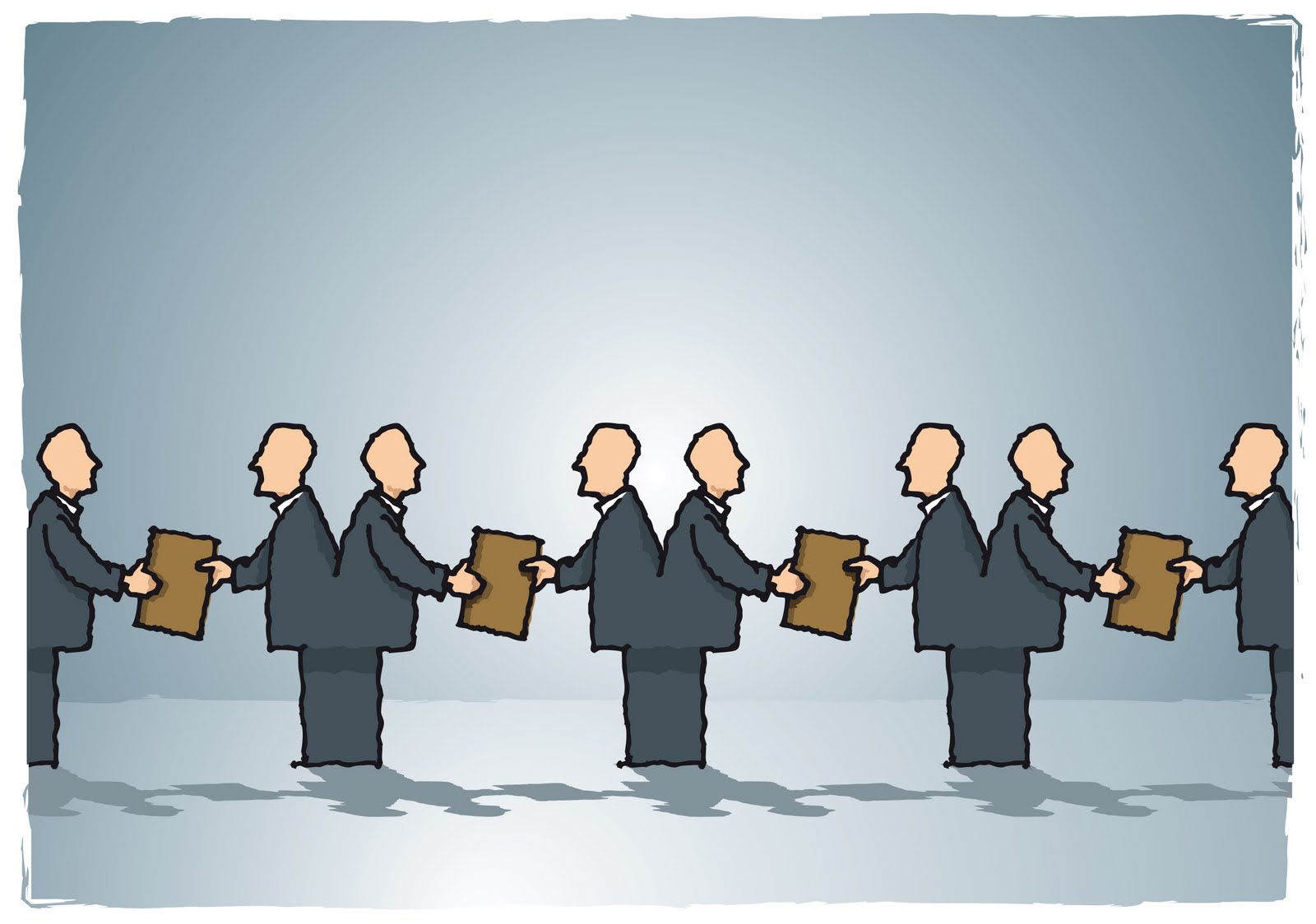
Is technology making us less anxious to own stuff? Lisa Gansky, author of the book, The Mesh: Why The Future of Business is Sharing, says yes. Speaking to this year's PopTech conference on new ideas in social change, technology and innovation, Gansky says new Web tools and remote sensors can help us track the real-time location of physical objects. That makes it less necessary for us to own them, Gansky says. As long as we can access stuff when we want it, she says, the more comfortable we are with the idea of living "less large."

Bottom line? Access is 'the new ownership,' she says. "There's a fundamental shift in the relationship we have to the stuff in our lives," Gansky told PopTech conferees gathered at a restored, 19th century opera house in the picturesque seaside village of Camden, Maine. Gansky defines "the mesh" as a thicket of relationships and connections enabling new way of doing business. The mobile Web, she says, gives people the ability to get more of what they want, exactly when they want it and at less cost to themselves and to the planet. "We are actually starting to see products and services designed to be shared and experienced rather than owned," she says.

Among such products is Zipcar, a car-sharing service. "The key ingredient, the perfect storm of meshiness, are mobile devices and social networks and physical goods," Gansky says. "We can locate each other in time and space now, in real time. If we can track goods, it takes the friction out of sharing."

Gansky said the concept came to her when she began to feel like she had too many things. "I started feeling that the stuff in my world started to be noise. I wanted to give up stuff for experiences, to music and film that I could enjoy without owning it. And now I feel like I'm not alone, like whole generations of people and cultures may well skip over ownership altogether."

For more on the Mesh, go to www.meshing.it. PopTech continues through Saturday.

-- Marcia Stepanek

(Illustration by Lisa Gansky for The Mesh)

Labels: , , , , , ,

Friday, May 14, 2010

Choose a Different Ending

There are a variety of ways that social advocacy groups use videos -- to break news, tout their passion and thought leadership, and explain complex issues. All focus on storytelling in traditional video formats.

But there's a new type of cause video starting to gain notice as an effective way to engage new supporters. It's interactive -- your supporters and would-be supporters decide what happens next. It's a type of video that combines good storytelling with the interactivity of a video game. Here's an example, called Choose a Different Ending, developed for the UK nonprofit, droptheweapons.org, to fight street violence. It was shot by British filmmaker Simon Ellis.


What do you think? Might this be an effective way for your cause to engage supporters? Let us hear from you.

-- Marcia Stepanek

Labels: , , , , , , , ,

Friday, April 16, 2010

Network-ready


Collaboration is one of the year's most aggressive new trends; two sessions at the Skoll World Forum explored the increasing use of social media by social change advocates to leverage their networks for greater impact.

It's one of the many trends I've been tracking for a book I'm writing, Swarms, about the rise of online networks and their increasing ability to aggressively (and sometimes abrasively) reshape establishment business, politics, media, philanthropy and other institutions.

Bruno Giussani, the European director of the TED conferences and a moderator of one of the panels on social media, said that "the reach of the Web is such that it is becoming far more inclusionary than exclusionary. When we have a phenomenon such as this occurring at this scale, it creates a world in which everywhere something serious and important is happening, we are camera-ready to capture a movement and network-ready to pass on that information to the rest of the world. Human rights abuses are no longer as easy to conceal."

Here are some other ways that social media are starting to influence activism:

*Social media create a common ground and "safer channels" for collaboration. Niche groups and networks are teaming up, increasingly, using the Web to share information and benefit mutual causes and goals. Mona Eltahawy, a speaker and blogger on Middle East issues, said Saudi women are starting to use YouTube, blogs, and Facebook to come together in their struggle for equal rights, including the right to vote and to drive. Eltahawy told the story of one activist in Saudi Arabia who asked a friend to make a YouTube video of her driving and verbally urging governmental authorities to lift the ban on women drivers. She then posted it online, then CNN picked up the story. It triggered a movement. Eltahawy says social networks are helping to consolidate multiple, individual efforts for change and help women activists to find each other. Eltahawy also says social media are giving Saudi activists a "safe space" in which to collaborate. "The government is less likely to mess with someone who's been on YouTube and CNN," she said.

*Social media are giving greater visibility and earlier credibility to new ideas. Kiva and Samasource (both present at this year's Skoll forum) said social media helped them to get funding and favorable attention early on; both said social media can help to rapidly spread new ideas and models for change in ways not possible before. New ideas used to have to pass muster by establishment "gatekeepers" before social media came along. Not entirely true anymore: Premal Shah, founder of Kiva, said a Frontline piece on his enterprise -- when shared virally on the Web and across key social networks -- became instrumental in giving the company the attention it needed at a dire point in its rollout to get funded and scale. Another example of a new activist community that is growing as a result of social media: Xindanwei, a new Chinese company that is helping would-be social entrepreneurs in China to find each other, collaborate, and scale.

* Social media are enabling social enterprises and established institutions to crowd-source some of their work. Responding to a question by a New York Times reporter about how the Web is changing journalism, panelist Joi Ito (the CEO of Creative Commons) advised him to "think of social media as your new newsroom." Organizations no longer have to do everything by themselves, he said. The social Web is changing the way people work. Collaboration between mainstream media and citizen journalists, for example, can reap better and more accurate reportage of current events, regardless of waning news budgets, Ito said.

To be sure, social media are still very new -- especially as a form of collaboration in the social entrepreneurial sector. But give it time, says Ito. "We're just beginning to see the impact of social networks on social innovation."

The Skoll conference ends tonight. Watch this space for further highlights and roundups.

--By Marcia Stepanek

(Illustration: istock.com)

Labels: , , , , , , ,

Monday, April 12, 2010

SkollFest 2010


This week, Cause Global is heading to Oxford, England, where the Skoll World Forum of social entrepreneurs convenes for its seventh year. Called the "Davos for social entrepreneurs," the gathering at Oxford's Said Business School has long been about celebrating up-and-coming entrepreneurs who don't simply want to prosper but also want to create new business and nonprofit models to help solve the world's most pressing problems.

But this year signals a shift in the conversation. Last year, the forum was held in what Skoll Oxford Centre Chairman Stephan Chambers called "the most chilling economic environment we've ever experienced." Social entrepreneurs talked about how their new field was finally gaining some mainstream legitimacy amid the failure of so many established institutions and organizations in the wake of the global financial meltdown. "The status-quo business model versus civil society is not a choice," Roger Martin, the dean of the Rotman School of Management said in opening remarks last year, "but rather the root of a new model, a new set of solutions for our times."

This year, amid criticism from some global change-makers that the Skoll gathering has become elitist and insular, the conversation will be less about proving the legitimacy of this new field and more about pushing its ability to scale. "Catalyzing Collaboration" is the prevailing theme of this week's three-day line-up of panels and networking sessions. With a new "collaboration track" added this year that includes such panels as "Structuring Collaboration: Mergers, Parternships and New Business Models," "The Power of Many: Collaborative Impact and Measurement" and "The Colours of Money: Social Financiers Collaborating for Impact" -- the message is clear: social entrepreneurs need to start playing better and more often with others to wield greater impact, attract greater funding, and trigger lasting change. [This year's Skoll Awards also send that message: most of the winners are social entrepreneurs who have been leading change efforts for years, learning how to work in various ways with existing groups and established authorities and organizations rather than around them.]

Cause Global will be covering parts of the conference, looking especially closely at the various new approaches being taken by social entrepreneurs to grow their initiatives. It will be a rich conversation, given that this new field continues to face some daunting funding challenges -- barriers that stepped-up collaboration with others outside the field can significantly help to diminish.

Watch this space for highlights.

(Illustration by Rienk Post Graphic Design for istock.com)

Labels: , , , , ,

Tuesday, February 23, 2010

Clout-sourcing


A widget unveiled by the Skoll Foundation's Social Edge today lets anyone search and add a real-time list of social entrepreneurs to their Web pages. The goal is to provide an exchange and transfer of information so as to avoid duplication in the "do-good" sector. "We want to help people find others in their field, specializing in their issue, or working in their geographical region so that they may learn from other business models, find new ways to collaborate and build coalitions for change," SE's announcement said.

The Social Entrepreneur API (application programming interface) is the first open database of information about social entrepreneurs who have won fellowships and awards from social enterprise funders. "It lets philanthropists, investors, press, and fellow entrepreneurs find leading social innovators based on keyword, location, cause area, population service and other factors," according to Social Actions, which convened the collaborating group and catalyzed the project with seed funding provided with a grant from the Peery Foundation.

The database was created by funders who have come together to pool their information on the social entrepreneurs they've vetted. Emerging social entrepreneurs can use it to find others in the field and vetted social entrepreneurs can benefit from increased exposure to themselves and their work.

Joining the Skoll Foundation in the effort are Social Actions, Civic Ventures (sponsor of The Purpose Prize), PopTech, The Draper Richards Foundation, and The Schwab Foundation for Social Entrepreneurship.

What do you think? Will this help to make the fledgling social enterprise sector less fragmented and more collaborative? How good is the potential for this to exclude more people than it promotes?

(Illustration by Miroslaw Pieprzyk)

Labels: , , , , , ,