Saturday, July 10, 2010

Minding the Gap


Okay, so you're a change agent at a traditional nonprofit organization -- or you're a social entrepreneur who has just started a social enterprise. You've got your seed funding and a rock-solid business plan. So now what? How do you inspire people, from your CEO to rural farmers to consumers, to change their ways to do good (or at least better) for society?

Don't laugh. How to get people to care more about "doing good" is one of the hottest new topics making the rounds of this season's social innovation conferences. Referred to more clinically as "the neuroscience of change," the topic popped up for the first time last spring, at the Skoll World Forum in Oxford, then again last month at the National Conference on Volunteering and Service -- and then again this past week, at the annual Aspen Ideas Festival in Colorado.

Whether inspiring consumers toward fair trade, persuading corporate executives to care more deeply about labor practices or empowering women in a rural village, the challenge to influence behavior is a tough one, indeed. Neuroscientists, including Chris Frith, a professor of neuropsychology at London's University College, say that based on the circuitry of our brains and the emotional responses that direct our behavior, there is some practical knowledge that can be used by social innovators to be more effective in changing hearts and minds.

Here are four quick pointers about the people you're trying to influence (with apologies to conference presenters):

They/We Are Not Different. Neuroscientists say our brains have an "us-versus-them" default; individuals have a tendency to think they are special, or different, than the people in need of help around them. We all stereotype others, whether we do it consciously or not, as a sort of primal safety mechanism. Humans have a tendency to frame the world in terms of people who belong to our "in group" and those who do not. Social entrepreneurs need to fight that human reflex by honing in on the similarities that unite them to their constituents. Key are storytelling initiatives or strategic interactions that show donors and higher-ups that they're not much different than the people your "do-good" efforts are attempting to serve.

They/We Have Choices. Framing the challenges you are trying to ease is key in gaining support for your work. For example, 600 people are on a deserted island and are hit by a deadly flu. You have a life-saving vaccine. The catch? You can give people two options. Option 1: You have 200 doses of the vaccine and can give it to 200 people, guaranteeing their recovery. Option 2: You can try a new vaccine on all 600 people with only a one-third chance it will save them all. Most people will choose Option 1. But if you frame the dilemma differently -- that Option 1 will kill 400 people and save only 200 lives, most people will opt for Option 2. Stress positive outcomes.

They/We Are Not Helpless. Donors, people in need and frustrated social entrepreneurs need to avoid confusing frustration with the feeling of helplessness -- that sense that, in the face of challenge, nobody can really make a lasting difference. To avoid this, draw up clear goals along with a list of steps required to achieve them. Set deadlines. Start measuring your progress. Broadcast your accomplishments. Measuring incremental change sets up a continuous improvement loop. Also key? Invite the people you're trying to serve to be part of the process. Train them how to measure results incrementally. As long as there is knowledge of impact, the "we are helpless" syndrome won't stand a chance.

They/We Are Not Smarter. Neuroscientists on recent panels refer to stagnant thinking that tends to challenge donors and executives, who have self-wired their brains with data and categorizations. New thinking that challenges these categories tends to be dismissed or downplayed -- not so much because it is bad or good, but rather because it falls outside the categories that most people have already built for themselves to cope with their everyday challenges and to compensate for what they think they do well or poorly. The antidote? Don't ask people to take action. Instead, create situations in which people are expected to act in a certain way unless they take decisive action to behave otherwise. If they opt out, then rinse and repeat. [See the previous bullet point, "They/We Are Not Helpless."]

These are just four quick tips from the pros. What might you add to the list?

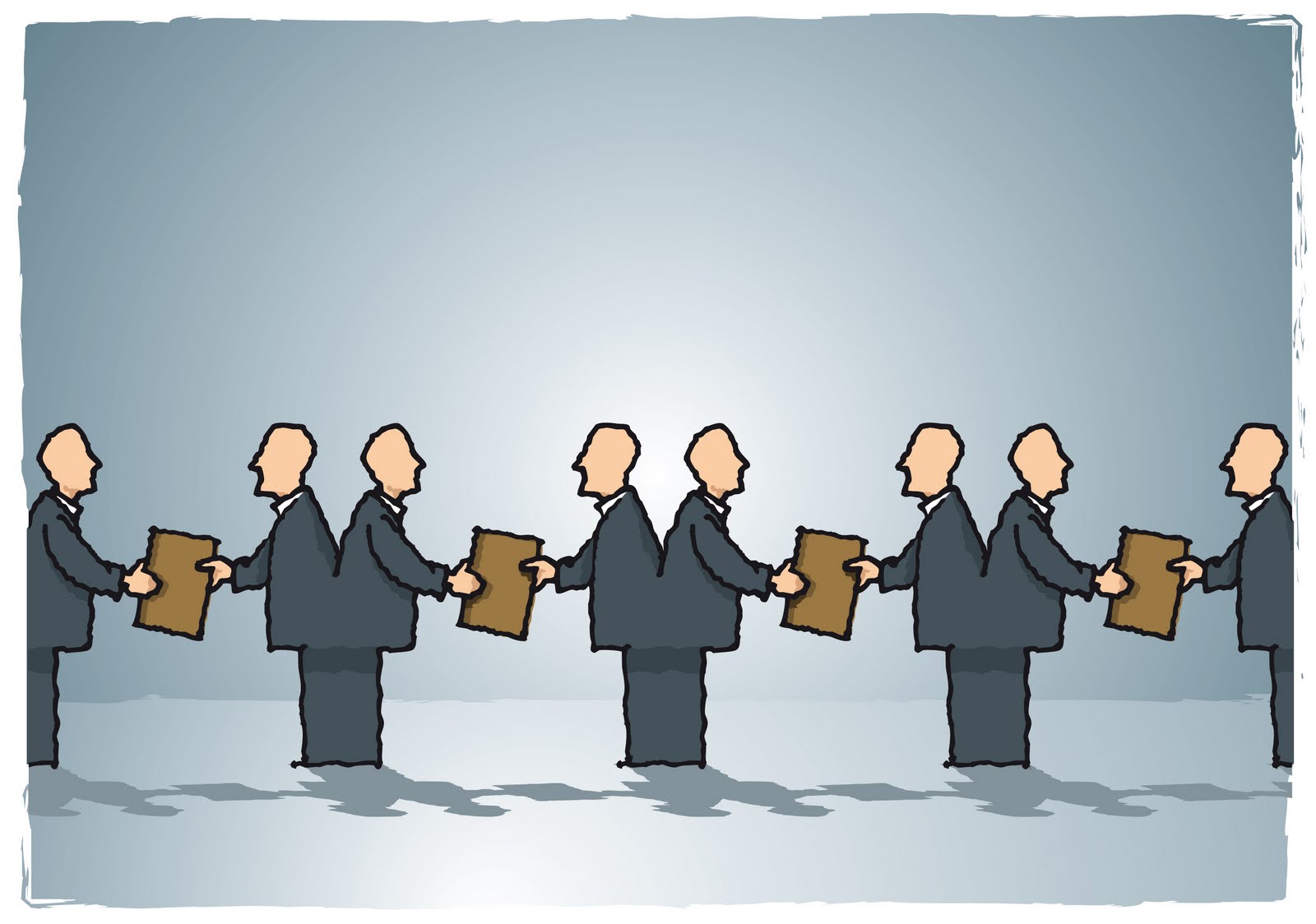
(Post by Marcia Stepanek; illustration by Mark Strozier for istock.com)

Labels: , , , , , , , ,

Thursday, April 22, 2010

Earth Day 2010


Writer and filmmaker Jon Bowermaster is a six-time grantee of the National Geographic Expeditions Council; his recently concluded Oceans 8 Project took him and his teams around the world by sea kayak to the Aleutian Islands, Vietnam, French Polynesia, Argentina, Gabon, Croatia, Tasmania and Antarctica. Seeing the world from the seat of a sea kayak has given Bowermaster a unique look at both the health of the planet's oceans and the lives of the people who depend on them.

For Earth Day, here's a transcript of his introduction to a panel discussion that he moderated on oceans at last week's Skoll World Forum in Oxford:

For years, for centuries, we’ve treated the ocean like one big receptical. We've tossed things into it, never really considering what the future of that would be. We've used the ocean as a seemingly infinite resource – take and take and take and now we’re all starting to pay the price. Now we have plastic gyres in several locations around the world, where plastic spins to such a degree that there is now six times as much plastic as plankton. At the mouths of 400 of the biggest rivers around the world, there are now growing dead zones, due to nitrogens and phosphorous that are being spread downriver from agricultural run-off and industrial pollution.

Climate change has a couple of different impacts. There are increased sea levels, which we're seeing slowly. You know, I’ve traveled around the planet in an odd way, often by foot and small sailboat and by sea kayak. And everywhere we've gone, around the world, people have told us that they are seeing more storms, more frequent storms and more violent storms. As the sea surface temperature warms, it means there are more storms. That is due largely to a changing climate. The other part of climate change which we're seeing is the evil twin of global warming, which is acidification. For all of the CO2 that goes into the atmosphere, a fair amount dumps into the sea. My favorite statistic is this: 1 million tons of acid go into the ocean every day, which is the equivalent of 24 million Volkswagen bugs. Every day. So we’ve not been very kind to the ocean.

We’ve taken, taken, taken – primarily fish. Ninety percent of fish that once were in the sea are now largely gone. The World Wildlife Fund predicts that by 2050, all the fish that we know will be gone. The greatest example of that single species right now that we are watching is blue fin tuna, which the WWF says will be gone by 2012. Mitsubishi Co is buying 40 percent of all the frozen blue fin tuna that arrives in Tokyo now. They're stashing it. Storing it. Because they know that blue fin will soon be gone. To date, the record price paid for a solitary blue fin at Tsukiji market in Tokyo was $177,000 but Mistubishi is gambling that once the blue fin is gone from the wild, they'll be able to sell a blue fin for $500,000 or maybe for $1 million. In our lifetimes, we may see a $1 million blue fin.

There are some bright spots, some hope spots (such as the Marine Stewardship Council and its work). We’re making more and more attempts to set pieces of the ocean aside, similar to what we’ve done with land. The statistic is that 12 percent of land is set aside, but the set-aside for oceans so far is less than 1 percent. That portion is increasing and as governments and NGOs get more powerful, hopefully that number will grow."

(Photograph: istock.com)

Labels: , , , , ,

Monday, April 19, 2010

TEDxVolcano 2


Cara Mertes, the director of the Sundance Institute's documentary film program, called it the first "flash forum" she'd ever attended. Truth is, last night's TEDxVolcano gathering was the first such instant event that any of us had ever attended -- a little over two hours of short talks, film clips and music that had been pulled together (crowdsourced) spontaneously by blogger Nathaniel Whittemore and several other cause-wired souls for the hundreds of Skoll World Forum attendees stranded in London.

Some of the 12 speakers presenting at the TED-style event -- held at The Hub (a co-location work space in King's Cross in central London) -- spoke eloquently about the nature and importance of serendipity. Entrepreneur Gary Bolles called this "a moment in time that can be essential for all of us to reconsider how to upgrade the impact we have on the world or how we can spread the influence of what we do in our lifetimes. Perhaps it is an opportunity for all of us to do more."

But not all speakers urged a gentle embrace of the circumstances that had brought them (yours truly, included) together again. Larry Brilliant, the American physician and director of the Skoll Global Threats Fund, said there is a strong relationship between the volcanic eruption in Iceland and climate change -- "not the kind you think" but a relationship caused, instead, by the fact that "we don't know (much) about a lot of very important things" including science.

"...Right now, the single most important thing the world faces is climate change," he said. "It is the exacerbater of issues of war, water, population growth, pandemics and policy." Despite this, he said, "science is under attack from a new generation of Luddites, of climate deniers ... while the science about volcanos is uncertain, one this is certain: we need more -- not less - science. We need more and better scientists and we need to fund science better to create an entirely new cadre of scientists and new staff to help us address and tackle the problems of the 21st century." Thanks to the rapid evolution of information technology, he added, humans -- for the first time -- can see environmental problems earlier, though "we still don't always know if what we're finding is going to be a smaller or a bigger problem" down the road.

Brilliant suggested that "maybe there's a reason we all are here together tonight. We are going to witness, over the next few days, the interplay between science and policy as every King and President calls the Prime Minister (UK) complaining that their son or daughter is stuck in London; we're going to see an interplay of all of those things antecedent to the great global threats that we face. We are going to learn, if we haven't started to already, that we are all in this together. There is no rich, no poor in this. We're all grounded, equally."

Brilliant concluded his remarks with the admonition that "everything we will learn from science is going to help us. Science is the set of headlights by which we steer this ship. We need to fight for science because we are going to need every tool we can muster to deal with the problems we are going to face in the future."

Among other highlights of TEDxVolcano:

* Matthew Bishop of The Economist said Goldman Sachs' problems and the failings of Wall Street serve as reminders of the complexity of today's world. "The world has changed; a whole paradigm proved to be faulty and the practitioners of it couldn't see that the world had changed," he said. "The lesson here, the challenge to this moment, is to think: 'What changes are there that we are missing because we are just carrying on as normal?'" Bishop also asked what could be done to improve the quality of public debate over the tough and complex issues facing the world. "There is a moment now in our history that says if we rise up and think big enough, we can come up with a much more intelligent public discussion," he said. "We are really going to need it, and if we don't have it, we're all in big trouble."

* Travel news correspondent Peter Greenberg, on his way to Heathrow to do a stand-up report for CBS on the continued cancellations of flights, predicted the volcano would have greater impact on the economy than did 9/11. "People cannot fly but cargo cannot fly, either," he said. "Today, in Kenya, 400 tons of flowers are rotting and have to be thrown away. For every day we are not flying and air cargo is not flying, documents are still not being delivered, medicines are not being delivered, human organs for transplant are not being delivered ... the economic impact is going to be huge."

* Cara Mertes of Sundance spoke about the leveling effect of nature. "I thought I was clever enough to figure out a way home but none of us were clever enough because we're all here," she said. "Money doesn't matter, either. You can have a private jet but that just means you might die alone. So now I realize I'm in an alternate reality. To understand it is to see patterns in things, so I started thinking about what the pattern was here -- and here's what I think: the Earth is talking back. And I think the Earth is saying, 'You people are not listening.' What it is actually saying is that we have a really big problem on our hands with the current levels of human disruption. We are getting a sneak preview of what would happen with climate collapse. It's a peaceful sneak preview. Nobody died to tell us what we have to go through, right? But what will happen when serious cataclysmic events start happening across the planet?" Then, recalling a speech by environmentalist Paul Hawken earlier this week at the Skoll Forum, Mertes said: "We don't live in an historical moment but in a civilization moment. This is a generation that has to decide if we're even going to have a civilization."

* Jeff Skoll, founder and CEO of the Skoll Foundation, and Sally Osberg, the director of it, both read poems they wrote on the trip down from Oxford. Osberg's riffed on Robert Frost's Fire and Ice; Skoll's had a lighter feel to it, ending with the declaration: "Damn the volcano; let's have a ball."

* A performance by singer Susheela Raman

* A showing of the short video, Pixels, by Patrick Jean:


Watch this site for further coverage, as long as I'm still in London.

-- Marcia Stepanek

Labels: , , , , , , , ,

Sunday, April 18, 2010

TEDxVolcano


There has been a lot of talk this past year about the shifting, seismic landscape of social activism, thanks largely to social media. But what people (including me) attending this past week's Skoll World Forum in Oxford, England didn't count on was that this seismic activity might one day become literal.

I cannot pronounce Eyjafjallajokull yet, but the Iceland volcano has grounded most of us here in the UK. The Skoll conference ended Friday but the entire Skoll World forum is still here -- and many of us are trying to turn this stranding into an opportunity. Fellow Skollers, getting in touch with TED, pitched the idea of a TEDxVolcano conference in London tonight, and I'm headed there now, to The Hub in King's Cross, to see how the power of social networks and social media are leveraging circumstances for the better.

Watch this space for a report.

--Marcia Stepanek

(Flickr photo of volcanic eruption in Eyjafjallajokull, Iceland)

Labels: , , ,

Friday, April 16, 2010

Network-ready


Collaboration is one of the year's most aggressive new trends; two sessions at the Skoll World Forum explored the increasing use of social media by social change advocates to leverage their networks for greater impact.

It's one of the many trends I've been tracking for a book I'm writing, Swarms, about the rise of online networks and their increasing ability to aggressively (and sometimes abrasively) reshape establishment business, politics, media, philanthropy and other institutions.

Bruno Giussani, the European director of the TED conferences and a moderator of one of the panels on social media, said that "the reach of the Web is such that it is becoming far more inclusionary than exclusionary. When we have a phenomenon such as this occurring at this scale, it creates a world in which everywhere something serious and important is happening, we are camera-ready to capture a movement and network-ready to pass on that information to the rest of the world. Human rights abuses are no longer as easy to conceal."

Here are some other ways that social media are starting to influence activism:

*Social media create a common ground and "safer channels" for collaboration. Niche groups and networks are teaming up, increasingly, using the Web to share information and benefit mutual causes and goals. Mona Eltahawy, a speaker and blogger on Middle East issues, said Saudi women are starting to use YouTube, blogs, and Facebook to come together in their struggle for equal rights, including the right to vote and to drive. Eltahawy told the story of one activist in Saudi Arabia who asked a friend to make a YouTube video of her driving and verbally urging governmental authorities to lift the ban on women drivers. She then posted it online, then CNN picked up the story. It triggered a movement. Eltahawy says social networks are helping to consolidate multiple, individual efforts for change and help women activists to find each other. Eltahawy also says social media are giving Saudi activists a "safe space" in which to collaborate. "The government is less likely to mess with someone who's been on YouTube and CNN," she said.

*Social media are giving greater visibility and earlier credibility to new ideas. Kiva and Samasource (both present at this year's Skoll forum) said social media helped them to get funding and favorable attention early on; both said social media can help to rapidly spread new ideas and models for change in ways not possible before. New ideas used to have to pass muster by establishment "gatekeepers" before social media came along. Not entirely true anymore: Premal Shah, founder of Kiva, said a Frontline piece on his enterprise -- when shared virally on the Web and across key social networks -- became instrumental in giving the company the attention it needed at a dire point in its rollout to get funded and scale. Another example of a new activist community that is growing as a result of social media: Xindanwei, a new Chinese company that is helping would-be social entrepreneurs in China to find each other, collaborate, and scale.

* Social media are enabling social enterprises and established institutions to crowd-source some of their work. Responding to a question by a New York Times reporter about how the Web is changing journalism, panelist Joi Ito (the CEO of Creative Commons) advised him to "think of social media as your new newsroom." Organizations no longer have to do everything by themselves, he said. The social Web is changing the way people work. Collaboration between mainstream media and citizen journalists, for example, can reap better and more accurate reportage of current events, regardless of waning news budgets, Ito said.

To be sure, social media are still very new -- especially as a form of collaboration in the social entrepreneurial sector. But give it time, says Ito. "We're just beginning to see the impact of social networks on social innovation."

The Skoll conference ends tonight. Watch this space for further highlights and roundups.

--By Marcia Stepanek

(Illustration: istock.com)

Labels: , , , , , , ,

Greening Hope


Environmentalist Paul Hawken, the author of Blessed Unrest, urged fellow social entrepreneurs and green activists attending the Skoll World Forum in Oxford "not to despair" -- despite many challenges and barriers to building a more eco-friendly society.

"What you hear again and again in the environmental social justice movement is that we are too late, we're not doing enough, we failed at Copenhagen -- a litany of failure," Hawken said, then quipped: "I think this is the only movement that circles the wagons and shoots inwards, you know?"

Hawken, the CEO of OneSun Solar, a solar energy technology company, used his keynote address at the Skoll forum to caution its nearly 750 attending social entrepreneurs gainst losing perspective in their struggle for a greener planet. "The way you win," he said, "is not to be on a team where the coach is depressed by the difficulty of the endeavor. The way you win is to recognize that what you are doing is extraordinary." He added: "Copenhagen (climate talks) weren't organized to succeed. What did succeed was the information that got exchanged, the new people energized and organized around the issues and the catalyzing of new proposals, new solutions and new ideas."

Is the challenge to save the environment daunting? Yes, absolutely, Hawken said. But the goals are not impossible. He likened today's social movement leaders to the brave souls behind the abolitionist movement in 18th century Britain, who sought an end to slavery. It was a movement, Hawken said, that was started by "a couple of Quakers and Anglicans...What was so extraordinary about it was that it was the first time people organized themselveson behalf of people they didn't know and who they would never know." Such behavior was viwed as being odd then, he said, but is accepted widely today.

"The thing is that today, we (activists) have taken on the whole tamale," Hawken said. "It's not like we're trying to fix one thing. We're trying to fix the whole thing, the whole industrial system -- every node, every aspect, every part of it needs to be addressed and re-imagined. If we are winning, then we are doing something wrong because that would be playing too small. We are going to be defeated again and again. We are going to get laughed at. That's how we know we're on the right track. This is big."

Hawken ended his remarks by saying that "anyone can make despair possible but to make hope possible takes real genius and real heart." Hawken received a standing ovation.

The Skoll World Forum continues through Friday. Watch this space for continuing highlights.

--Marcia Stepanek

Labels: , , , , ,

Thursday, April 15, 2010

Call to Arms


Public health activist and social entrepreneur Paul Farmer is urging fellow social innovators attending the Skoll World Forum in Oxford this week to do more for Haiti as it moves into the rainy season, when "people in shelters on seaside slopes will be hit hard by acres of mud and waste."

"There are still hundreds of thousands of people packed into tent cities and public parks," Farmer said in opening remarks at the Forum, which convened here Wednesday night and runs through Friday. Farmer, whose public health work in Haiti was famously profiled in the 2003 book, Mountains Beyond Mountains by Tracy Kidder, expressed concern about rising tensions in the camps, saying Haitians are "at the breaking point...Government and the international humanitarian community must do something to prevent an outbreak of mental illness among people who have gone without now for so long."

Farmer called on the nearly 750 social entrepreneurs attending the conference from around the world to turn their attention more fully to Haiti, and to help him brainstorm new ways to bring collaboration around aid to the nation in crisis. He urged conferees to devise innovative new ways to provide victims of Haiti's January earthquake with better shelter, land reforestation aid, safer drinking water, disability rights for those maimed by quake-related injuries, a new system of education -- especially one for girls -- and the creation of local environmental industry that will create alternative energy sources and green jobs.

Showing conferees photos taken three days ago by people who work for Partners in Health, Farmer's organization in Haiti, Farmer said "the international community has failed" to help Haitians well. "None of us deserve high marks for distributing food, water and shelter to people who needed it yesterday," he said.

In other highlights from Wednesday night's evening opener:

* Colin Mayer, the Dean of Oxford University's Said Business School, the venue of the Skoll conference, said that the new field of social entrepreneurship has "finally come of age," fueled by "deep-rooted skepticism" by the public and leaders of traditional institutions over "business-as-usual, which has valued cost-cutting above caring." Meyer added: "There is a widely-held belief that our institutions have failed us. We no longer trust them to do what they are supposed to be doing, much less what we would like them to do." Against that backdrop, Meyer said, the social entrepreneurship movement "is gaining momentum around the world."

* Jeff Skoll, the CEO and founder of the Skoll Foundation, said that in the seven years he has been hosting the conference, social entrepreneurship has gone from "a curiosity to a force." It is time now, he said, for the field to start collaborating more widely with groups also working broadly for social change, including governments and aid agencies. Added Pamela Hartigan, director of the Skoll Centre for Social Entrepreneurship at Oxford: "While Skoll continues to celebrate social entrepreneurs, unless we can create a movement with our efforts, the impact we will have will be limited."

The Forum continues through Friday. Watch this space for more highlights.

-- Marcia Stepanek

(Illustration by Fotolia.com)

Labels: , , , , , ,

Coat-tail Crowds


Parties have "after parties." Panel talks have the "back channel." (Think Twitter.) Now, on the fringe of this week's invitation-only Skoll World Forum on social entrepreneurship in Oxford, there is something new: "coat-tail" conferences -- actually, a couple of small, satellite events scheduled to occur simultaneously around the Skoll gathering but which aim to include more of the crowd in the discussion.

One of the coat-tail events is an "e-Philanthropy" conference, sponsored by the Oxford Internet Institute, being held just up the road from the Said Business School, the epicenter of the Skoll gathering. Much of the talk there has been about how philanthropy needs to become more effective in solving social problems and measuring impact. A second fringe event, called Oxford Jam, is being held across the street. Founder Ben Metz, a former Ashoka Fellow, says his event is intended "to provide another space for conversation" that mixes up people attending the Forum and those not invited. With a logo that reads, "Oxford Jam: Spread Evenly," Metz's event also seeks to raise the visibility of younger and more diverse social change activists with a spirited menu of scheduled conversations, breakfast meet-ups and dinner collaboration exercises.

For the past two years, Metz says, he has been attending the Skoll conferences, hosting a dinner off-conference during each. Last year, he said, attendance at his dinner jumped from 25 people at the first one to more than 100 at the second, with many attendees coming up to him later telling him that "the dinner was actually more produtive than the whole of Skoll put together," Metz says. So this year, Metz decided to expand his annual dinner into a three-day ''jam.''

So far, so good, he says. His opening 'jam' sessions on Wednesday included some Skoll attendees who decided to stop by between Skoll pre-sessions, and Metz expected many more to attend his events through Friday's close.

Metz, though, insists his fringe sessions aren't "just a Skoll thing" but rather a sign of how the ''big conference model'' is changing across the sector, thanks to the Web and social media. "It's really about the growing influence of Web-powered crowds," he says. "The wisdom in any one room is much greater than what you can find on a platform (at a more traditional conference)," he added. "Why don't we as a community start looking at (new conference) structures that will harness the widsom of the crowd more effectively for the benefit of all?"

Metz says there is a place for panel discussions -- much of the Skoll forum's format and still the traditional format of choice at many events. But he said that new Web-wired crowds also now want to have broader and more spontaneous interchanges on the fringes of traditional big conferences that can "uncover hidden talent and hidden gems where you didn't see them before."

Metz predicts the coat-tail conferencing trend will take off across the social action sectors. "I think there's an arc that's just starting which you see in crowd-funding and crowd-sourcing that has yet to hit conferences and physical interactions all around," Metz says. Oxford Jam is a beginning. "We'll see how this goes," he says. "It's an experiment. By the end of the week, we could crash and burn or be wildly successful."

Watch this space for updates.

-- Marcia Stepanek

(Illustration by istock.com)

Labels: , , , , , , ,

Monday, April 12, 2010

SkollFest 2010


This week, Cause Global is heading to Oxford, England, where the Skoll World Forum of social entrepreneurs convenes for its seventh year. Called the "Davos for social entrepreneurs," the gathering at Oxford's Said Business School has long been about celebrating up-and-coming entrepreneurs who don't simply want to prosper but also want to create new business and nonprofit models to help solve the world's most pressing problems.

But this year signals a shift in the conversation. Last year, the forum was held in what Skoll Oxford Centre Chairman Stephan Chambers called "the most chilling economic environment we've ever experienced." Social entrepreneurs talked about how their new field was finally gaining some mainstream legitimacy amid the failure of so many established institutions and organizations in the wake of the global financial meltdown. "The status-quo business model versus civil society is not a choice," Roger Martin, the dean of the Rotman School of Management said in opening remarks last year, "but rather the root of a new model, a new set of solutions for our times."

This year, amid criticism from some global change-makers that the Skoll gathering has become elitist and insular, the conversation will be less about proving the legitimacy of this new field and more about pushing its ability to scale. "Catalyzing Collaboration" is the prevailing theme of this week's three-day line-up of panels and networking sessions. With a new "collaboration track" added this year that includes such panels as "Structuring Collaboration: Mergers, Parternships and New Business Models," "The Power of Many: Collaborative Impact and Measurement" and "The Colours of Money: Social Financiers Collaborating for Impact" -- the message is clear: social entrepreneurs need to start playing better and more often with others to wield greater impact, attract greater funding, and trigger lasting change. [This year's Skoll Awards also send that message: most of the winners are social entrepreneurs who have been leading change efforts for years, learning how to work in various ways with existing groups and established authorities and organizations rather than around them.]

Cause Global will be covering parts of the conference, looking especially closely at the various new approaches being taken by social entrepreneurs to grow their initiatives. It will be a rich conversation, given that this new field continues to face some daunting funding challenges -- barriers that stepped-up collaboration with others outside the field can significantly help to diminish.

Watch this space for highlights.

(Illustration by Rienk Post Graphic Design for istock.com)

Labels: , , , , ,