There has been, for a while now, a spirited debate over whether philanthropy and social media-driven giving sites should have a place in
social enterprise. The argument heated up again recently at a conference sponsored by New York University's
Heyman Center on Philanthropy and Fundraising called "
Charities on Trial."
There,
New York Times philanthropy journalist
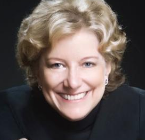
Stephanie Strom questioned the blurring of lines in the social change space. Perhaps one of the most unsettling behavioral trends by today's philanthropy donors, Strom told conferees, is their growing willingness to funnel their tax-exempt dollars to support for-profit programs- and sometimes, at the expense of the nonprofit organizations they used to support."Newer forms of philanthropy," she said, "have been quick to promote the use of for-profit models for social good, and the case they make is persuasive. Why shouldn't GE get some sort of tax break for creating a system that better enables the management of health records, a system that would benefit nonprofit hospitals? ...When Citibank provides mortgage financing to low-income families, why shouldn't that portion of its operations be eligible for the same tax treatment as a local community loan bank gets?"
Trouble is, Strom told the NYU conference, some of the projects seeking funding on some of the new online giving sites -- such as
Global Giving, for example -- are corporate programs. Donors making gifts to support those projects "are, effectively, underwriting corporate social responsibility," Strom says. "In other words, companies are using gifts for which a donor has received a tax deduction to finance their corporate philanthropy - something they used to have to fund out of their profit streams." Meanwhile, she says, the Bill & Melinda Gates Foundation, among other private grantmakers, are starting to devote a small portion of some of their grants to partnerships with for-profit companies ranging from MTV to JPMorgan Chase and Merck.
Further, says Strom, donors are pushing charities to "look more like business" in their analysis and evaluation of their impact. "The demand for results that donors can understand arises every day, and it increases the challenge for fundraisers," Strom says. "The simple fact is that there’s a paucity of good, honest information about the impact nonprofits have and organizations today are going through enormous time, effort and expense to try to devise systems that will demonstrate their efficacy."
The problem, says Strom, is that many of these efforts also "blur the line between for-profit and
nonprofit as fundraisers, consultants, and experts appropriate the language of business to try to explain what nonprofits achieve." For-profits, meanwhile, benefit from this new vocabulary, Strom said. There is a danger, she suggested, that this new language can sometimes be misleading to donors. "What is social investing if it’s not philanthropy?" Strom asked. "And is
SASIX, the South African Social Investment Exchange, really a capital marketplace? Its Web site says SASIX makes 'carefully selected social development projects available as investment opportunities with a social return.' It sounds a lot like the materials I just got from Charles Schwab."
And there are other questions. Said Strom:
"A year or so ago, the IRS granted tax exemption to a small organization called Zeus Energy Movement. Its founder told me that he and his three partners had sought a tax exemption because they were finding it too difficult to tap into federal support to sustain their research on clean energy devices. ['One is a gadget that harnesses energy from sea waves. It's very interesting,' Strom says.] Their plan is to sell the patents they get on such devices to major energy companies as well as attract foundation grants to support research and development. The problem for me was understanding how Zeus was different from any one of the many small startup companies that my friend Richard, a venture capitalist, invests in. Richard invests his money in solar energy, wind energy, and water energy companies. He puts in the risk and hopes that the devices that his money is supporting will have widespread commercial value and produce a handsome return. Moreover, he pays taxes on those returns. Zeus doesn’t have to." (Is that fair?) These and other questions will get debated again at this fall's Social Capital Markets conference, a place where investors in the business-for-good space are starting to converge. For the first time this year, there will be a Tactical Philanthropy track to look at how philanthropy is changing in response to the expansion in the types of groups and people now working for change. That track is being developed in partnership with Tactical Philanthropy, Sean Stannard-Stockton's philanthropic advisory services firm, which grew out of his blog of the same name.
What do you think? Does philanthropy have a place in social enterprise? Are new tax rules required to keep it all kosher? Where is collaboration needed? Let us hear from you.
-- Marcia Stepanek
[This piece first appeared on Justmeans.org and appears here with permission.]
(Illustration by Ray Meyer for istock.com)
Labels: charities on trial conference, globalgiving.org, philanthropy, socap2010, social enterprise, social media, social media strategy, stephanie strom