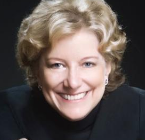
At this past week's TEDGlobal 2010 conference in Oxford, the former diplomat and international relations professor Joseph Nye said that in modern-day diplomacy, "it is the story and the narrative that now wins (conflicts). Great powers have great stories." True enough, but fellow TED presenter Elif Shafak took it up a notch Wednesday, arguing that the power of the personal story trumps all. "The problem with today's cultural ghettos is not lack of knowledge," said Shafak, the best-selling female author in Turkey and the daughter of a diplomat and a philosopher. "We know a lot about each other, or so we think. But knowledge that doesn't take us beyond ourselves makes us distant and disconnected." Fiction, said Shafak, takes us into new territories. "Identity politics divides us, fiction connects," she said. "One is interested in sweeping generalizations; the other, in nuances. One draws boundaries; the other recognizes no frontiers. Identity politics is made of solid bricks; fiction is flowing water."
The digital and physical worlds get reconciled beautifully in Sophie Blackall's five-month-old blog, Missed Connections, in which Blackall uses her skills as an artist to illustrate online "missed connections" ads from Craigslist New York. Her subjects are people trying to reconnect digitally with strangers they just saw or met in passing somewhere—at a diner, in a subway car, on the rooftop at a party in Greenpoint. New York magazine's August 10-17 Approval Matrixcalled Blackall's blog both "highbrow" and "brilliant"; coolhunting.com cites her renderings of "chance encounters, momentary glimmers of hope for a new friend or lover..."
["Uptown 3 train: If not for your noisy tambourine, I would not have seen you. Your green skirt looked terrible but that leather jacket makes you look just right. I was the attractive guy sitting to your left just before you got off."]
Here's another:
The Craigslist ads "are like digital messages in a bottle," says the Adelaide-born Blackall, who illustrates childrens' books from her Brooklyn studio. "I've lived in New York for 10 years now but still, it's fascinating to me that millions of people cross paths every day and occasionally, something happens that puts them into the immediacy of each others' lives for just a moment. Always, in these ads, there seems a deep hope that this might be the one connection, that if found again, could change their lives forever. I think the Web can be very hopeful in that way." Here's more from our recent conversation with Blackall:
Why this, and why now? I was looking for an apartment on Craigslist and stumbled across this section for missed connections. It was so riveting, that I found myself trawling through page after page. One woman posted an ad for a 'misconnection' that hadn't happened yet. She was planning to have one in the future. She named a time and a specific place, one block on Second Avenue between 9th and 8th streets; she announced that she was going to be walking a dog on a leash and be wearing a black t-shirt. She wrote that she was going to see if anyone would show up and become her misconnection. I followed up; I kept reading the missed connections list to see if I’d see anything back from her, but I never did. What I did see were two posts from people who had been there but didn’t see her. Maybe she didn't show up. Who knows? Maybe she was sitting in a café across the street somewhere, watching to see if anybody would bother.
Scrabble Tattoo on Roof (above, top) is another favorite, from an ad placed by a man who was clearly besotted with a girl he met at a party on a rooftop in Greenpoint. He saw her while she was sitting on top of the stairs, and he asked her if she always sat in a circle of Asian girls. He also asked, Did she always sit at the top of the stairs, so everyone who would pass her would fall in love with her? The guy had gone downstairs to get her a piece of cake and then, when he got back, she’d disappeared.
Did you always want to be an illustrator? My burning ambition when I was 12 was to illustrate a New Yorker cover. I'd papered all of my bedroom walls with New Yorker covers that belonged to my father; he was an Englishman and one of a handful of people in Australia at the time who subscribed. As soon as he'd bring the magazines home, I'd rip off the covers and tack them up on the walls in my room, like wallpaper, and he'd be furious because I'd never ask first."
Photographer, filmaker, and multimedia artist Douglas Gayeton is a new kind of digital storyteller. He creates immersive story experiences for virtual worlds and social networks, including Second Life, Gaia, Habbo Hotel and Sony Home—the first high-def virtual world (which released in public beta in June).
In case you missed it the first time around, here's a clip from one of Gayeton's better-known projects, Molotov Alva and His Search for the Creator: A Second Life Odyssey. He wrote, produced, and directed this documentary, the first-ever shot entirely within Second Life. The highest-rated video in the world on YouTube, Molotov Alva was purchased recently by HBO.
Gayeton is the chief creative officer at Millions of Us, a San Francisco-based agency that specializes in marketing programs in Second Life. He is preparing a one-man retrospective of his works for Slow Food Nation, a San Francisco celebration of the sustainable food movement that's to be held at Fort Mason over the Labor Day weekend.
I will be sitting down with Gayeton in Chicago in early September to hear about his plans for using virtual environments to raise awareness of social issues. "People sometimes use virtual worlds to redefine themselves and the world in a way that's closer to the vision that they have of it and themselves," Gayeton says. Watch this site to learn more about Gayeton and his thought leadership on the newest forms of social media for social change.
I’m sitting in a movie theater just outside Washington that is jammed with cause advocates, filmmakers, philanthropists, and nonprofit leaders. It’s the second day of SilverDOCS, one of the nation's top documentary film conferences, and attendees are buzzing about the transformative power of digital storytelling to engage audiences and create social change locally and globally. This is an edgy, influential crowd: 108 long and short documentaries from 64 countries are being screened here this week; most were made to expose global social ills.
I’m thinking about Tom Bettag—a lot. In May 2001, some four months before 9/11—a day the world got smaller—Bettag, then the executive producer of ABC's Nightline, invited me to attend a conference at Columbia University. Ironically, he and other top journalists were meeting to explore how new digital video technologies—then just emerging—could be used to fight moves by network cost-cutters to slash foreign news budgets and close overseas news bureaus.
Bettag did not hide his frustration. "They (TV executives) say Americans don’t care much about foreign news but that’s a canard put out by the accountants," he told those gathered at Columbia. Presciently, Bettag knew the digital video revolution would make foreign news-gathering far less costly and give more power to those in the field. Why not move immediately, then, to proliferate the technology and give Americans a more authentic, urgent knowledge of the world?
Fast-forward seven years. Much has changed—and hasn't. Digital video documentaries—"cause news docs"—are the hot new medium of the moment. News budgets are still under assault.
Bettag's 2001 activism came to mind this morning, when Michael Markarian, the executive vice president of The Humane Society of the United States and author of a blog called Animals and Politics, spoke on a SilverDOCS panel about the erosion of traditional news gathering, this time by newspapers. “Big cuts in news journalism staff, in funding for investigative journalism and the rapid decline of newspapers is affecting advocacy and is having an impact on documentary filmmakers, as well,” Markarian said.
Markarian knows this well. One of today's "cause-news docs" producers, Markarian in January famously drummed up more than a half-million hits to the Humane Society's fundraising Web site after posting a digital video investigation by his staff that reported the abuse of downed cattle at a California slaughterhouse. In the video, Humane Society executives said the poking, prodding, and forklifting of sick and downed cows there endangered food safety in school lunchrooms across America. CNN and The Associated Press picked up the humane society's story, pretty much unquestioned, and it led to the recall of 145 million pounds of ground beef, the temporary removal of beef from many school lunch menus, and eight congressional hearings exploring the possibility of a link between animal cruelty and food safety. The story also helped the Humane Society raise millions of dollars in new and expanded donations.
“Obviously,” Markarian said, “the news media is changing but the issues remain—so it’s falling more and more to advocacy groups to investigate and uncover what’s happening and play the role of the watchdog in society, which the media are playing less and less.”
Maybe so. Hooray for a concerned, enlivened citizenry. But is this new "cause-news docs" movement entirely a good thing? When does advocacy become propaganda?
Seven years ago, Bettag and other journalists worried about whether the American public was getting enough information. Now—with nonprofits and philanthropists increasingly using digital video technologies to create their own news stories on social issues near and dear to their hearts—there’s a question of whether the public is getting enough of the right information.
Markarian's story, for example, did not include interviews with outside experts, independent food safety officials, meatpacking officials, slaughterhouse managers, or government regulators. It did not investigate the source of the problem nor prove that the abuse had, in fact, tainted the public food supply. (The slaughterhouse, for example, when finally questioned much later, said the cows in question were never processed into food and that forklifts were required to move them, since they couldn't walk or stand by themselves.) Further, the only people quoted in the Humane Society video were employees of the Humane Society, convinced that what was happening at the slaughterhouse was abuse and that the abuse was threatening the health of millions. (see video clip, below)
Appropriately, one SilverDOCS panel was entitled “Is it Propaganda? Using Media as a Tool for Social Change.” Markarian was there. So was Sameer Padania, the director of The Hub, a Web site that debuted in December that offers video training to citizen news documentarians. The Hub is part of the nonprofit Witness, which gives people digital video cameras so they can document human rights abuses around the world. Padania says that ideally, The Hub “will be a platform eventually for citizens, filmmakers, and news organizations to pull together.” Its motto: See it. Film it. Change it.
To be sure, this is a critical, exciting time for filmmakers and journalists—one filled with tremendous opportunity. But even some of the new citizen journalists are starting to question the rise of partisan media. Ethan Zuckerman, the cofounder of Global Voices Online, a new international news site that aggregates news blogs from around the world, asked recently: “Should we expect that people are aware that media has changed and that they should expect every voice to have strong, visible bias? Or is there a need to re-learn how to read/view both online and offline media to understand that we’ve got far more activist media and far less neutrality?”
Back in 2001, Bettag (now the top documentary film producer for the Discovery Channel, a cosponsor of the SilverDOCS festival) and Parisa Khosravi, CNN's chief of international news gathering, warned that the digital storytelling movement would bring with it a critical need to guard against staged news events, misleading and one-sided reporting, inaccurate assertions and lack of context. “It’s going to take some people who have great journalistic voices who know how to tell a story extremely well” to do it properly, Bettag had said. “There are going to be a lot of people who are going to do it irresponsibly, and they will make people hesistant.”
The Humane Society's Markarian, today defending his efforts and those of other nonprofits to break news, says he's confident that viewers "know propaganda when they see it."
But do they? If propaganda is really good, it feels like fact. Let’s hope that citizen media activists of all stripes keep trying, at least, to recognize the difference.
To view the Humane Society's digital video investigation, click on the screen below:
Ms. Stepanek is a Multimedia Journalist, New Media Strategist, an award-winning news and features editor and author of the forthcoming book, "Swarms: The Rise of the Digital Anti-Establishment." She teaches digital media strategy and cause video at Columbia University, curates a speaker series on disruptive innovation in the advocacy sector and runs a short-form 'micro-documentary' studio in Manhattan. A former Knight Fellow at Stanford and the former Web Strategies Editor at BusinessWeek, Marcia is a frequent speaker on the influence of new media at workshops and conferences worldwide. She was Founding Editor-in-Chief of Contribute magazine, covering the rise of the mass philanthropy movement and the use of social media in advocacy. She blogs for the Stanford Social Innovation Review, Pop!Tech, Videocracy.org and msnbc.com.
This blog covers the influence of new media on popular culture, business innovation, social change advocacy, and the workplace.
 At this past week's TEDGlobal 2010 conference in Oxford, the former diplomat and international relations professor Joseph Nye said that in modern-day diplomacy, "it is the story and the narrative that now wins (conflicts). Great powers have great stories." True enough, but fellow TED presenter Elif Shafak took it up a notch Wednesday, arguing that the power of the personal story trumps all. "The problem with today's cultural ghettos is not lack of knowledge," said Shafak, the best-selling female author in Turkey and the daughter of a diplomat and a philosopher. "We know a lot about each other, or so we think. But knowledge that doesn't take us beyond ourselves makes us distant and disconnected." Fiction, said Shafak, takes us into new territories. "Identity politics divides us, fiction connects," she said. "One is interested in sweeping generalizations; the other, in nuances. One draws boundaries; the other recognizes no frontiers. Identity politics is made of solid bricks; fiction is flowing water."