Wednesday, March 24, 2010

Twestival Global 2010

Twestival Global kicks off tomorrow, this time bringing thousands of people in 175 cities around the world together to support the cause of education. Last year, the first global Twestival raised money for charity:water. This year, all proceeds will go to Concern Worldwide, a global organization that works to boost education for children born into poverty.

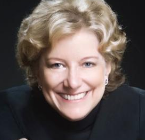
During a visit to London last week, I spoke with Renate Nyborg, a Twestival cofounder who parlayed her social media skills into founding Madhouse Collective, an interactive events company in the UK. [Nyborg was on a panel I led last week at Justmeans.com's Social Media and Stakeholder Engagement conference in London.] Here's an edited transcript of our short conversation about Twestival:

What led you and Amanda Rose to start Twestival last year?
I was running an events company at the time and had started using Twitter; at the time, just journalists and bloggers and tech geeks like myself were using it and we thought:
Wouldn’t it be great to bring a bunch of these people together in the world to connect and share resources and give each other advice and use this collaborative idea to raise money for a good cause? So we rallied people on and offline, at first to benefit a local soup kitchen, and then we put that idea of a larger event out there on Twitter, and rather quickly, we started asking people where they were based, what were their skills, and what would it take for them to get involved? Two weeks later, we had 200 registered cities, 1,000 volunteers and we ended up raising $250,000 for this in the space of a month.We knew we were on to something from the start -- though I must say, we had no budget; basically, there were two of us doing it alone from London, but leveraging the buzz around it allowed the infrastructure to scale. We ended up being one of these online swarms that made a huge difference. We used the money to build 55 water wells in Ethiopia and Uganda, which directly affected 70,000 people. That was one campaign –we’ve done several others since. I think campaigns like Twestival are a strong example of how people can use social media to collaborate, versus popping up to exert pressure. And it's a sustainable group so far. It's building on what we started, not having to start from scratch.

What's next in the evolution of Twestival, in your view?
I believe passionately that collaboration is the way forward. Since we did the first Twestival campaigns, we have engaged a number of corporations and other stakeholder groups to help us to facilitate the work that we do -- PayPal, eBay, and other companies are helping us to do good and raise money for charity. The proposition to them is this: we tell them we have 1,000 people worldwide investing their time and skills and speaking well on their behalf, so let us build this for you. I think that's how things will evolve in many uses of social media for good, once the social capital -- the sheer numbers of people can be charted and brought to bear. I think corporations, rather than having to sit down and figure out what they have to do, or how they can change things or put up a budget, might better simply align themselves with people already out there doing things that can help change their organizations from the inside out.

Last year, we raised $750,000 for Twestival and we'll raise more this year. Now we have in place an infrastructure, and every single day, we've been getting lots of requests from corporations and individuals wanting to do something -- a design-for-good competition, for one, and a group of musicians offering to donate downloads of their music for charity, to cite two examples. It's really all about using social media to moderate group activity, to keep connecting the right people to each other, and the right brands to the right actions. We have high hopes for this year but we're still just getting started about seeing how widely this can scale over time. For those asking us where the money goes and how it gets there, this year, there's a Twestival Results section to the site, where you can look at detailed statistics including funds raised to date and how they're being spent. (Click on Impact tab)


For more on Twestival Global, check out the promotional video, below:


Labels: , , , , ,

Saturday, March 13, 2010

After Slacktivism


Who says social advocates can't raise big money and forge lasting donor relationships online for their causes? Today's South by Southwest (SxSW) panel on slacktivism -- more elegantly and formally called Debunking the Myth of Social Media Fundraising -- offered a rousing antidote to the notion of ineffectual, click-and-give philanthropy. Urban Dictionary defines slacktivism -- a portmanteau of the words "slacker" and "activism" -- as "a way of pretending to care while sitting ... in front of a computer playing WoW." Such detachment, the panelists asserted, is becoming less of a factor in today's cause-wired, text-aided giving arena: the outpouring of mobile contributions to victims of Haiti's January 12 earthquake and donor retention strategies being crafted to hang on to many of those donors over time should be proof positive that online giving has, at last, begun to evolve and inform even the most traditional philanthropy circles.

[Evgeny Morozov, one of the critics of slacktivism, wrote in a Foreign Policy Magazine article last fall entitled "From Slacktivism to Activism" that he is skeptical of numerous digital activism campaigns "that attempt to change the world through Facebook and Twitter." He said the desire to instantly connect with others online around ever-new causes poses a threat to more productive uses of time, such as brainstorming solutions to the world's ongoing problems.]

Combining research data with personal anecdotes, panelists Stacey Monk (Epic Change); Brooke McMillan (the Lance Armstrong Foundation); Donna Wilkins (Charity Dynamics), and Frank Barry (with Blackbaud, the fundraising software firm) made a strong case for the potential of social media sites like Twitter, Facebook, and YouTube to raise money and awareness -- not simply as tools in one-off fundraising campaigns but also in efforts to build richer and more sustainable donor relationships across the socioeconomic spectrum.

There are dozens of commonly-held misperceptions about the use of social media in advocacy, the panelists said, and here are five of them:

Myth One: Social Media Aren't Very Effective. Not true, said the panelists. Social media can be effective in breaking down geographic boundaries, building communities of donors who otherwise would not be able to connect, and bringing in contributions from many more people than before. Monk says her nonprofit has raised nearly all of its money via Twitter, to build classrooms in Tanzania, buy school supplies for the students there and provide skills training inside and outside the classroom -- including social media skills aimed at helping them to learn more about other people from around the world. While the panelists agreed that using social media to fund-raise can take time, as it's all about relationship-building and not simply a matter of learning the technology.

Myth Two: Major Donors Do Not Exist in Social Media. Not true, said McMillan, and cited the example of @fatcyclist, the Twitter handle for a man who blogged and Tweeted to raise some $800,000 over the course of a year for Livestrong, Lance Armstrong's cancer research foundation. With social media, Barry said, "major donors" are no longer just wealthy individuals. Now they include individuals of all income levels adept at using their social influence online and off to engage others around giving to a cause.

Myth Three: No one Raises Money on Twitter. Guess again, said the panelists. For one, look at Twestival, the regional, national, and global fund-raising campaigns staged on Twitter to benefit a variety of causes. Then look at TweetsGiving. Both micro-blogging fundraisers have increased donations year over year, suggesting such campaigns are sustainable. To be sure, Monk said, "when you first get on Twitter you don't know what you're doing there." But soon, she added, you discover that "Twitter engineers serendipity" -- all sorts of connections that can be leveraged to raise money and awareness over time.

Myth Four: Building Community Does Not Help You Raise Money.
Also not true, the panelists said. Social media campaigns allow nonprofits to reach new donors and build the relationships required to raise funds from previously untapped sources. Nonprofits, said Monk, "shoot themselves in the foot" when they put a "give" button on their Web sites. Causes need, instead, to humanize fund-raising by using social media to engage donors in the cause. "Authentic connections between humans create movements, and movements raise funds," Monk said. "...Social media should humanize the process of giving, not automate it." Storytelling, the act of humanizing your cause to engage donors, is critical, she added. "If the word 'donate' is in your Tweet, you're doing it wrong," said Monk. To emphasize the point, Monk says she writes the Twitter handles of donors on the walls of the classrooms they're helping her to build as a way of showing them both her gratitude and their impact, and it works.

Myth Five: Social Media Cannibalize Other Fundraising Channels. Au contraire, said Monk. "Social media are just additional tools. Donors want to be able to choose" the way they give money to a cause, she said, and sites like Facebook and Twitter give them the option to give in new ways. Besides, the panelists agreed, social media offer an effective way for causes to reach the hearts and pocketbooks of Baby Boomers, the largest-growing demographic using Facebook, Twitter, and other social networking sites. Both Wilkins and Barry said multi-channel fund-raising strategies proved most effective, citing a recent Blackbaud/Charity Dynamics study. One finding: organizations that use email effectively to fund-raise also tend to use social media more effectively, as well. "My job didn't exist a year ago," said McMillan, the social media evangelist at Livestrong.

For more on the subject, check out the study on social media in fund-raising released last month by Charity Dynamics and Blackbaud.

Still not convinced? Come to the NTEN annual conference in Atlanta in April to hear some opposing views on the subject and a debate over the challenges to online giving that exist. My panel on Slacktivism will feature Nancy Lublin, CEO of dosomething.org; Jacob Colker, Cofounder of The Extraordinaries; Wendy Harman, social media director of the American Red Cross, and Aaron Smith, of Pew Research Center's Internet & American Life Project, which is conducting ground-breaking research on the use of social media by Generation Y. Hope to see you there!

--By Marcia Stepanek

(Illustration by Jumpingsack for istock.com)

Labels: , , , , , , , ,

Wednesday, February 18, 2009

Swarms


Manhattan's birds are brilliant. From my 42nd-floor conference room in Midtown, I often see flocks fly by in perfect formation, suddenly veering right, then left, to dodge the buildings below. It's as if they're being choreographed by some grand master hawk squawking orders from atop the Empire State Building.

Truth is, of course, birds aren't very smart. [Central Park's birds still can't seem to distinguish a cookie wrapper from a bagel chip.] But flocks of them? Different story. Group-think helps them to negotiate skyscrapers and migrate to Miami in a heartbeat.

Humans, too, gain some advantages in groups: we're just starting to figure out how much smarter we can be when linked online. [Five years ago, we began using social media to find and aggregate the people we knew into simple social networks. Then we started organizing our networks to do things, like raise money for a cause.] Now? We're experiencing another big evolutionary shift in the way we use the Net to collaborate. Think swarms—multiple social networks that aggregate rapidly to influence the offline behavior of others. They're much bigger and more powerful than our single social networks ever were. And like SWAT teams, they're all about swooping in to do something quickly, then disbanding.

Four types of super-swarms made headlines last week, offering up some tough lessons in mass collaboration for organizers and bystanders, alike:

* Twestival—the 250-city, one-day global gathering of Twitter users offline—ended up catalyzing hundreds of thousands of people in 186 cities worldwide to raise money for charity:water.org, a New York-based nonprofit that builds freshwater wells in Africa. It was the largest, if not the first, swarm-for-good ever assembled. Yet today, nearly a full week after the Feb. 12 event, Twestival organizers still don't know how much money they raised toward their goal of $1 million. Amanda Rose, Twestival's London-based chief organizer, sent out a tweet early yesterday that attempted to lower expectations: "Reaching $1 million that quick was always going to be tough," she tweeted, "but the awareness that came out was worth it. Will not blame those who didn't reach it." [This followed an earlier tweet that indicated that only 25% of the cities participating had reported how much money they raised. Later still, she tweeted: "We are close to £200k ($284,703.210) so nothing small. Announce soon."] Throughout the day, Rose urged people to continue donating in a last-ditch effort to bring the tally closer to the goal. Take-away: Swarms can easily overwhelm the individuals who organize them; their behavior is very difficult, if not impossible, to document in detail or control by any one individual or nonprofit once catalyzed.

* More than 4,000 people swarmed into London's Liverpool Street Station Feb. 9 to both mock and mimic an ad by a local phone company. Some characterized this Facebook-driven swarm—which totaled 14,000 participants online and off—as, simply, the latest in a series of Internet-inspired pranks in recent years [The first recorded flash mob occurred in Manhattan in 2003.] But this one was different. It might be the first swarm mobilized to mock or mimic something commercial. Previous "flash mobs", new media experts say, have been focused simply on having fun. This swarm resulted from viral marketing writ huge. Take-away: Companies can help to launch a swarm as part of a viral marketing campaign but can't guarantee it will stay "on message."

* The Women's Media Center mobilized a swarm in New York and Washington on Feb. 10 to protest remarks made by TV personality Bill O'Reilly following President Obama's first press conference. O'Reilly derided veteran White House correspondent Helen Thomas, calling the 88-year-old journalist "the wicked witch of the East" and poking fun at her age. Within hours, more than 10,000 people sent angry emails to O'Reilly and his producers, forcing the conservative provocateur to apologize to Thomas on air the next day—precisely what the swarm ordered. Take-away: Swarm-advocacy can be used to both challenge and promote free speech and social norms in new and highly powerful ways, raising new questions about the power of a networked crowd to shape the expression—and the behavior—of an individual.

* al Qaeda forces Feb. 11 staged simultaneous suicide attacks on three Afghan government ministries by mobilizing newly formed online strike-swarms. Terrorist "flash mobs" are now being used in smaller-scale terrorist violence, similar to the kind first seen in Mumbai last November, swarm theorist John Arquilla says in a piece he wrote Feb. 17 for The International Herald Tribune. Arquilla says al Qaeda and its affiliates have been using swarm tactics for several years and that they are being coordinated, increasingly, through the use of social media. Take-away: Flash causes, or swarms—when politicized—can be dangerous and difficult to minimize or pre-empt.

Howard Rheingold, the author of the 2003 bestseller, Smart Mobs: The Next Social Revolution, says digital swarms are just getting started. Given the evolving "brush fire" mentality of the Web, expect to see many more of them taking collective action offline—for better or worse—in coming months. Warns Rheingold: “As these [flash groups] become politicized, there is a potential for good and for danger.”

For more on the early work of swarms, see Cisco engineer J.D. Stanley’s recent paper, Digital Swarms, here. Also check out Swarm Theory, an article by Peter Miller in the July 2007 National Geographic. And for the upside of swarms, check out Charles Leadbeater's 2008 book, We Think, about mass collaboration and innovation.

(Illustration, The Birds, by Harley McCabe for istock.com)

Labels: , , , , , , , , , , , ,

Thursday, February 12, 2009

Twestival


Today is Twestival, a day when more than 200 cities worldwide, for 24 hours, will be holding volunteer events to bring together people who know each other through the micro-blogging service Twitter. The goal: to raise money for charity:water—a Manhattan-based nonprofit that builds wells and rainwater capturing systems in Africa. The event, which also will be collecting donations online, will offer live feeds from cities including New York, Washington, D.C., Athens, Greece, and Auckland, N.Z. Twitter has been used before by groups to organize offline events. But Twestival will be the first big test of how well Twitter communities can mobilize Internet activity internationally into real-world action for a cause.

Twestival organizers hope to raise at least $1 million; they also hope the San-Francisco-based Twitter service will be able to handle the surge in traffic around it. [Twitter has been known for occasional downtime, chiefly in its early days but also as recently as yesterday.]

Twestival grew out of a face-to-face gathering of Twitter users in London last September, organized to benefit a local soup kitchen. Amanda Rose, the architect behind today's festivities, expanded the concept and last month started organizing teams of volunteers to help coordinate Twestival events in London and 100 other cities. [See a blip.tv interview with Amanda here.] "You have a bit more of an audience when you Twitter something," she told The New York Times. "It doesn't go unnoticed."

Twestival has since gone mega-viral with the help of uber-promoter Scott Harrison, the former Manhattan club promoter who founded charity:water in 2006 after traveling to Liberia aboard the Mercy Ship Anastasis as a photographer helping doctors on the floating hospital document their work. Harrison witnessed, first-hand, the illness and disease caused by a lack of access to clean water. "The disconnect between the West and what radical poverty looks like is immense," Harrison told Contribute Media's Jesse Ellison in an October 2007 interview. Here's Harrison's pitch for Twestival, below:


charity: water for Twestival from charity: water on Vimeo.

In addition to collecting contributions online, Twestival participants can buy t-shirts, get involved in special eBay auctions for the cause, buy music online and other activities.

CauseGlobal will be following parts of the event through the day: follow us on Twitter [@Causeglobal] for updates.

(Photograph, Faces on the Wall, of the Berlin Wall, courtesy of istock.com)

Labels: , , , , , , ,

Thursday, January 22, 2009

Social Actions Roundup 4

The use of social media for social change is proliferating rapidly. In that vein, we at Cause Global have started sharing this weekly round-up of social action links and varied tech news bits from Social Actions and its passionate, cause-wired team—Joe Solomon, Christine Egger and Peter Deitz.

Here's Social Actions' most recent round-up, a special MLK Day/Obama Inauguration wrap:

CauseGlobal posted a guide to participating in the Obama inauguration using social media.

Seth Godin reflected on the National Day of Service.

Winners of Houston's MLK Oratory Competition were selected.

Britt Bravo shared Five ways to participate on the MLK Day of Service.

Social Actions branded its search engine with the MLK silhouette and launched MLKActions on Twitter.

Zazengo launched its MLK Impact Challenge on Facebook.

Idealist.org covered Change.org's Ideas for Change in America Competition and Obama's Citizen Briefing Book.

I voted for the black half t-shirts and blog

Regular News Roundup

NTEN and TechSoup Global announced their free webinar series on Storytelling & Social Media.

Firstgiving surpassed $80 million raised for nonprofits since its inception in 2003.

Change.org announced the winners of its Ideas for Change in America Competition.

Spot.us posted an interview with Beth Kanter about offline and online organizing.

Amazee launched a Facebook application.

CauseGlobal reported on the role of Twitter in covering the US Airways crash landing.

Alan Wolk asked, Will Facebook Be The Death of Twitter?

PolicyPitch asked visitors for feedback on a Web site redesign.

MicroPlace asked, Where's the innovation in micro-finance?.

Tom Watson talked about CauseWired and online social activism on the podcast, 501c3cast.

Gabriel Kasper of the Monitor Institute shared his thoughts on what online giving marketplaces might mean for philanthropy.

Jean Butzen posted on the SSIR site an example of making nonprofit collaboration a foundation strategy.

Carl Bialik of The Wall Street Journal critiqued charity evaluators (hat-tip Tactical Philanthropy).

Wikipedia reported that it raised $6.2 million from 125,000 donors over the holidays.

Beth Kanter explained what she thinks the State of the Twitterspace report means for nonprofits.

The Extraordinaries covered the Met Council program of volunteer phone calls to senior citizens.

FastCompany shared a list of the Most Influential Women in Technology (including Beth Kanter, Gina Bianchini, and Kaliya Hamlin)

GeniusRocket previewed its new Web site.

Care2's Frogloop blog shared 10 fast tips to boost your e-newsletter performance.

Ashoka and We Media launched The Power of Us - Re-Imagine Media competition (hat-tip Ideablob).

Nathaniel Whittemore reflected on charities' existential dilemma.

Sasha Dichter offered a theory about why overhead ratios are meaningless for Kiva and Acumen Fund.

Kiva shared a video called, The Story of a Kiva Loan.

Recent Discoveries

Fiscal Sponsorship Directory (hit-tip 501c3cast)

Building a Regional Entrepreneurship Network: A Guide to Action

Resist Network - Your ideas for social change

The Peace, Justice, and Environment Project (PJEP)

Small Hands Fund

About.com's guide to Strategic Planning

Twestival - Tweet. Meet. Give.

Challenge Your World

People Helping People Network

Social Actions hosted a Q&A conference call about its upcoming Change the Web Challenge. SA also is asking for nominations of judges for its upcoming Change the Web Challenge.

Social Actions launched its revamped social network, My Social Actions.

What are Social Actions Round-Ups?

Each week, Social Actions community members post links and news about online social action applications and nonprofit activism. This round-up is a summary of just some of the links that surfaced in the last week, through January 21. You can share links and news for future Social Actions round-ups in the Peer-to-Peer Social Change FriendFeed Room. You can also check out past round-ups here and can tag your delicious bookmarks with "p2pchange" or include "#p2pchange" in your tweets; Social Actions will scoop them up and review them.

Social Actions round-ups are syndicated on CauseWired, CauseGlobal, TakePart, and NetSquared.

(Photoillustration, Mouse, by istock.com)

Labels: , , , , , , , , , , , ,