Conflict Calling


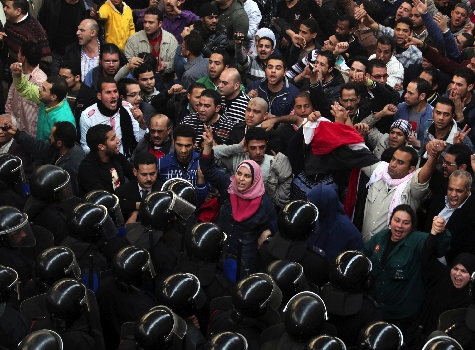
Livestreaming, the act of broadcasting a video to the Internet in near-real time, is fast becoming the weapon of choice for increasing numbers of citizen activists worldwide, from supporters of Occupy Wall Street to protesters in Cairo and Moscow, to civilians targeted for assault in Syria's civil unrest.
Increasingly, cell phones are being used to document events as they happen, and to broadcast them, simultaneously.
Because of a spike in the number of citizen livestreams coming out of Russia, Egypt and Syria in recent weeks and months, here are some quick takeaways on mobile/video activism -- especially significant this past week, amid Syria's failure to completely block all livestreams of authoritarian abuse leaking out of Homs, the epicenter of the 2011-2012 Syrian uprising.
* Bambuser, a mobile app out of Sweden, has become one of the most popular livestreaming platforms, chiefly because of its ability to stream video over poor mobile connections and because it supports more than 200 different mobile devices, from inexpensive Nokias to the latest iPhone. About 90 to 95 percent of live video coming out of Syria in recent days and weeks has been streamed via Bambuser. The Syrian government blocked 3G and desktop Web access to the service on February 17th, yet some streams documenting the government's attacks on civilians as well as horrific conditions in Syrian hospitals caring for the wounded are still getting through. Here's another stream out of Russia today, by citizen journalist Vova Moska, documenting the large crowds that converged in Moscow's Red Square to protest government corruption in advance of next week's expected victory of Vladimir Putin at the polls.
* Livestreams are becoming one of the most potent forms of cause activism and citizen journalism. Thanks to recent improvements in Facebook's newsfeed, it is now easier to broadcast a live feed to target audiences via a smartphone or tablet device. One of the more facile stream-casters to date is Tim Pool, who became Web-famous last fall for his day-long, live videostream on Ustream of the tense, second-month anniversary of Occupy Wall Street last November 17th, which he engineered via a Samsung Galaxy S II cellphone operating on Sprint's 4G network. Pool's continous livecasting, which he hosted, narrated and produced on the spot for nearly 22 hours that day, drew more than 20,000 simultaneous viewers and 250,000 unique visitors. His feeds were also picked up by Al Jazeera English and other more mainstream news outlets.
* Livestreams are proving to be effective inhibitors. According to Bambuser Founder Mans Adler, in an interview last December with NPR's Brooke Gladstone, livestreams have evolved over the past five years from content produced by "soccer moms streaming live from soccer games" to live action shots of conflict produced by citizen activists covering civil unrest. When picked up by traditional media channels, livestreams can serve as near-instant documentation of authoritarian abuses as they occur -- and under the right circumstances, help to stop them. "Livestreaming provides (activists) with the opportunity to not be afraid of losing their content because when you're protesting, the police may confiscate your phone," Adler told NPR. "Doing a livestream isn't so risky. Once livestreamed, the content is already out there on the Web." Adler cites the case of Tarek Shalaby in Egypt, who was livestreaming a protest outside the Israeli Embassy in Cairo last June and got arrested along with 12 other people. "He kept streaming while the police arrested him and the others and you can hear everything they're saying," Adler told NPR. "The police were collaborating with the Egyptian Army, which was the first time anybody had heard that. The livestream was picked up by Al-Jazeera and it was such a huge thing on the news -- even before the police had managed to get those 13 people to the police station. The head of the police station was afraid of all the media attacking him, so he ended up letting them go."
In case you missed it the first time, here's an edited transcript of that interview:
NPR: A lot of people think livestreaming is a paragon of objectivity. Is that really the case?
ADLER: No, but it's definitely much harder to fake. I mean, it has the potential of validating things that a lot of other tools have a hard time of validating. Since Twitter is only text, it's very hard for a news editor to validate if someone writes that there are 100,000 people on Tahrir Square at the moment. However, if they are livestreaming, then a news editor will be able to send a real time chat saying, can you broadcast to the right? And they will validate that this is going on right here, right now.
You founded Bambuser in 2007. What motivated you then?
ADLER: The vision was to democratize the technology of broadcasting. The traditional business model for broadcast video costs several dollars a second. Now, all of a sudden, you had everything on your phone; you had a camera, you had an Internet connection. And boom, all of a sudden, you can do the same with your mobile phone.
How was the technology first applied?
ADLER: There were soccer moms streaming live from soccer games. There were people handing out real time live lectures so that students away from the university could ask questions and interact. A lot of nonprofit organizations picked up the tool here in Sweden. A lot of the political parties started to do livestreamed press conferences. Then, it sort of moved over during the last couple of years to more activists. Livestreaming provides them the opportunity to not be afraid of losing their content, because in scenarios where you're protesting and the police may confiscate your phone, doing a livestream is not so risky. Once livestreamed, the content is already out there on the Web.
Have you seen any of the livestreaming translate into tangible results?
ADLER: We have several scenarios of this. For example, a guy that we actually met in Egypt, Tarek Shalaby, he was livestreaming a protest outside the Israeli Embassy in the beginning of June. He got arrested, together with 12 people. He kept streaming while the police were arresting them. He even managed to get his phone into his pocket before they took it away from him. You can hear everything they say. And they were actually collaborating with the Egyptian Army, which was the first time anybody had heard that.
In Egypt, there is loyalty toward the army and a great deal of hostility toward the police, so this would seem like betrayal.
ADLER: Exactly. And so this livestream was picked up by Al-Jazeera and it was such a huge thing on the news -- even before the police had managed to get those 13 people to the police station. The head of the police station was afraid of all the media attacking him and ended up letting them go. ... And then when a bomb exploded in Oslo on July 22nd (2011), there was a person starting a live broadcast and that video was directly picked up by the Danish national broadcaster. It took four minutes from when he started his broadcast until that broadcast was live on mainstream television.
Are you seeing a trend among the people who download Bambuser?
ADLER: We're receiving a lot of videos from Russia, Syria, from the Emirates and, of course, a lot of Occupy Wall Street movements, still.
So in a way, this live streaming provides a portrait of protest.
ADLER: Absolutely. It's sort of like taking the temperature on a political level of what's going on, on our planet right here, right now.
For more on livestreaming in activism, check out Global Revolution, Livestream's citizen media channel, and this ehow.com on how to convert your camera cellphone into a wireless Webcam. Here's another "how-to" on livestreaming from Livestream.
-- Marcia Stepanek
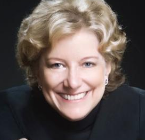
(Photos: (Top) A screenshot of a Bambuser-generated video out of Homs, Syria, on February 17th documenting the bombing of a pipeline by government authorities; (middle) a photo, courtesy Fotorater, of Mans Adler, the co-founder of Bambuser, and (bottom) photo of Tim Pool, a chief livestreamer of last fall's Occupy Wall Street protests in NYC. (All photos published here with permission.)
Labels: bambuser, cause video, cellphone video, censorship, livestreaming, livestreams, mans adler, marcia stepanek, OWS, social activism, syrian violence, tahrir square, tim pool
posted by Marcia Stepanek at
4:44 PM
0 Comments